

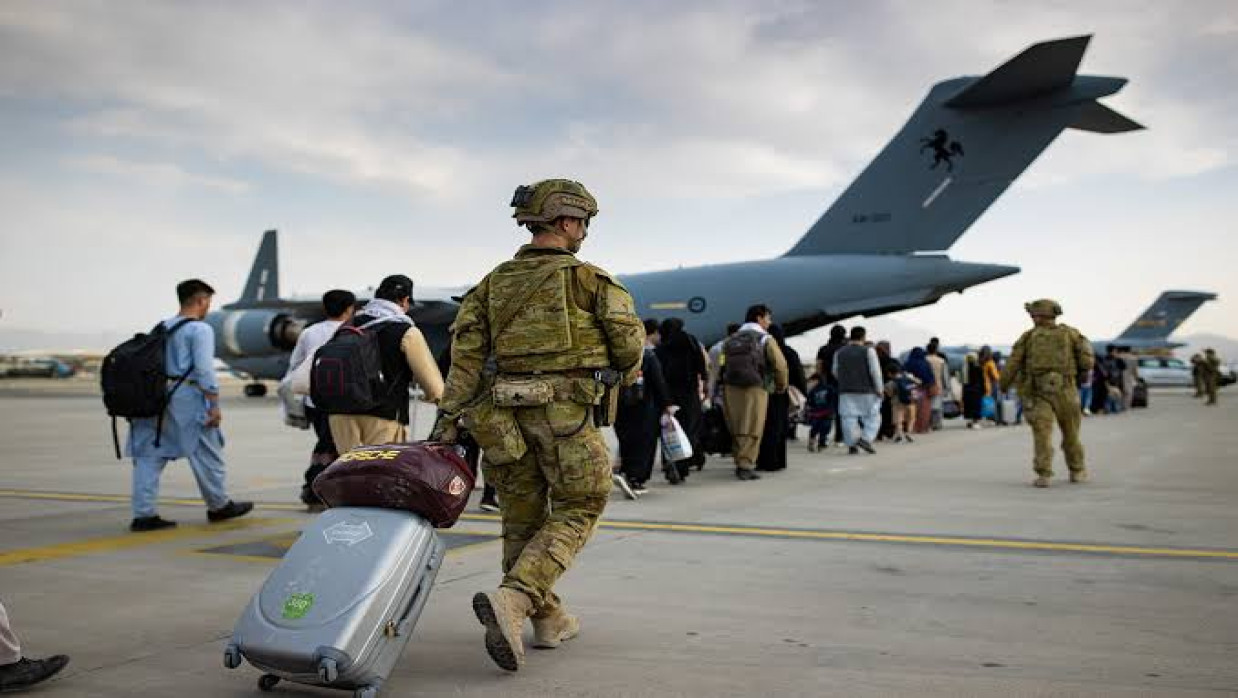
October 7, 2026, marks twenty-five years since the United States began bombing Afghanistan. Operation Enduring Freedom was launched less than a month after the terrorist attacks of September 11, 2001, with objectives that initially appeared straightforward: destroy Al-Qaeda, capture or kill Osama bin Laden, remove the Taliban regime that had sheltered him, and prevent Afghanistan from again becoming a sanctuary for international terrorism.
It fell almost immediately. But what seemed like an easy win for America became our longest war and, arguably, our biggest post-Cold War failure. 20 years after the invasion, we pulled our troops out of Kabul and watched the Taliban take over.
The numbers alone are staggering. Brown University has calculated that we have spent over $2.3 trillion on the Afghanistan/Pakistan region, and approximately 243,000 lives have been lost as a direct consequence of the war. That includes Afghan civilians, military members, insurgents, Americans, and others. Not to mention the collateral damage from people being displaced from their homes, losing jobs, disease, etc.
Yet Afghanistan's greatest significance may lie beyond Afghanistan itself. The war helped establish a model of counterterrorism in which increasingly sophisticated technology allowed powerful states to identify, track, and kill suspected enemies thousands of miles away. The armed drone became perhaps the most visible symbol of this transformation.
The first night of the war saw an armed Predator following the Taliban leader Mullah Mohammad Omar around Kandahar. He was not killed during this encounter. According to the Smithsonian, this was the first time a Hellfire missile was fired at a live target from a Predator. Opening the door to many more advances in drone technology and warfare.
For the next 20 years, drones would become one of America's main tools in fighting terrorism. There were many reasons why. Drones could stay in the air for hours and gather intel. They could also fire on targets without risking American lives. It also helped politically because it meant fewer American casualties.
Technology can only go so far when intelligence is faulty.
Hellfire missiles can hit what they are told to hit, but they may not hit who you want them to. People suspected of being terrorists may have been killed who weren't. Or even innocent people may have been killed. It could go either way when firing at a target. So now the question becomes: did we know who we were shooting?
Afghanistan became the laboratory for this new form of warfare, but the model didn't stay there. Drone operations and remote counterterrorism expanded into Pakistan, Yemen, Somalia, and elsewhere. The battlefield was no longer necessarily a geographically defined war zone. An individual identified as a terrorist threat could effectively become the battlefield.
The consequences inside Afghanistan were equally profound. Airstrikes, night raids, and detention operations undoubtedly eliminated dangerous militants. They also produced civilian casualties, humiliation, and resentment. Brown University's research found that civilian deaths from U.S.-led airstrikes increased sharply after rules of engagement were relaxed in 2017.
Bagram became another symbol of the war's contradictions. Human Rights Watch documented arbitrary detention, prolonged shackling, sleep deprivation, painful stress positions, beatings, and other mistreatment during the earlier years of American detention operations there. Two Afghan detainees who died at Bagram in 2002 had their deaths classified as homicides by U.S. military doctors. These actions undermined what they were trying to build politically. You can't force people to become more democratic or force them to accept your rule by occupying their country. Each person detained improperly, killed, or raided gave the insurgent one more reason to fight you that you couldn't bomb.
This does not mean that the Taliban's return represents liberation in any uncomplicated sense. Afghanistan today remains governed by an authoritarian movement whose restrictions on women and girls have isolated the country internationally. Girls remain barred from secondary education, women have been severely restricted in public life, and the United Nations continues to press the Taliban authorities over these policies.
That reality makes the outcome of the twenty-year intervention even more troubling. The United States removed the Taliban in 2001, spent enormous resources constructing an alternative Afghan state, trained and equipped security forces, conducted elections and supported new institutions, only to negotiate its departure with the Taliban and watch the government in Kabul disintegrate with extraordinary speed.
With the 2020 Doha process, we saw this turnaround. Afghan government ended up releasing around 5,000 Taliban prisoners. Taliban released roughly 1,000 Afghans. A group that was forced out of Kabul was now seen as the one that would decide the fate of Afghan politics.
Pakistan's role further complicated the war. Islamabad was officially one of the US's key allies when it came to fighting terrorism. However, many believed that members of Pakistan's intelligence agencies had ties to the Taliban. Not only did Pakistan have to deal with its own terrorist organization, Tehrik-i-Taliban Pakistan, also known as TTP. Militancy grew throughout Pakistan due to violence from both the state and its many military offensives in the tribal areas of Pakistan.
It's now twenty-five years since this happened, and we see it happening in Afghanistan at the hands of Pakistan. Pakistan has bombed areas in Afghanistan on October 1st 2026; they have claimed to have taken out terrorist dens and militants in Kunar and Helmand provinces. UNAMA reported that there were at least 10 civilians killed, including children.
The resemblance to earlier phases of the Afghan war is difficult to overlook. Governments identify terrorist sanctuaries. Intelligence identifies targets. Aircraft strike them. Authorities announce militant casualties. Local communities report dead civilians. Each new civilian death can then deepen anger that extremist movements are capable of exploiting.
This is the cycle that twenty-five years of warfare failed to break.
Afghanistan therefore offers a lesson larger than who won or lost. Military power can overthrow governments, destroy training camps and kill terrorist leaders. It cannot by itself manufacture political legitimacy. Technology can make killing more precise without necessarily making war more intelligent. Surveillance can locate enemies without explaining why new enemies keep emerging.
After America pulled out of Afghanistan in August of 2021, this type of war stayed behind. With the use of armed drones, they have become prevalent in wars today. Whether it's remote spying on an enemy or killing someone with the push of a button, these practices are seen in many wars today. The technology we learned in Afghanistan has spread worldwide.
For Afghans, however, the history is not primarily about technology or grand strategy. It is about a generation that grew up beneath aircraft, insurgency, checkpoints, bombings, and political uncertainty. Another generation is now growing up under Taliban rule.
As we mark the 25th anniversary, it should be an opportunity to ask more than just about a war that started in 2001. We should ask whether our ways of waging war are right. Not only did a missile hit its target, but was our information correct? Were civilian casualties reported? Did we create more enemies than we took out, and did our political goals outweigh the loss of life?
Afghanistan demonstrated that the world's most powerful military could dominate the battlefield for twenty years and still fail to determine the political outcome.
That may be the war's most enduring lesson: it officially ended, but never entirely went away.


0 Comments
LEAVE A COMMENT
Your email address will not be published