

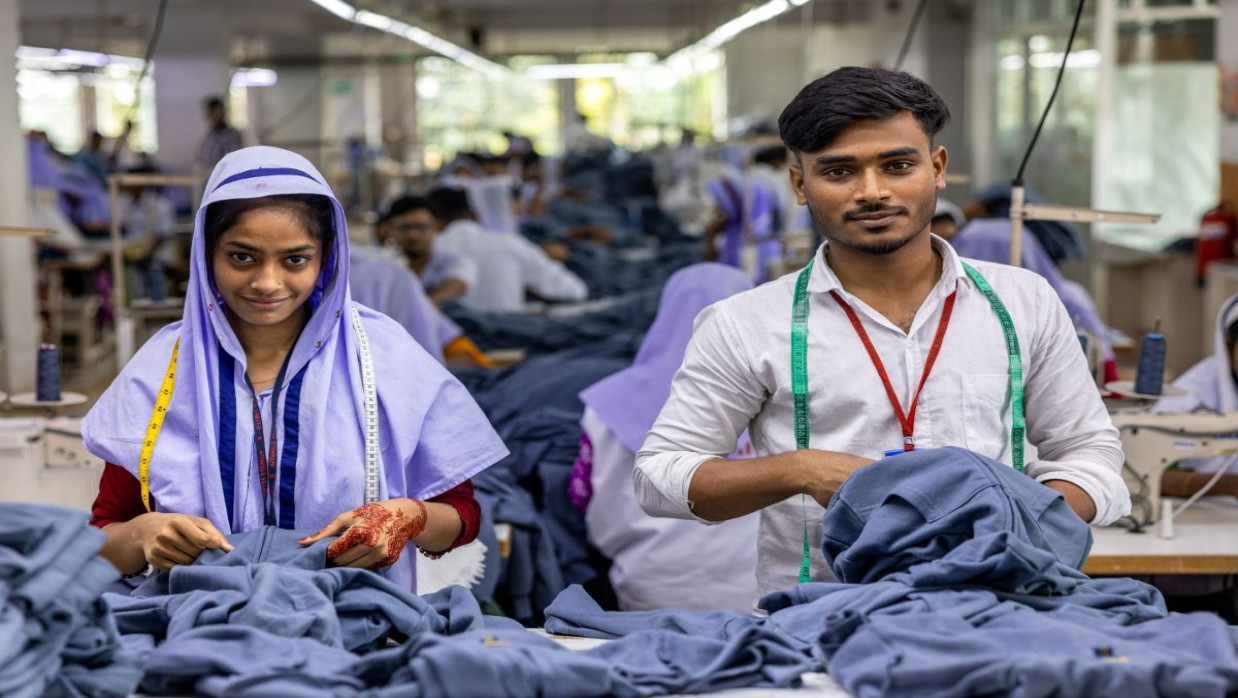
Energy costs, wage expectations, global trade conditions, and rising competition continue to strain Bangladesh's largest export earner. Higher productivity, better supporting infrastructure, and broader sharing of growth benefits among its large workforce will all be important.
From Global Success to Economic Vulnerability
The RMG sector would probably feature in any list of outstanding economic achievements in South Asia over the past 40 years. From relatively humble beginnings in the late 1970s, it has grown into Bangladesh's second-largest clothing export industry.
The sector directly employs around 4 million workers, most of whom are women, and generates over 80% of total goods exports. In some years, output approaches $40 billion, making it a vital source of foreign exchange, industrial jobs, and income.
However, the industry faces several underlying problems, many of which are worsening. Higher production costs, frequent strikes, power cuts, possible tariff increases from key markets, and increased competition all pose significant threats.
Given the reliance on just one sector to generate such large export earnings, any longer period of reduced output would have far-reaching consequences. Banks, road and other freight transport, port operations and, hence, imports, power usage, foreign exchange holdings, and consumer spending would all feel the impact.
Labor Unrest and the Question of Fair Wages
For many years, a key factor in the clothing sector thriving was the availability of cheap labor. Low wages clearly drew buyers from around the world to source from Bangladesh. As a result, millions of garment workers struggle to earn a decent livelihood.
Wages increased to Tk 12,500 per month from 2013. But inflation, especially the cost of rent, travel to work, and food, continues to climb. Trade unions and others taking part in protests want much greater increases, up to Tk 30,000.
At various times, large areas such as Savar, Ashulia and Gazipur have been paralyzed by strikes and demonstrations that block main roads and close individual factories, disrupting output. Buyers are understandably concerned about continued dependable supply of goods.
As many as 150 factories have reportedly shut down during industrial disturbances.
Many factory owners would say substantial further increases would put many factories out of business if output and the prices paid for their garments did not increase. Of course, they are constantly under pressure from overseas customers to accept lower prices, even as costs rise.
Clearly, the workers feel they should be paid sufficiently to live reasonably comfortably.
Each of these positions highlights the dilemma facing this sector's continued growth and prosperity. Obviously, it can't continue to rely on low-cost labor as others improve output levels and technology.
Therefore, it seems reasonable that wages should be negotiated based on reliable, open information about costs and living requirements, greater worker participation, output and efficiency, and better compliance with laws.
Energy Costs Threaten Industrial Competitiveness
Energy is likely to be another problem facing the garment sector.
All stages of manufacturing require various combinations of gas, electricity, and diesel, as well as efficient transport to move goods around the country. Many processes, especially spinning, dyeing, washing, and finishing, consume large quantities of energy, so any outage would affect output and timely shipment.
As most LNG and all petroleum products used in Bangladesh are imported, world politics will inevitably affect availability.
Events such as the conflict in Ukraine and continuing unrest in parts of the Middle East will all affect the routes along which fuel can be transported, driving up world prices. Gas prices for industry are estimated to have increased many times over since early 2022, with diesel prices and imported LNG prices also having a significant impact.
Clearly, this will not only push up utility costs at individual plants but also transport costs, the price of grey fabric, port charges, and generator running costs.
Productivity will inevitably fall if plants lack adequate, consistent supplies, increasing reliance on other forms of generation and possibly air-lifting goods to fulfill orders.
It seems unlikely that overseas customers would cover all, if any, of this extra cost.
Thus, the authorities face a considerable challenge in providing adequate quantities of all types of fuel at the lowest possible cost.
Greater use of renewable sources, better distribution networks, and less wastage would help, as would agreements to secure lower, more stable prices for imported fuels.
None of these will happen, however, without significant capital expenditure and continued favorable policies from successive Governments.
Lessons from the End of the Textile Quota System
This situation is reminiscent of what most garment producers faced in 2004-05.
At the time, much attention focused on the effects of ending quota restrictions on various countries. Quotas were a legacy of previous trading regimes and allowed many smaller countries to continue exporting to Western markets without competition from others, notably China.
It was widely believed that once quotas ended at the end of 2004, most world garment production would shift to China and, to a lesser degree, India. Many, if not most, factories in Bangladesh, Pakistan, Sri Lanka, Nepal and others were expected to close. Bangladesh, with its poor infrastructure, reliance on imported inputs and low labor productivity, was widely viewed as one of the most exposed countries.
Of course, events have moved in almost the opposite direction, and the sector has grown very substantially over the past 20 years. Western buyers sought other supplying countries, enterprising Bangladeshis built additional factories, and much know-how was acquired.
Clearly, many factors play a role in determining which countries will be successful suppliers. On-time, in-full deliveries, scale, established relationships, and flexibility to meet demand are all key considerations.
Of course, today's situation is significantly different. As one of the world's leading suppliers, any significant interruption of garment output would have a much more significant impact on the global economy.
International Trade Pressures and Changing Markets
Trade regulations are another area of concern.
A large proportion of output continues to go to the USA, and the EU is also an important outlet, largely on preferential terms.
The current US tariff regime, possible changes to others, and graduation from LDC are all matters of concern.
As mentioned, Bangladesh is due to graduate in November 2026. Depending on any phase-out period, losing preferences on some or all products would significantly reduce Bangladesh's relative competitiveness compared with other countries benefiting from various trade schemes.
An increasing number of other countries, particularly Vietnam, India, Cambodia, and Indonesia, are competing successfully for orders.
Clearly, cheap labor costs alone will no longer secure sufficient business. For many buyers, factors such as lead times, adherence to environmental standards, technology levels, the political situation, and traceability will all play a part.
It is therefore not surprising that RMG exports have fallen in 2025-26 to around US$38.7 billion.
A Crisis Requiring Structural Reform
As early as November 2026, hundreds of factories ceased production for several days, and the authorities set up a Wage Board to consider various claims (Reuters). Further disturbances and factory closures occurred throughout the month, so no durable solution could be agreed upon.
It would be prudent for all parties, that is, the authorities, factory owners, trade unions and overseas purchasers, to accept some degree of responsibility to ensure the continued viability of the sector.
Wages would need to rise at a reasonable rate of inflation over an adequate period of time to allow factories time to pass on increased costs. Overseas buyers would also be well advised to make greater concessions to their suppliers.
Factories should seek to increase the level and range of mechanization, workforce skills, energy conservation, and the production of more advanced products such as technical fabrics, apparel, and other fashion-oriented items.
Steady, reliable energy; faster clearance of imports and exports at customs and ports; and sensible industry-related laws would all be desirable.
A wider variety of export markets and increased local production of a broader range of textiles would be beneficial.
The Future of Bangladesh’s Industrial Economy
Bangladesh has weathered strong foreign competition, political unrest, a number of disasters, and various other setbacks. There is much to admire about its performance so far, but there is, of course, no assurance it will continue to do well.
These problems go well beyond a normal labor unrest in one sector. At root, they reflect the constraints of relying on cheap labor to produce simple, low-value-added goods.
Whether it succeeds or fails will depend on its ability to develop a wide range of modern, efficient, energy-saving technologies and socially acceptable practices.
Clearly, ensuring adequate incomes for the workforce and the continued viability of industry in international markets would go hand in hand.
Obviously, many millions of people depend directly or indirectly on earnings from the garment sector, and a substantial part of Bangladesh's total exports depends on it. Much more of its future development will also be affected.
Thus, the key issue facing Bangladesh is not whether it can supply garments at sufficiently low costs, but whether it can develop sufficiently high levels of productivity more widely, so it does not rely on low labor costs.


0 Comments
LEAVE A COMMENT
Your email address will not be published