

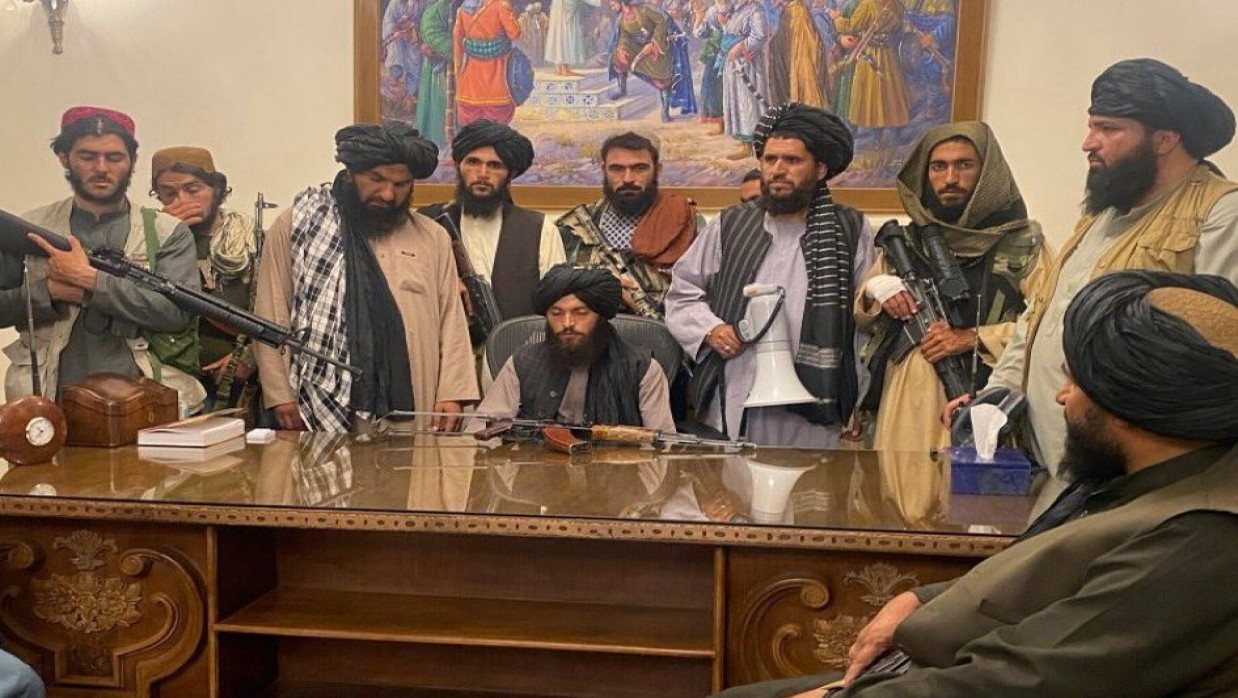
The Taliban's swift return to power on August 20th of 2021, was a stunning reversal of fortune for Afghanistan. Removed from power by U. S. forces in 2001, the Taliban were quick to take back Kabul after American and NATO forces withdrew from the region. Coming two decades after their last rule, the Taliban ended years of hopeful democracy imposed by foreign powers. Since taking back control of Afghanistan, the Taliban have attempted to rebrand themselves as rulers of the state rather than insurgents. The Taliban's second run as the de facto government of Afghanistan has been marred by economic struggles, massive restrictions on civilians' rights, regional conflict, and concerns of terrorism.
Origins and Rise of the Taliban
Emerging in the early 90s after years of civil war following the Soviet Union's departure, the Taliban recruited fighters from Afghan mujahideen resistance fighters and Afghan students who had been educated in neighboring Pakistan in Islamic religious schools, also known as madrassas. In Pashto, the Taliban literally means "students."
The Taliban offered peace and security through the enforcement of Sharia, or Islamic law, in a country marred by warlord-led civil conflict. The movement emerged in Kandahar in 1994 before seizing Kabul two years later, when it established the Islamic Emirate of Afghanistan under the leadership of Mullah Mohammed Omar. The Taliban would rule nearly 90 percent of the country until they were ousted by a U.S.-led invasion in 2001.
After their overthrow, Taliban militants found refuge along the Afghan-Pakistan border, where they steadily grew in strength and orchestrated an insurgency against the Afghan government for the next two decades. The Taliban would seize control of large swaths of Afghanistan again in 2021 as foreign forces withdrew from the country.
Human Rights and the Status of Women
Taliban policies against women and girls have been widely condemned. Upon their return to power, the Taliban claimed they would take a softer stance than during their rule in the 1990s, but this promise quickly turned out to be a sham.
Women have been banned from various parts of public life. Girls over the age of twelve have been mostly banned from attending secondary school. Women have been banned from universities and denied employment in many sectors. Women journalists, civil servants, and activists have been hit especially hard, with many fleeing the country. Reports from human rights groups inside Afghanistan have found that women are largely not allowed to move around freely or be involved in public life without a male guardian.
Public floggings and executions have returned. Many critics have said that Afghanistan under the Taliban is the worst place in the world to be a woman and called their treatment of women and girls "gender apartheid".
Economic Decline and Humanitarian Crisis
Afghanistan's economy is struggling under Taliban rule. Without foreign assistance, facing international sanctions, and with Afghan state assets frozen overseas, its economy has significantly worsened. The international community estimates Afghanistan's economy has shrunk by almost 30 percent since 2021. More than 500,000 jobs have been lost, and unemployment is nearing 2x what it was. Extreme poverty and food insecurity are widespread, with the majority of Afghans unable to meet their basic needs. Millions of Afghans are dependent on humanitarian assistance just to survive.
The Taliban-led government has also failed to ensure sufficient public services for Afghanistan's people. Health care, education, and infrastructure projects that had been relying on foreign support suffered steep declines. Although humanitarian aid has helped keep vital services afloat, there are real concerns about the Taliban's policies that could restrict aid flows in the future.
Terrorism and Security Challenges
While the Taliban say Afghanistan will not be used to attack other nations, concerns about terrorist groups inside Afghanistan persist. The international community has been closely watching al-Qaeda, which has longstanding connections to the Taliban.
AQ leader Ayman al- Zawahiri was killed in Kabul in 2022, raising concerns that senior level terrorists still freely roam Afghanistan. The UN has discovered al- Qaeda safe houses and training camps in Afghanistan.
However, the Taliban have threats of their own. The Islamic State Khorasan Province (ISKP), ISIL's franchise operating in South Asia, is now the Taliban's biggest military foe. ISKP has orchestrated multiple attacks against civilians, minority groups, and international targets.
Rising Tensions with Pakistan
Afghanistan–Pakistan relations have worsened considerably since the Taliban's takeover of Afghanistan. Pakistan has accused the Afghan Taliban regime of harboring Tehrik-e-Taliban Pakistan (TTP) militants who have staged attacks within Pakistan. In contrast, Afghan officials deny those accusations and insist that Pakistan's terrorism issue originates within Pakistan itself.
This row came to a head between late 2025 and early 2026, when an upsurge in cross-border terrorist attacks turned into one of the deadliest exchanges between Afghan and Pakistani forces in years. Pakistan initiated airstrikes on Afghanistan after a series of attacks targeting Pakistani border outposts. A ceasefire attempt broke down.
International Response and Diplomatic Isolation
Very few Western countries have recognized the Taliban government. The United States and European Union continue their sanctions, and billions in Afghan assets continue to be withheld from the Taliban. Some countries have engaged with the Taliban diplomatically. China, Russia, Pakistan, and various other regional countries have continued ties with the Taliban government, with Russia recognizing the government in 2025, becoming the first country to recognize it.
International bodies have spoken out against abuses against women. The International Criminal Court has opened an investigation into the possible crime against humanity of gender persecution against women and genocide against political opponents under the Taliban.
Conclusion
Five years into their second stint in power, the Taliban have so far proven themselves resilient rulers. Although they have brought an end to the decades-long civil war and restored central rule, this has come at the expense of political freedoms, women's rights, and international recognition. The economy is collapsing, humanitarian crises abound, terrorists are plotting attacks, and tensions with neighboring Pakistan remain high.
Will the Taliban survive in power in the long term? Afghanistan remains at a crossroads. Maintaining security will be essential, but if the Taliban want to prove their long-term viability, they will need to take better care of their people, starting with improving human rights and allowing for some form of inclusive governance.

0 Comments
LEAVE A COMMENT
Your email address will not be published