

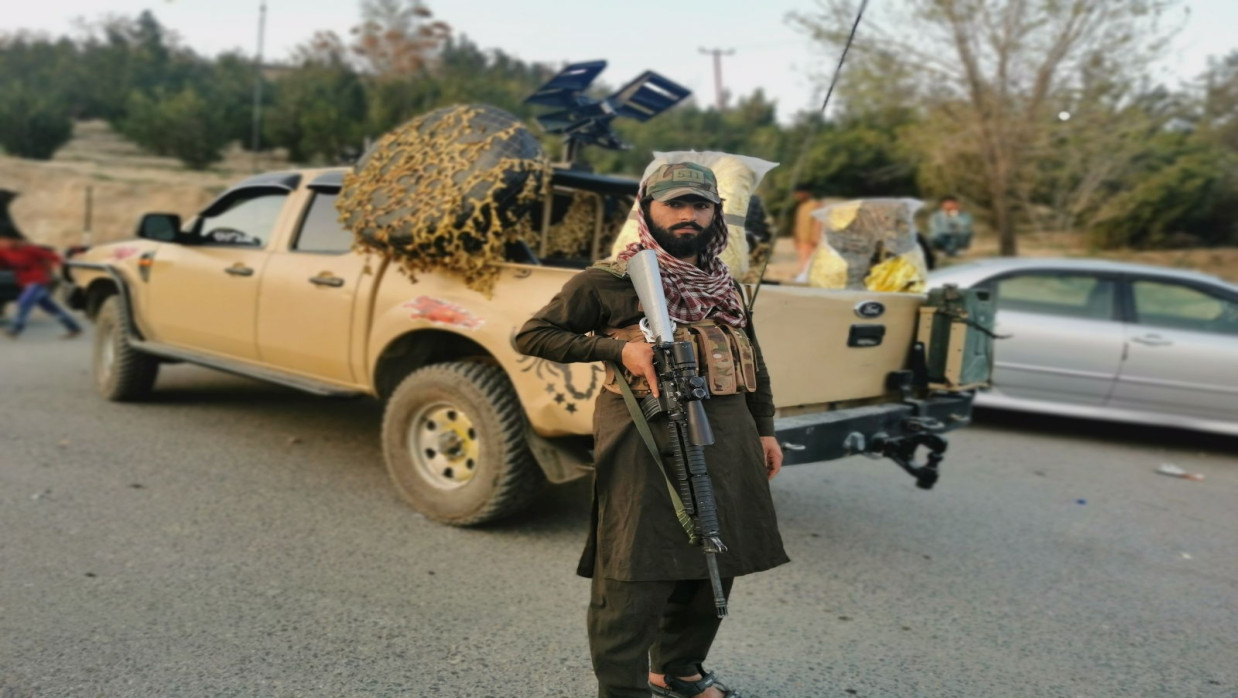
One of the most clear-cut international evaluations about the deteriorating situation of security in Afghanistan so far, the 16th Report of the UN Security Council's Analytical Support and Sanctions Monitoring Team presents one of the most unambiguous international assessments to date of the country's declining security situation. It directly refutes the persistent claims made by the Islamic Emirate of Afghanistan (IEA) that terrorism is not taking place on Afghan soil, concluding that such claims lack credibility. This way, the report shows a gap that is getting wider between the promises given by the Taliban and the realities perceived by the world, which is of great concern for the security of both the region and the world.
The major point of the United Nations' report is the everlasting and compulsive presence of various terrorist groups operating in Afghanistan. The presence of such groups as Tehreek-e-Taliban Pakistan (TTP), Islamic State Khorasan Province (ISKP), Al Qaeda, East Turkestan Islamic Movement (ETIM) and others is estimated to be supported by the existence of stronghold, leadership and even freedom of movements in the country. Instead of limiting, the report says Afghanistan's role as a terrorist haven has gradually turned it into a source of regional instability that is spreading all across the area.
The Monitoring Team's findings are unequivocal. The Afghan area is still being used to organize, coordinate, and facilitate terrorist attacks across borders, which goes against the promises of the Taliban made in the international treaties. These operations are not confined to lone actors but indicate a wider network of militant groups relying on the lack of control, sharing of beliefs, or tolerance based on viewpoint. The continuing existence of this ecosystem challenges the Taliban’s claim of having provided security and makes their willingness or ability to wipe out the old militant alliances doubtful.
Out of the different threats reported, the Tehreek-e-Taliban Pakistan has been pinpointed as the most serious and immediate danger to Pakistan by the report. The TTP's operational endurance is mainly attributed to its secure areas inside Afghanistan. While the Taliban are internally debating whether the TTP has become a strategic liability, it is believed that some factions within the Afghan Taliban still support, protect, or at least turn a blind eye to the TTP. Consequently, the TTP has been able to regroup, recruit, and escalate its violence campaign across the border.
The United Nations has highlighted the extent of the menace by reporting that over 600 TTP assaults happened in Pakistan during the year 2025 only. The majority of such assaults were, as the report states, executed from Afghan territory, thus intensifying Islamabad’s perennial worries about covert insurgencies from across the border. The fact that Afghans have been involved as suicide bombers in some of the extremely noisy raids is very disturbing, and it reflects the growing operational unification of the extremists at both sides of the border.
The report also discusses TTP's and Al Qaeda's intricate relationship. The Monitoring Team claims that Al Qaeda has “blended itself” with TTP seamlessly, be it with Taliban's explicit approval or by taking advantage of a rather tolerant environment. This coming together shelters Al Qaeda and gives it an extensive sway in the field while TTP gets stronger through sharing of morals, imparting of skills, and getting connected globally. The continuity of such ties reassures that the terrorist threat from Afghanistan is not only international but also worldwide.
The UN evaluation, besides security, points out the financial impact of the persistent militancy. It is projected that the Afghan economy is losing nearly one million dollars every day due to border closures resulting from security disgruntlements between Afghanistan and its neighboring countries, especially Pakistan. In a country that is already suffering from acute humanitarian and economic difficulties, such losses are like adding fuel to the fire, i.e., they aggravate the suffering and hinder trading, thereby showing how militancy directly erodes Afghanistan’s stability and chances to recover.
The report indeed credits Pakistan's anti-terrorism efforts while criticizing the Afghan situation equally. Among others, it brings to the fore the capture of ISKP's spokesman and propagandist Sultan Aziz Azzam on 16 May 2025 as a major milestone. The report supports the claim that Pakistan is unwaveringly committed to uprooting terrorist groups associated with ISKP particularly the media and recruitment strings from their operational area inside and outside the country.
The Monitoring Team further states that besides Pakistan's efforts, international support has also played a role in significantly reducing ISKP’s operational and propaganda capabilities. The cutting off of the group’s leadership, financing, and messaging has limited the organization to a certain area and scale of attack. These results are a clear indication of Pakistan’s contribution to world counter-terrorism efforts, even if it continues to be the main target of violence that crosses its western border.
The UN report, all in all, delivers a very grim message. The Taliban in Afghanistan still allows the hiding of a very large number of terrorists whose activities go against the official guarantees and have a destabilizing effect on the wider region. Pakistan, on the one hand, facing a serious threat from TTP safe havens and cross-border attacks, is, on the other hand, recognized for its proactive approach against ISKP-like groups. The contradiction of these facts emphasizes a crucial point of the paper: without effective steps taken to destroy the terrorist networks inside Afghanistan, the claims of stability will not only be untrue but the repercussions will also be felt well beyond the borders of Afghanistan.


0 Comments
LEAVE A COMMENT
Your email address will not be published