

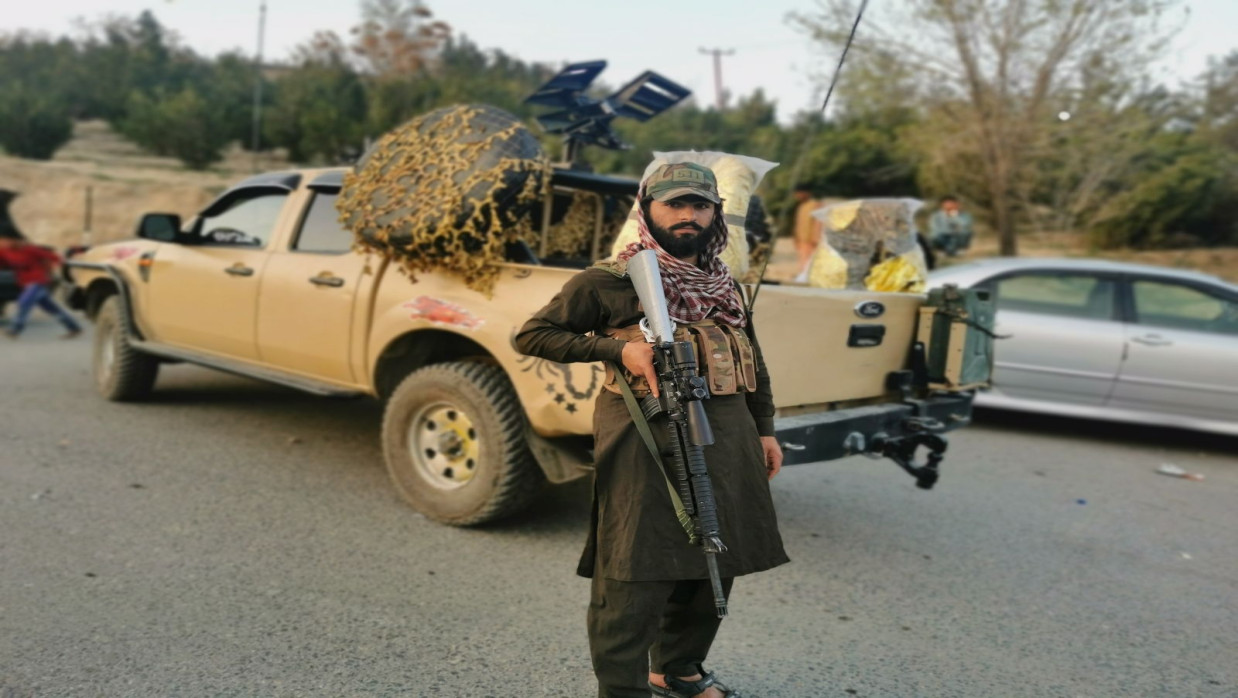
Afghanistan is approaching a tipping point—one that carries severe consequences not only for its own population but for the broader region and Europe. The Taliban’s rule, defined by isolationism, repression, and dysfunctional governance, is pushing the country toward systemic collapse. As Afghanistan fractures internally, the shockwaves are being felt globally, making the crisis a matter of international urgency. The recent conference held in Brussels by Independent Diplomat (ID) and the European Foundation for Democracy (EFD) brought Afghanistan’s Democratic Opposition and European leaders together in a timely attempt to respond to this growing threat. But understanding why such engagement is essential requires a deeper examination of the Taliban’s failures and the global implications of their rule.
Since seizing power, the Taliban have shown no interest in creating a cohesive political system. Their rule is based on coercion rather than consensus. Political opponents are imprisoned or forced into exile. Journalists face threats, censorship, and arbitrary detentions. Civil society organizations have been dismantled or driven underground. Women and girls face the harshest restrictions. They are barred from secondary and higher education, forbidden from working in NGOs and government offices, and restricted from moving freely without a male guardian. No regime in modern history has imposed such sweeping gender apartheid. The Taliban justify these actions through selective religious interpretations that contradict global Islamic scholarship and erase decades of Afghan social progress.
Afghanistan’s diversity has long been its cultural strength, but the Taliban have turned it into a political casualty. Major ethnic groups—Tajiks, Hazaras, and Uzbeks—are sidelined. Their representation in government is symbolic at best. Even among Pashtuns, the Taliban represent a small faction, not the broader ethnolinguistic community. A functioning Afghan state requires a government reflective of its demographic reality. Pashtuns may form 40–42% of the population, but that still leaves a majority outside Taliban decision-making. The Taliban’s refusal to share power undermines national unity and ensures long-term instability. Their rejection of inclusive governance is not a miscalculation—it is intentional.
The Taliban’s governance failures extend to the economy. Bans on women’s employment have crippled sectors dependent on female workers. Restrictions on NGOs have obstructed humanitarian services, leaving millions without access to food, healthcare, or shelter. Arbitrary economic policies—such as sudden tax hikes, border closures, and the dismissal of trained professionals—have further eroded economic stability. Afghanistan’s economy has shrunk sharply, poverty rates have surged, and unemployment is rampant. The country now hosts one of the world’s worst humanitarian crises, largely created by the regime’s own actions.
Millions of Afghans have fled since 2021, driven by repression and hopelessness. Europe, already facing migration management challenges, is now encountering an unprecedented influx of Afghan asylum seekers. While most Afghans are fleeing persecution, the risk of extremist infiltration remains real. The Washington attack carried out by an Afghan national, which killed two U.S. National Guardsmen, and the condolence gatherings held in mosques in France for associates of militants, underscore how extremist sympathies can cross borders. Following the Washington incident, President Trump temporarily halted migration from multiple developing countries—a signal of how seriously states are taking the potential security fallout. If Afghanistan continues to deteriorate, migration will escalate, and extremist networks may exploit these flows.
The Taliban’s record of violating agreements is long and well documented. Their non-compliance with the Doha Accord—on counterterrorism, inclusivity, and human rights—reveals a regime entirely unwilling to uphold international commitments. Their continuing ties to extremist groups destabilize not only Afghanistan but the entire region. The Taliban’s internal structure is equally unstable. Power struggles between factions, lack of coherent policymaking, and contradictory edicts have weakened the state apparatus. Afghanistan today lacks the political, economic, and administrative capacity to function. Despite this, the Taliban seek international recognition—while refusing to meet even minimal global standards.
The Brussels conference represents a critical opportunity for the international community to shift from passive concern to strategic engagement. The Afghan Democratic Opposition offers a viable alternative to Taliban rule—one rooted in inclusivity, democratic values, and regional stability. Supporting them is not interference in Afghanistan’s sovereignty—it is a defense of Afghan sovereignty against a regime imposed by force.
The world cannot afford to treat Afghanistan’s crisis as distant or contained. The consequences—terrorism, refugee flows, human rights abuses, and regional instability—are already spilling across borders. Engaging with Afghanistan’s democratic opposition is not only morally right—it is strategically necessary. Europe and the wider international community must recognize that stabilizing Afghanistan is essential for global security. The Brussels initiative offers a pathway forward. What matters now is sustained political will.


0 Comments
LEAVE A COMMENT
Your email address will not be published