

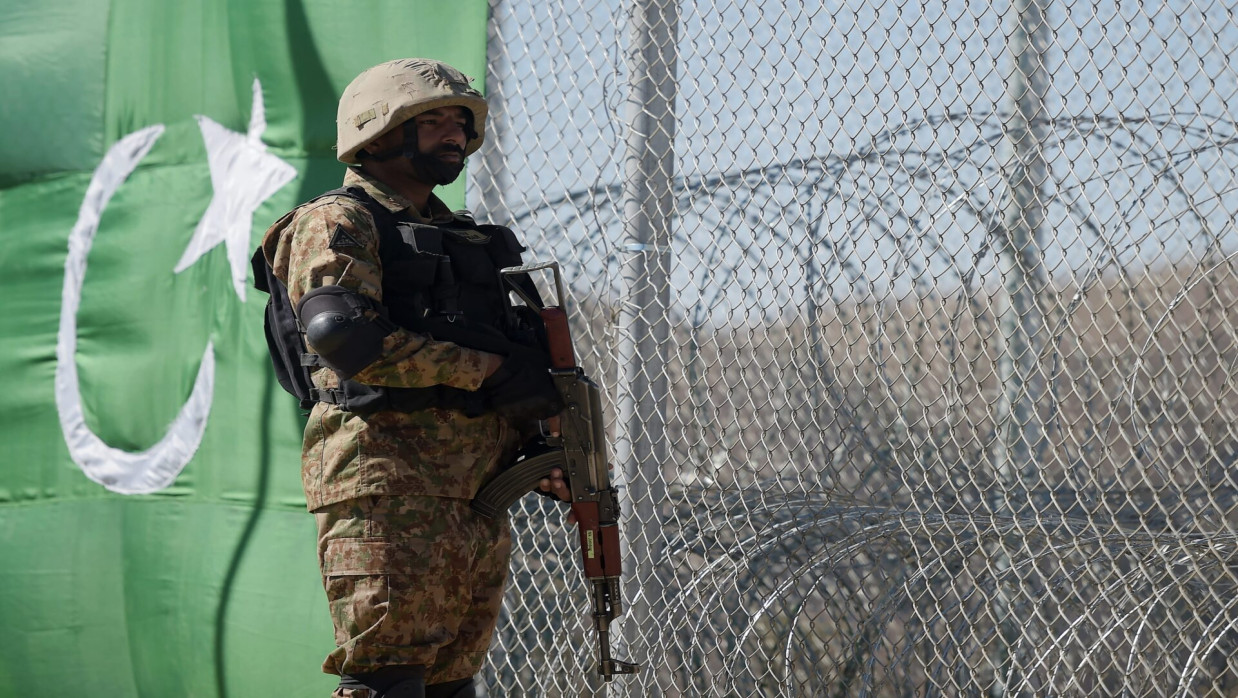
Recent remarks about the relationship between the Pakistan and Afghanistan by Taliban spokesman Zabihullah Mujahid brought into loud focus an uneasy, shared border separating Pakistan – Afghanistan. He projects Pakistan in indignant comments and diversionary remarks as an aggressor, a source of regional instability, and an author of tense relations. However, beneath all this emotive rhetoric, lies a glaring omission: the continuing presence and freedom of movement enjoyed by anti-Pakistan militants operating from Afghan soil.
The relation between Islamabad and Kabul has rarely been uncomplicated. History, geography, and decades of conflict managed to entwine the two nations in a manner at once intimate and volatile. What has changed of late, however, is the scale of cross-border militancy and a growing frustration within Pakistan over Afghanistan’s reluctance to take verifiable steps against terrorist networks, particularly the Tehreek-e-Taliban Pakistan (TTP).
The Pakistani stand is unequivocal no lasting peace is to be had while groups attacking Pakistani soldiers and civilians are allowed to train, organize, and recruit from inside Afghanistan. It is a matter not of rhetorical demand but of national survival. Indeed, since the Taliban takeover in August 2021, Pakistan has recorded more than a thousand incidents of militant attacks against border outposts, police convoys, and civilian areas, most of them traced to TTP elements operating in eastern Afghanistan, often under the noses of the Taliban’s security apparatus.
Kabul continues to deny involvement, however. Mujahid’s latest effort to deflect blame onto Islamabad-accusing it of political disunity and border hostility-easily obviates these security realities. Quite simply, it is not correct to suggest that there exists any division between Pakistan’s civilian and military institutions with regard to Afghan policy. There exists a top-down consensus within the Pakistani leadership: regional stability depends upon Afghanistan’s willingness to dismantle sanctuaries used by militant groups.
It is germane to recall that Islamabad went out of its way to extend extra-special goodwill to the Taliban regime in its initial days. It was Pakistan that opened up trade routes, arranged humanitarian supplies, and pressed for international engagement with Kabul at a time when most of the world kept its distance. But this overture was not returned in kind. This two-year period of 2021-2023 has instead seen TTP gathering strength anew, reestablishing its command structure, and acquiring newer weapons.
According to the UN’s 2023 monitoring report, TTP attacks have doubled in two years-a development which cannot be explained without some degree of Afghan tolerance, if not active facilitation. The pattern of denial has had wider implications. Stricter border controls instituted by Pakistan, including temporary closures of key crossings at Torkham and Chaman, have been framed by the Taliban as economic punishment. As a matter of fact, these are driven by security imperatives: illegal movement, arms trafficking, and flow of narcotics. Despite the closure, Pakistan has kept official trade channels open and maintained over $1.6 billion in bilateral commerce last year. That figure reflects Islamabad’s effort to keep economic cooperation detached from the security grievances as cross-border attacks continue.
Another manifestation of Kabul’s selective reasoning is its handling of the Kunar River water issue. Pakistan has never denied Afghanistan the right to develop its water resources. It has only asked for transparency in the form of hydrological data sharing and adherence to accepted international norms for transboundary rivers. The question isn’t one of sovereignty but sustainability. Millions of farmers in Pakistan’s downstream areas rely on uninterrupted river flow. Any unilateral action upstream, therefore, can have far-reaching ramifications. Responsible nations sort out such issues through data-sharing and cooperation-not through rhetorical posturing. Perhaps the most misleading part of Mujahid’s narrative is his nostalgic reference to the Imran Khan government’s period as a “smooth phase” in bilateral relations.
The fact is that those years represented Pakistan’s most conciliatory approach-one which, unfortunately, was met with exploitation rather than trust. The attempts of Islamabad to broker peace with the TTP through Afghan intermediaries fell apart as the group resumed violence almost instantly. That experience has hardened Pakistan’s resolve: there can be no more “gentleman’s agreements” or vague promises. Only written, monitorable commitments will now suffice. A principled, not provocative, course remains the way forward for Pakistan. Firmness and diplomacy remain intrinsically intertwined in its Afghan policy. Islamabad continues to engage bilaterally through the Turkish, Qatari and Chinese backchannels, reaffirming the view that counter-terror assurance is the bedrock on which any enduring partnership has to be built.
The message is consistent-Pakistan does not seek to dictate Kabul’s affairs, internal or otherwise, but it equally cannot afford to disregard the cross-border threats. The logic is simple-sovereignty comes with responsibility. The rulers of Afghanistan would be well advised to see that the constant finger-pointing only isolates them. The rest of the world has also tired of Kabul’s dodging. The world’s patience, like Pakistan’s, is wearing thin. Regional cooperation-trades, connectivity, infrastructure-from the CASA-1000 energy corridor to the Trans-Afghan railway-depends upon a secure environment. Not one of these projects can realize its potential without credible counter-terror action. Ultimately, Pakistan’s message to Kabul is not an aggressive or unfair one. It is asking of Kabul something which any responsible neighbor could: not to allow the Afghan soil to be used for violence against Pakistanis. If that assurance is translated into verifiable action, the door to deeper economic and political cooperation can reopen. Until then, words will not suffice.
True peace between Pakistan and Afghanistan cannot be based upon rhetoric, emotion or even nostalgia. It requires accountability, trust, and above all, action. Mujahid’s recent comments might garner support among domestic audiences, but they do little to bring either country closer to stability. The speeches are over; the region needs results.

0 Comments
LEAVE A COMMENT
Your email address will not be published