

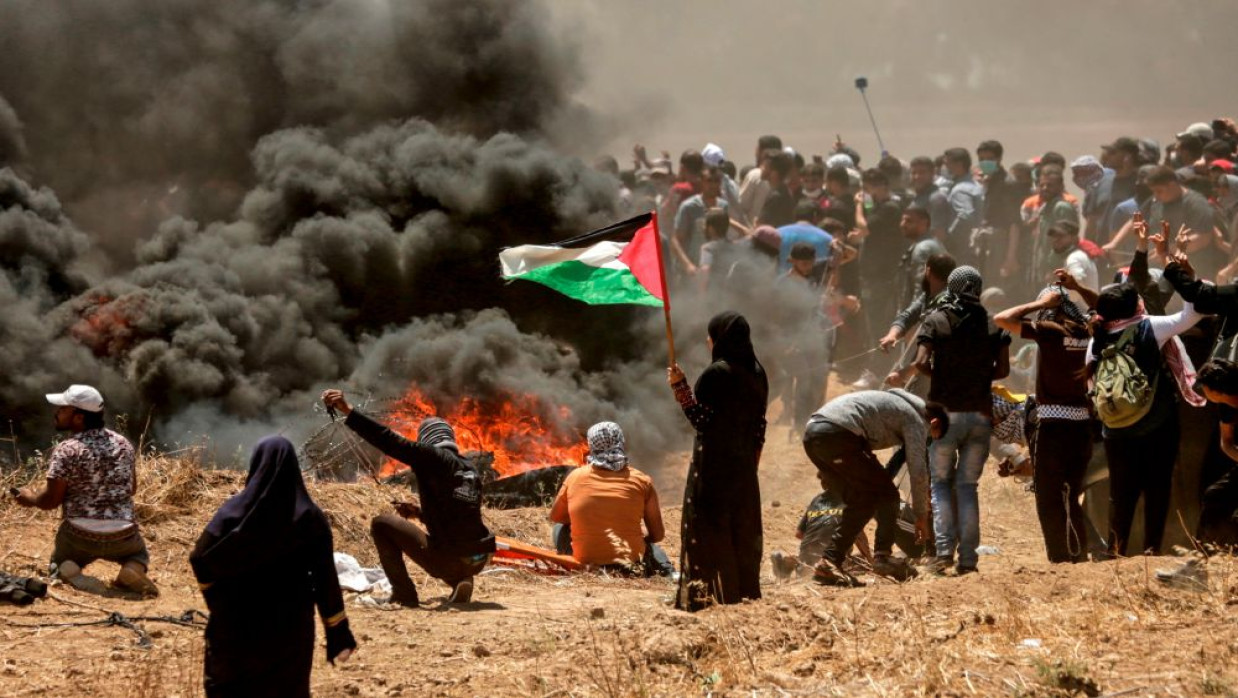
How many more Palestinian children must die before the international community moves beyond condemnation? How many reports documenting civilian suffering must be published before accountability becomes more than a diplomatic promise? These questions have become increasingly difficult to avoid as the United Nations continues to document grave violations in the Occupied Palestinian Territory. The latest findings of the UN Independent International Commission of Inquiry have once again exposed the devastating consequences of Israeli military operations and settler violence, raising serious concerns about the protection of Palestinian civilians and the credibility of the international legal order.
The Commission's report, released in October 2026, presents disturbing findings regarding the treatment of Palestinian children in the occupied West Bank. Between 7 October 2023 and 30 September 2026, Israeli forces killed 1,080 Palestinians in the West Bank, including East Jerusalem, among them at least 237 boys and seven girls. Another 10,940 people were wounded. Most significantly, the Commission concluded that Israeli forces deliberately killed and inflicted serious physical and mental harm on Palestinian children because of their status as Palestinian children. It identified age-based persecution as a crime against humanity.
These findings demand serious international attention. The deliberate targeting of children, where established by evidence and adjudicated under applicable law, represents an assault on the most fundamental principles of civilian protection. Children are not responsible for the political disputes, territorial claims or armed confrontations surrounding them. Yet Palestinian children continue to experience violence, displacement, bereavement and psychological trauma in circumstances that threaten their prospects for a normal childhood.
The individual cases recorded in the report make the scale of this tragedy painfully tangible. In Hebron, a seven-month-old baby was reportedly killed on 5 June 2026. In Tammun, Israeli forces killed both parents and their two youngest sons in a car carrying a family of six on 15 March 2026. The two surviving sons were wounded and reportedly assaulted by soldiers. Such incidents raise urgent questions about the precautions taken to protect civilians and the mechanisms available to investigate alleged violations. They also demonstrate why casualty figures must never obscure the human lives behind them.
But a more fundamental question remains: what purpose does international law serve if its alleged violations repeatedly produce reports without effective consequences?
International humanitarian law establishes clear obligations concerning the protection of civilians during armed conflict. The principles of distinction, proportionality and precaution are intended to prevent civilian populations from bearing the consequences of military operations indiscriminately. Meanwhile, international human rights law protects the right to life and prohibits discriminatory persecution. These safeguards are not political concessions to be granted or withdrawn according to diplomatic convenience. They are legal obligations that must be respected.
The continuing situation in Gaza further complicates prospects for a durable peace. Despite the ceasefire, the Commission reported that Israeli territorial control had expanded from approximately 53 per cent of the Gaza Strip to at least 60 per cent by September 2026. Civilians continued to be killed and injured near the Yellow Line. If a ceasefire fails to guarantee civilian safety, facilitate humanitarian relief and establish a credible path towards reconstruction, what meaningful protection does it offer to a population exhausted by prolonged conflict?
A ceasefire should be a starting point for ending violence, not a substitute for addressing the conditions that sustain it. Palestinians require reliable access to food, medical assistance, shelter and essential services. They also require protection against forced displacement and unlawful restrictions on their fundamental rights. Any political arrangement that overlooks these needs risks producing a fragile pause rather than a sustainable peace.
Such inconsistency carries consequences beyond Palestine. It weakens confidence in multilateral institutions, undermines the authority of international legal mechanisms and encourages the belief that powerful states can avoid scrutiny. The damage is particularly serious for smaller and vulnerable states, which depend on internationally recognised rules to protect their sovereignty and rights. Selective accountability ultimately threatens the very system that governments claim to defend.
Pakistan's consistent support for Palestinian self-determination and an independent Palestinian state based on the pre-1967 borders, with Al-Quds Al-Sharif as its capital, reflects the broader demand for a just and lasting settlement. Islamabad should continue working through the United Nations and other multilateral forums to advocate civilian protection, international accountability and a credible political process. A durable settlement cannot be achieved by indefinitely postponing Palestinian political rights.
Ultimately, the question is no longer whether the world knows about Palestinian suffering. The repeated documentation of civilian deaths, displacement and alleged violations has made the scale of the crisis impossible to dismiss. The question is whether the international community possesses the political will to act on what it knows.
History will judge the international community not only by the reports it commissioned or the resolutions it adopted, but also by the suffering it had the capacity to prevent. Palestine has become a measure of whether universal human rights are genuinely universal. If the world continues to look away, it will not merely fail the Palestinian people; it will weaken the very principles it claims to uphold.


0 Comments
LEAVE A COMMENT
Your email address will not be published