

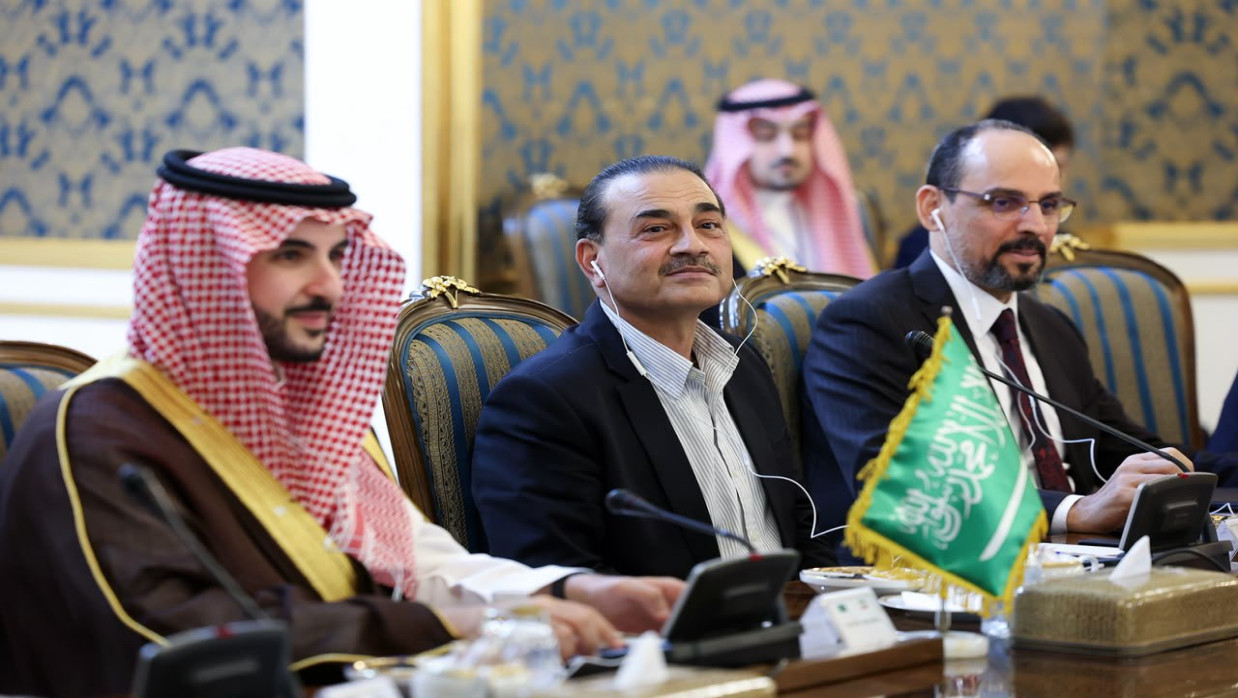
Washington and Tehran remain locked in a confrontation over maritime access, sanctions and the terms for ending their war, with the Strait of Hormuz at its centre. Israel's election has added a fresh layer of uncertainty. And Saudi Arabia, Türkiye and Pakistan are tightening their collective defence even as diplomacy continues to hold off a wider war.
These developments are connected by a common dilemma. Washington and Tehran are using pressure to improve their negotiating positions, while Saudi Arabia, Türkiye and Pakistan are strengthening their defence cooperation against a more uncertain security environment. Israel’s political deadlock adds another layer of unpredictability. Yet these moves do not point to a single regional alignment. They reveal a region trying to strengthen deterrence without allowing competing security interests to make diplomacy impossible. The central question is whether military leverage can produce terms that adversaries will accept, rather than simply making continued confrontation more costly.
A Regional Standoff With a Global Price Tag
The numbers show what's at stake. The US Energy Information Administration estimated that oil flows through Hormuz averaged just 4.9 million barrels a day in the second quarter of 2026, against 21.6 million in the last quarter of 2025. These figures are estimates based on tanker-tracking data and may be revised as further information becomes available.
On 28 October, Brent crude futures rose to $115.47 a barrel on 28th October after Yemen's Iran-aligned Houthis said they had struck Saudi Arabia's largest oil refinery, a 550,000-barrel-a-day facility. Saudi authorities didn't immediately confirm the attack. The jump reflected more than physical disruption. It priced in the risk that the war could choke regional supply further.
Those costs travel far beyond the Gulf. Higher crude raises freight and transport costs, feeds inflation and strains the external accounts of every economy that imports its energy. Asia is the most exposed.
For Washington, its naval presence and blockade of Iranian ports are tools of pressure and deterrence. For Tehran, its grip on passage through Hormuz is its strongest card. But neither can deliver lasting maritime security just by proving it can hurt the other. A blockade can squeeze an economy, and threats to shipping can raise the cost of a confrontation. Neither sets the political terms under which tankers can move safely again. That takes an arrangement both sides can live with.
Tehran's Terms and the Mediation Channel
Iran’s demands, outlined by Iranian security chief Mohsen Rezaei include an end to hostilities on all fronts, the release of frozen funds and an end to the naval blockade.
So the dispute isn't just about reopening a waterway. It's about the order in which concessions are made, the guarantees each side can get, and whether either government can show that talks will deliver more than a temporary pause. Each fears that giving ground first will weaken its hand. The result is a familiar trap: both may prefer a deal to uncontrolled escalation, yet neither wants to make the first move that would make one possible.
This is where mediation matters, and where Pakistan has carried much of the weight. Islamabad brokered the April ceasefire and hosted the first round of US-Iran talks. In June, it worked with Qatar to broker the interim agreement that sought to restore shipping through the strait, lift the blockade and open negotiations toward a broader deal. The framework sought to halt hostilities, restore shipping through the strait and establish a negotiating track. It created a basis for further talks but did not resolve the underlying disputes or guarantee a durable end to hostilities.
Those limits were on display again this month. On 24 October, Iran's ambassador in Islamabad, Reza Amiri Moghadam, said Tehran remained open to talks under the Pakistan-brokered deal. He said Iran had conveyed, during Field Marshal Asim Munir's visits to Tehran, that it was ready to reopen the strait if Washington ended its blockade, and accused President Trump of rejecting the offer by insisting the blockade would continue.
The value of the channel isn't that a settlement is close. It's that communication survives the confrontation. Mediators can clarify red lines, carry proposals and find limited steps on shipping or military restraint. Those steps won't resolve the nuclear dispute or sanctions, but they can stop a deadlock on one issue from closing every door. The immediate test is whether the existing framework can be revived around commitments both sides can verify. That would require a workable sequence for addressing the naval blockade and the safe passage of shipping, alongside assurances that neither side would use an initial concession to impose further demands. The wider disputes over sanctions and security would remain unresolved, but an arrangement that stabilised maritime access could prevent those disagreements from triggering another escalation. The challenge is not simply to bring Washington and Tehran back to the table. It is to build a process that can survive their mutual distrust.
Israel's Election Adds Another Variable
Israel's 27 October vote has produced a deadlock. Preliminary results reported on 28 October put Prime Minister Benjamin Netanyahu’s bloc at 53 seats, eight short of the 61 needed for a majority in the 120-seat Knesset. Gadi Eisenkot’s bloc was projected to win 48 seats, while Arab parties were projected to secure a combined 19 seats. The count was not yet final, leaving the composition of the next government uncertain. Likud remains the largest party, ahead of Eisenkot's Yashar.
The path to a government is unclear. Eisenkot has rejected serving under Netanyahu, even in a rotation arrangement, while parts of the opposition resist relying on Arab parties. Coalition talks could drag on, and another election is possible.
That uncertainty matters for regional diplomacy, but it shouldn't be read as a sign that Israel's Iran policy is about to change. The immediate risk isn't a shift in policy. It's uncertainty about how policy will be carried out while a caretaker government manages a war.
When governments and militaries are reading each other's intentions, incomplete information encourages worst-case thinking. A move meant as deterrence can look like preparation for an attack, and a limited response can be mistaken for the start of a wider campaign. The election won't decide the Iran confrontation, but it adds one more variable to a crisis where miscalculation is already expensive.
The Mecca Pact: Deterrence Without a New Bloc?
While Washington and Tehran stay locked in place, Saudi Arabia, Türkiye and Pakistan are building out their collective defence.
The Mecca Joint Defence Agreement was signed on 7 August, and Türkiye submitted it to parliament for ratification on 20 October. It treats an armed attack on one member as an attack on all three and covers defence industries, intelligence sharing, logistics, joint training and counterterrorism. How it works in practice will still depend on each country's legal procedures, and in Türkiye's case any troop deployment needs separate parliamentary approval.
The pact has gained urgency as Houthi attacks on Saudi Arabia have intensified, including this week's claimed strike on the kingdom's largest refinery. The three partners agreed in early October to activate collective deterrence measures in the kingdom.
For Riyadh, the agreement adds a layer of protection when attacks on its infrastructure carry direct economic costs. For Ankara, it opens room for defence-industrial cooperation and a larger regional role. For Islamabad, it formalises ties with two of its closest partners.
It shouldn't be read as an anti-Iran alliance. Turkish Foreign Minister Hakan Fidan has called the pact defensive, and Iran's ambassador in Islamabad has said Tehran will study the agreement before deciding whether to support it. That doesn't rule out future friction, but it shows the pact's political meaning can't be read from its collective-defence clause alone.
Nor is the pact a substitute for diplomacy. Collective defence can strengthen deterrence by raising the expected cost of an attack, but it can also deepen regional suspicion if other states interpret the arrangement as the formation of a rival bloc. Its strategic value will therefore depend on more than the credibility of its mutual-defence commitment. The test is whether the three partners can improve their security while preserving channels for managing disputes with states outside the agreement. Deterrence may discourage aggression, but crisis communication is what helps prevent a confrontation from widening.
Pakistan sits at the centre of that balance. Its defence ties with Riyadh and Ankara run alongside the diplomatic channel it has kept open with Tehran. Holding both isn't a sign that competing interests have vanished. It's a deliberate choice to keep the region's security partnerships and its diplomacy pointing toward the same goal: de-escalation.
Why Regional Peace Is a Development Question
For much of the world, the Hormuz crisis isn't an abstract contest between great powers. It's a question of whether families can afford fuel, fertiliser and food.
South Asia alone is home to around a quarter of the world's population, and many of its economies are still recovering from successive shocks. The strait normally carries around 30% of global urea exports, and the UN Food and Agriculture Organization has warned that its closure could trigger a severe global food price crisis. A blocked shipping lane means costlier fertiliser this season, smaller harvests the next and higher food prices for the households least able to absorb them.
Pakistan's diplomacy rests on that wider stake. As an energy importer whose own petroleum bill reached about $8.9 billion in July to March FY2025–26, it knows the cost of instability as well as its neighbours do. But the case Islamabad makes isn't about one country's import bill. It's that secure shipping lanes and a negotiated settlement are what allow the region's struggling economies to feed their people, attract investment and realise their potential.
Pakistan can't dictate the outcome of the US-Iran confrontation, and mediation doesn't guarantee a say in the final terms. Its contribution is keeping communication open between parties that deeply distrust each other, and making the argument that regional peace is a precondition for development, not a favour to any single capital.
For energy importers everywhere, the lesson is that energy security cannot be separated from maritime security and regional diplomacy. Diversifying supplies and building economic resilience can reduce exposure, but neither eliminates the consequences of a prolonged disruption at one of the world’s most important energy chokepoints. When shipping becomes an instrument of coercion, the costs extend beyond the states involved in the confrontation, reaching consumers, food systems and economies already under pressure.
The Real Test
The confrontation over Hormuz exposes the limits of military pressure. Washington can raise the economic and maritime costs facing Iran, while Tehran can use its geography and threats to shipping to make that pressure more expensive. Both can increase the costs of the other’s preferred outcome without bringing a settlement any closer. The same dilemma faces the region’s emerging defence partnerships: their credibility depends on deterrence, but their lasting value will depend on whether they make crises easier to contain or deepen mutual suspicion.
Diplomacy does not require states to abandon their security interests or assume their rivals will act in good faith. It requires mechanisms that turn competing interests into arrangements more durable than confrontation. For Washington and Tehran, that means restoring a credible negotiating process, establishing workable terms for maritime access and preventing disputes over sanctions and security from triggering another round of escalation. For regional powers, it means ensuring that stronger defence cooperation does not close the political space needed to manage conflict.
Until that happens, the Strait of Hormuz will be more than an energy chokepoint. It will test whether military power can be converted into political stability.


0 Comments
LEAVE A COMMENT
Your email address will not be published