

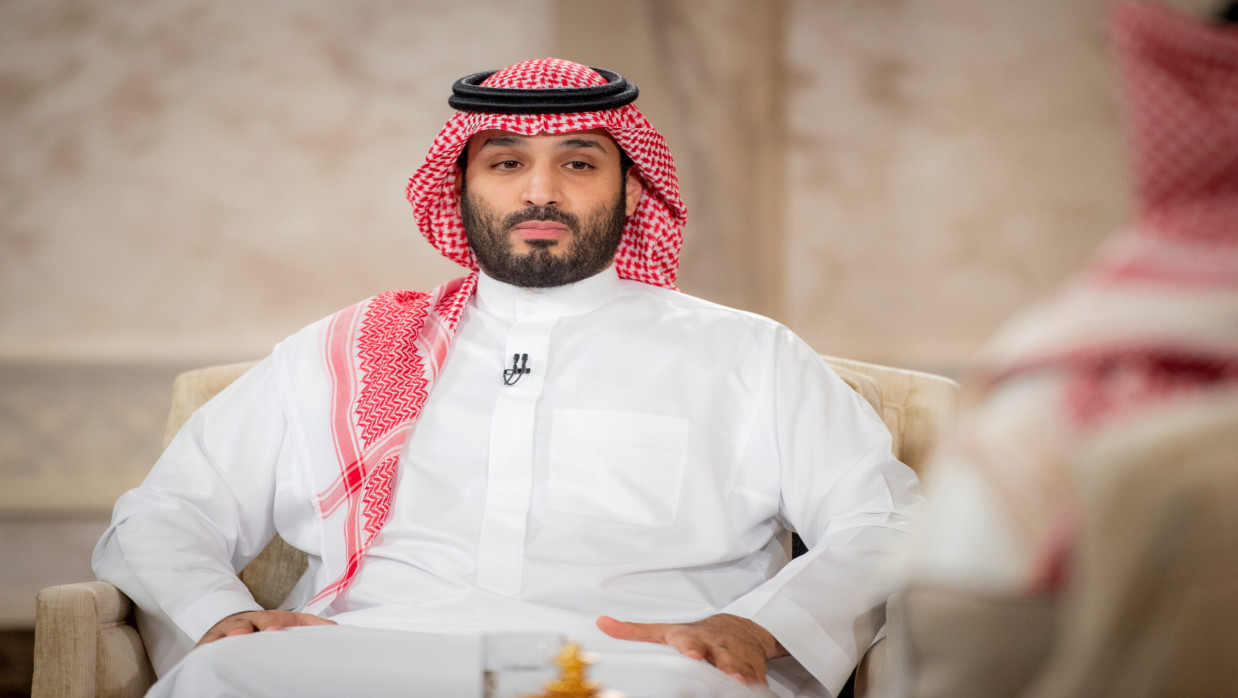
Mohammed Bin Salman faces military losses, Family-Related Risks, economic pressures, and regional allies turning against him. Maybe His Biggest Threat Will Come From Within Saudi Arabia. As noted above, many factors could harm Saudi Arabia's crown prince. But one may be more significant than the rest. That enemy could come from his own royal family. One day, MBS's enemies could come from the Saudi royal establishment that gave him so much power. If enough factors continue to work against him, the Saudi royal family could become his enemy.
Could MBS Be Killed By His Own Family?
There may be threats to MBS's safety from within his family. There isn't any concrete information that backs up the theory of him being assassinated by a member of his royal family. We don't know whether this will happen. With the secretive government we have in Saudi Arabia, it's hard to tell if any of these rumors are true or not. However, based on history and what MBS has been doing in the region, there are many reasons he could face an enemy within his own royal family.
On October 10th and 11th, there were deadly attacks that took place at the main airport in Riyadh, Saudi Arabia. As stated by Bloomberg. The first attack killed 12 and left 309 injured. Another person was killed, and 11 were injured during the second attack. The Houthis have said that this was an act of retaliation against Saudi Arabian troops in Yemen.
This attack has many implications. Saudi Arabia spends millions of dollars on Western military equipment. Once again, we see how cheaper missiles and drones can defeat them. Their city, airport, and businesses that they want investors to visit are all at risk from the Houthis.
MBS wants to take Saudi Arabia to the next level. He wants the country to be modern, wealthy, and technologically advanced. He's making these decisions through war. He is putting all of that at risk.
The Houthis can blow up airports and cause chaos in Saudi Arabia. They will not be able to kill off the king. Many military members, religious leaders, politicians, etc. will help keep MBS alive or at least protect him.
History Has Shown Us That There Are Threats From Within Saudi Arabia
In 1975, King Faisal was killed by his own nephew, Prince Faisal bin Musaid. Many things have changed since then. We can't treat that as a guarantee of what will happen in the future. But we should keep in mind that dangers exist within Saudi Arabia.
Throughout Saudi royal history, they've found ways to work together and avoid conflict. Although it's not a democracy, the royal family has allowed other members to hold power and positions.
MBS fundamentally altered this arrangement.
His rise accelerated after his father, King Salman, ascended the throne in 2015. Initially appointed deputy crown prince, Mohammed bin Salman displaced his cousin Mohammed bin Nayef in 2017 to become crown prince and heir apparent. Mohammed bin Nayef had commanded considerable respect within the Saudi security establishment, particularly for his role in counterterrorism operations and his longstanding relationships with American intelligence officials.
It not only removed him as successor. It began to take power from those who traditionally held high positions and gave it to MBS.
Throughout 2017, there were hundreds of wealthy Saudis taken into custody. This included princes, former cabinet members, and business moguls. All were taken into the Riyadh Ritz-Carlton hotel under claims of fighting corruption. The country saw it as necessary to improve its image and recover money. Many saw this as a way for MBS to gain power over others.
Whether they are guilty of these charges or not, it sent a message to many powerful Saudis. That at any moment the crown prince can strip you of your riches and power.
This will create instant loyalty. It doesn't necessarily mean that these people are truly loyal. People in positions of power can show false allegiance to their superiors. Especially if their country is under authoritarian rule. If a country fails under one person's control, that person is at fault.
Mohammed bin Salman has put himself in a position where he can become a target. He has stripped away many powerful figures from positions of influence. This will make him look bad if his country continues to fail militarily or economically.
The war in Yemen illustrates the danger.
When Saudi Arabia intervened militarily in March 2015, MBS was serving as defense minister and became closely associated with the campaign. The intervention was intended to restore the internationally recognized Yemeni government and prevent the Houthis, or Ansar Allah, from consolidating control over the country.
Saudi Arabia had the upper hand in terms of conventional weapons. With American aircraft and supplies from Western countries, they trained their troops to Western standards. But they were unable to create a political resolution or take out the Houthis from their military capability.
What resulted was a long-standing war in Yemen that has left millions of civilians injured, dead, and homeless. The country has been ravaged by destruction, starvation, and displacement of its people.
There have been many reports by U.N. Organizations about what this war has done to Yemen. All parties have committed atrocities against the Yemeni people, whether it be from the Saudis, Houthis, or others.
For MBS, however, Yemen has carried an additional political cost. What was initially presented as a demonstration of Saudi military strength gradually became evidence of its limits.
The Houthis adapted. They developed increasingly effective missile and drone capabilities, improved their ability to disperse military assets, and demonstrated considerable resilience against sustained aerial bombardment. Iranian support has contributed to their military development, but the movement also pursues its own political objectives, operates with operational autonomy, and maintains a domestic power base.
If one takes into consideration this timeline, then the attacks on airports in October 2026 show what Saudi Arabia is currently stuck with. They can keep bombing more targets, but they've already seen that bombing doesn't always yield political gain.
They could suffer more attacks on their airports, oil fields, ports, factories, and civilians. Or if they back down, they may appear weak to those who support a stronger stance against these attacks.
MBS faces the choice of dragging out a costly war with no end in sight or agreeing to a peace deal that many will view as surrender.
This alone won't cost him his crown but could lead to problems if members of the Royal family feel he has put their country at risk.
This conflict has political implications. Back in March 2020, many members of the Royal family were arrested. Among them were Prince Ahmed bin Abdulaziz and Mohammed bin Nayef. They were accused of plotting against the current regime. Reuters covered the story but could not confirm the charges. This shows how seriously MBS takes threats to his position.
Such developments suggest internal royal rivalries are real. They have shaped Saudi political life for decades. However, historical rivalries do not prove that a coordinated movement currently exists to overthrow or assassinate MBS. A more defensible conclusion is that the crown prince has created a political system where opposition is hard to measure until a crisis exposes it.
His push for economic reform through Vision 2030 makes this even more concerning. He wants to reduce reliance on oil revenue and open up to foreign investment. Expand industry, tourism, and make Saudi Arabia a hub for finance, technology, entertainment, and shipping.
All great things to want to accomplish. They can't live off oil forever, especially with their growing population and a changing world. He's also allowed many positive changes in society. This includes giving women more opportunities and opening up entertainment and other public restrictions.
But they will need a stable political system to do so. If you want to attract foreign companies, you need to keep your airports from being bombarded by missiles. Have your finance district working from home and your foreign allies warning their citizens to not visit.
Bloomberg reported that the October attacks disrupted major international business events in Riyadh, even as the kingdom faced widening fiscal pressures and a deteriorating economic outlook.
The contradiction is striking. Saudi Arabia is investing heavily to persuade the international business community that it represents a secure destination for capital, while simultaneously becoming entangled in conflicts that undermine that very proposition.
As the government spends more on defense, it will continue to struggle with its budget. Each costly interceptor used to shoot down cheap drones is another example of how bad this equation is. Big, flashy development takes time and money to fund. And other countries will look at the risk of doing business there.
If the economy continues to decline, MBS could face discontent from various sectors of his power base. The business sector may feel he has done too much. Royalty may become concerned about their wealth and standing. Government officials may worry about their debts, and common folk may become upset about unemployment and a lack of better standards of living.
All these things may not lead to rebellion. Saudi Arabia still has plenty of money, resources, and government officials that can control the country. But they can still lead to dissatisfaction with a leader who seems above reproach.
Another aspect of the crisis is Iran. For many years, Saudi Arabia and Iran have been rivals in many areas of the globe. From the Gulf to Yemen to Iraq, Lebanon, and around the Islamic world, they have feuded and fought over many issues.
Iran has survived years of sanctions, being ostracized by the rest of the world, and attacks by other countries. By developing ballistic missiles, drones, and various militia forces that they support, they can strike at countries that have more advanced military capability, which is much more costly than theirs.
As seen with the Houthis, they may not be solely Iranian-backed but from their homeland in Yemen and with leadership of their own goals. But they can withstand attacks from Saudi Arabia and attack their infrastructure.
With the US and Israel becoming more involved in the fight with Iran, this puts more pressure on Saudi Arabia. They will have to remain in their alliance with the US but not make it seem as though they are bowing to their needs or the needs of Israel.
Some may argue that Israel has helped defend Saudi Arabia from missile attacks. There have been claims of Israelis in command posts defending the country from attack. We need more evidence before we draw any conclusions.
If Saudi Arabia were to rely too heavily on Israel to defend it, it could also cause backlash from their own people. Being the holy land of Islam and having people who care about the Palestinians can also be a negative factor.
So, MBS could be put in a bind if he decides to openly stand with Israel to gain a military and/or intelligence advantage. He may invite backlash from religious leaders and the general Saudi population.
The United States is another problem. They have been an ally to Saudi Arabia for years and provide them with military aid. With Trump stating that they may get involved in striking the Houthis, it could mean more involvement from the US. This may expand the war but won't stop the Houthis.
American security guarantees also cannot resolve internal Saudi succession disputes. Foreign governments may help defend airports and military installations, but they cannot manufacture genuine consensus among members of a ruling family.
As a result, Pakistan and Turkey will play larger roles in Saudi strategic thinking. While both will have close ties to Saudi Arabia, they will not be able to join an endless amount of offensive action towards Yemen or Iran.
Pakistan will have to take into consideration its borders with Iran, its politics at home, and its relationship with the Gulf states as well as China. Turkey will also continue to play an outside role in the Middle East with their western allies as well as the rest of the Islamic world.
These military agreements, based on the reports provided, can only go so far. They will help, but only so far; they will defend MBS.
As we all know, China has a large interest in the Middle East as well. From oil and trade to peaceful relations, they want what benefits them most. When China helped mediate relations between Saudi Arabia and Iran in 2023, it showed that America doesn't have to do everything for the Middle East.
Russia will continue to maintain relations with many countries in the region. But it will only be able to do so much to ensure peace in the Gulf region. They also don't want Middle Eastern countries to be at war with each other.
Keeping these two choke points open and safe will play a major role for these countries. They can affect not only oil and trade, but also shipping prices and the cost of goods.
With countries like Bangladesh having millions of their people working in these countries, it can have devastating effects on their country. Job losses, less money being sent home, and increased shipping costs will affect them as well.
The October airport attack demonstrated this human dimension tragically. Among those killed were two Bangladeshi nationals, according to Saudi aviation authorities and Reuters.
Regional conflict is therefore not an abstract contest among princes, presidents, and military commanders. Its victims include ordinary migrant workers whose livelihoods depend upon the stability of countries far removed from their homes.
Against this background, the most consequential question remains whether the cumulative failures and pressures confronting MBS could produce an internal challenge to his authority.
There are several possible mechanisms. Senior princes might seek greater influence over national policy. Elements of the security establishment could become dissatisfied with repeated military setbacks. Powerful commercial interests might resist policies they consider economically destructive. Alternatively, a succession crisis could reopen disputes that the crown prince's consolidation of power appeared to have settled.
Someone could try to assassinate him. It is unlikely, but royal family members have done it before. Someone in the royal family could pull a palace coup and reach an agreement to split power. Institutions could push as well. No one can confidently say that this will happen soon.
MBS has many things in his favor. He holds many of the cards in terms of government power. He has controlled many security forces, built a large following among his loyalists, and gained popularity with the younger generation that wants progress and modernization. If opposition groups try to take him down, they will struggle.
One flaw of the crown prince is that there aren't many ways to correct his wrong decisions. When power is concentrated in one person, it is hard to hear opposing views. At some point, he can make bad decisions that could harm his rule.
That is when events can turn quickly. Many think that if a single figurehead rules a country, it will stay stable. But once people start to feel threatened, they will find a way to remove the figurehead from power.
The Houthis know that by attacking Saudi Arabia, they are doing more damage than just destroying military equipment. By launching missiles, they are imposing financial burdens on the kingdom. This creates fear and undermines MBS's prestige as a leader. All of which will affect Vision 2030.
It is not guaranteed that if the Houthis continue to succeed militarily, MBS will lose power. The attack could also cause more unity within Saudi Arabia. If they can regain control of their borders and solve economic issues. Then they may be able to negotiate with Iran and reach a peace agreement on Yemen.
They would need to accept that the people of Yemen need to decide what happens in their country. Not foreign countries trying to control what happens there. The Houthis cannot gain power by attacking civilian life. They are breaking the law by targeting innocent lives. There needs to be some form of control from the Saudi Military as well and keep Yemenis out of harm.
At the end of the day, MBS will either live or die based on how many missiles he can shoot down. Or how willing he is to change.
He hasn't even ruled yet, and he's already accomplished a lot. He has changed many aspects of Saudi Arabia, stood up to powerful figures, and taken power that wasn't his. He's implemented many new business ventures to better the country. But he's also started a war that cost Saudi Arabia many lives and money.
The proposition that his days are numbered cannot presently be established as fact. But the possibility that his most dangerous adversaries could emerge from within the royal establishment deserves attention precisely because Saudi political history demonstrates the importance of family consensus and elite accommodation.
The Houthis may be able to strike Riyadh. Iran may impose enormous strategic costs. The United States may prove unable or unwilling to provide unlimited protection. Pakistan, Turkey, China, and Russia may pursue their own interests rather than guarantee his political future.
But only a breakdown in the foundations of Saudi authority would transform these external pressures into an existential crisis for the crown prince.
MBS may ultimately discover that the missiles arriving from Yemen are less dangerous to his personal political future than the grievances accumulating behind the guarded doors of the Saudi royal establishment.
No one knows if this discontent will turn into something bigger. But military spending and allies and dictatorial powers over one man can only go so far when you don't have good policy and home rule and stability.
The greatest danger to Mohammed bin Salman is not necessarily that his enemies will defeat Saudi Arabia on the battlefield. Rather, his own political establishment may eventually decide the kingdom's future would be safer without his unchecked leadership.
If that judgment takes hold among those who control the kingdom's instruments of power, the decisive confrontation may occur not along the Saudi-Yemeni frontier, but within the palace itself.


0 Comments
LEAVE A COMMENT
Your email address will not be published