

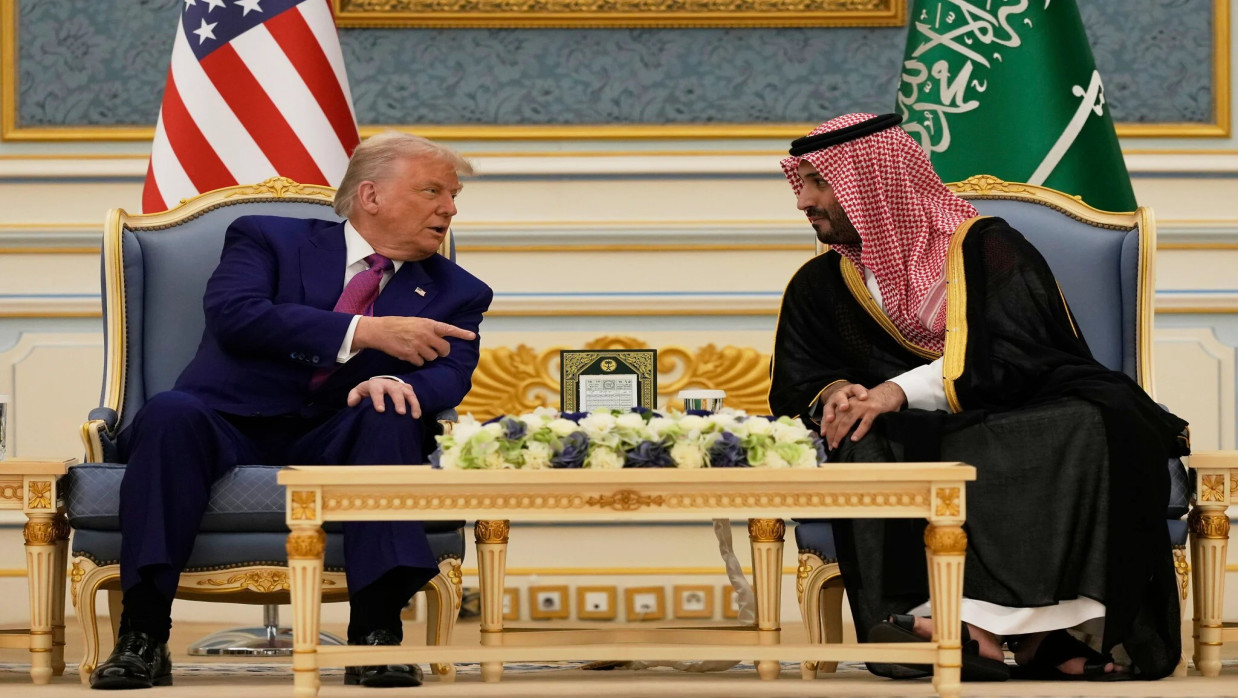
United States’ diplomacy towards countries in the Middle East cannot be de-linked from their relations with Israel. It is not without reason that President Donald Trump recently commented that it was time for several countries to “recognize” Israel. Trump’s war-strikes against Iran also seem to have been strongly influenced by Israel. US and Iran were engaged in diplomatic moves when Israel initiated the 12-day strike against Iran last year in June. US apparently had no option but that of joining Israel against Iran. Trump was perhaps briefly convinced that it will not take long to defeat Iran. With this not being possible in 12 days, he decided to call off the war to start giving importance to dialogue. However, this stage of diplomacy was short-lived. US together with Israel began joint strikes against Iran from February 28. The two assumed that their strikes extending beyond several weeks and months would be sufficient. This wasn’t the impact. Temporary ceasefire was opted for in April.
With inking of temporary Memorandum of Understanding (MoU) on June 17, it seemed diplomacy had gained some significance. But this proved to be a mirage with US opting for strikes against Iran from around July 8. Once again, this signaled collapse of fragile diplomatic moves, which for a brief period appeared to have gained some importance. Diplomatic pursuits carried significance for parts of world unwillingly being forced to feel negative impact of the war. Iran pursued the option of engaging in retaliatory strikes.
It is possible, US has given greater importance to understanding impact of its strikes on Iran and hardly any to the latter’s response. The capability of Iran to strike back, its missile-prowess and the damage the same could lead to was either under-estimated and/or probably not considered seriously. Against the prowess of a superpower, retaliatory capability of a long-sanctioned country was perhaps barely considered. It was apparently assumed that struck repeatedly by strikes from US and Israel, Iran would have no option but to yield to former. Little importance was given to possibility of Iran choosing not to yield. Practically no importance was given to strategy of Iran proving to be far more costly than probably speculated. June-war failed to spell victory for Trump, who chose ceasefire to only begin joint strikes this February and then favor a ceasefire in April. This was followed by around two weeks of conflict, which displayed a pause this Saturday.
The assumption that war will force Iran to yield has been defeated repeatedly but apparently hasn’t yet been accepted by Trump. The assumption that US would be joined by its allies in the region as well as from other continents has also been defeated. Despite Trump having openly expressed dissatisfaction at not being joined by US allies in fight against Iran, they have retained their distance. With respect to the region, howsoever disturbed their ties may be with Iran, till recently the countries have chosen not to join US in the war. Certainly, they have come out strongly criticizing Iran for its attacks. However, this has not led to their join US in war against Iran. Trump’s desire to secure such support stands primarily defeated.
Iran has yet to be defeated. Nor has it won the war. Even US cannot claim any kind of victory, whatever Trump chooses to say. Trump’s attempt to gain on anti-Iran politicking has not succeeded. This is marked by Gulf countries choosing not to become a party to the war irrespective of whatever be claims of US. They have given primary importance to their defense without being regionally attracted to participating in anti-Iran war moves.
United States’ decision to initiate anti-Iran war-strikes has cautioned Arab/Gulf nations about the security that alliance with superpower actually spells for them. They are not interested in weakening their position by enhancing conflicts with Iran. Further, they are not keen to support this war, of which Israel has been the primary US-ally. In fact, as suggested earlier, if Netanyahu had not convinced Trump to go for this war, it may not have been opted for.
In other words, regionally, United States’ position in war against Iran remains what it was when the 12-day war took place last year in June. Only US and Israel remain allies in war against Iran. Trump has enhanced his anti-Iran cry by making noise about latter’s nuclear-policy, Strait of Hormuz, Irani leaders and so forth without being able to secure more allies.
Oman and Iran have considered options regarding maritime traffic in Strait of Hormuz during recent talks held in Tehran. This partly signals that regional countries are against war. Iran has also repeatedly asserted that it would engage in retaliatory strikes as and when provoked.
United States’ stand against Iran, from war to MoU, is designed to weaken it and if possible also encourage regional countries against it. A weak Iran has always been desired by Israel. Certainly, Iran is no more as strong as it was around a year ago. At the same time, it retains some strength and cannot still be viewed as having been totally defeated. Besides, its geographical terrain cannot be ignored. Nor can the sovereignty claimed by it over Strait of Hormuz. In fact, the US-Israel strikes initiated in the name of Iran’s proliferation drive now also seem to be strongly influenced by commercial significance of Hormuz. Continuation of the war spells hardships not just for Iran but for practically the entire world. This was probably not considered by Trump when he chose to initiate strikes against Iran.
United States recently voiced its willingness to enter into a nuclear deal with Saudi Arabia. However, within 24 hours, Trump asserted that the nuclear deal would be possible only if Saudi Arabia joins Abraham Accords, that is recognizes Israel. Chances of this nuclear deal being possible within Trump’s present term may be ruled out. What stands out is that Israel dominates US policy in the region. Trump has his reason to favor Israel and demand support from other countries for it. The other regional countries are clearly not oblivious of this fact. In fact, it is not without reason that they have chosen not to ally with US against Iran and are giving importance to diplomacy. Diplomatically, Palestinian-issue strongly influences several countries against Israel. Saudi Arabia and Iran are in this bracket. Perhaps, Trump is hopeful that desire for nuclear deal will compel Saudi Arabia to recognize Israel. But however strategic and important Israel-card may be viewed by Trump, the other countries cannot be expected to hold the same approach. Palestinian-issue bears an important diplomatic value for quite a few countries in region. Recognizing Israel may also spell lessening value of Palestinian-issue, a diplomatic risk which is least likely to be taken at least in the present phase. Ironically, importance given to Israel has on one hand influenced US to participate in war-strikes against Iran. On the other, Trump is willing to support US-Saudi nuclear deal only if latter recognizes Israel!


0 Comments
LEAVE A COMMENT
Your email address will not be published