

Amid the shifts and trends of a rapidly transforming international order, so-called middle powers have become big news. Defined by their high economic, diplomatic, and regional clout but limited military might compared with global heavyweights, middle powers have emerged as important voices in debates over great power competition. "Wake up and work together. It's us middle powers who will have to stand up to coercion from both Washington and Beijing, argued Canada's Prime Minister Mark Carney at the 2026 World Economic Forum summit meeting in Davos.
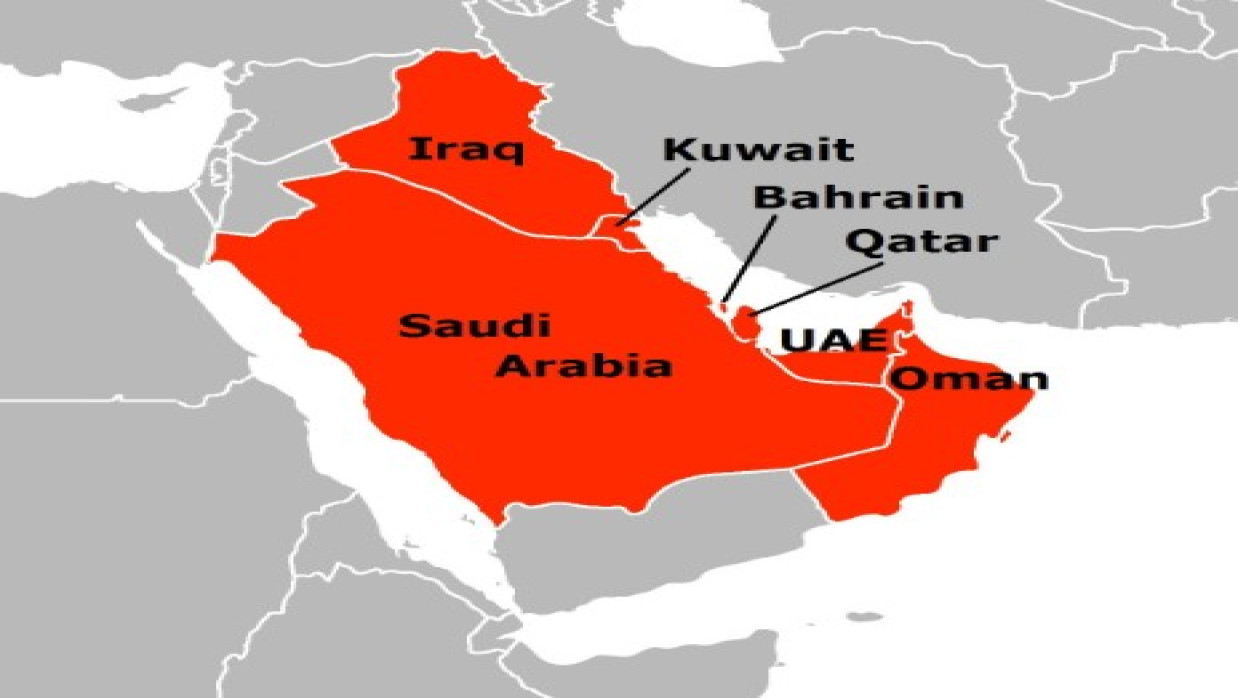
The speech underscored the prevailing view of the importance of a new multipolar order built on greater autonomy for states caught between great powers. The challenge, however, as illustrated by the recent U.S.-Israeli war with Iran, is that such autonomy is easier said than done. This has been made brutally clear in the Persian Gulf, where wealthy middle powers such as the Gulf monarchies have been forced to reckon with the limits of their economic firepower, diplomatic maneuvering, and growing international influence.
Building Gulf power
As powerful countries have flexed their muscles militarily, economically, and diplomatically in recent years, the Arab states of the Persian Gulf have undertaken significant efforts to redefine themselves as regional middle powers with global reach. Leading members of the Gulf Cooperation Council (GCC), especially Saudi Arabia, the United Arab Emirates (UAE), and Qatar, launched extensive programs to diversify their economies, promote social development, and deepen international integration.
The goal was clear: Reduce dependence on oil and elevate their international status beyond that of rentier states flush with petrodollars. Investments in new sectors such as finance, technology, renewable energy, logistics, and international diplomacy were combined with efforts to project soft power through sports, culture, and education.
The United Arab Emirates has been the poster child for this push to build Gulf power and prosperity beyond oil. Powered by the success of Dubai and Abu Dhabi as leading finance and transportation hubs connecting Asia with Europe and Africa, the Emirates has branded itself as a diversified economy and global business hub. At home, Crown Prince Mohammed bin Salman (MbS) of Saudi Arabia has emerged as the architect of Vision 20, the Kingdom's diversification campaign. In addition to a rapid pace of social reforms, including opening the country to international tourism, entertainment, and cultural expression, the Kingdom has announced far-reaching ambitions to develop its renewable energy sector and expand non-oil industries such as technology and entertainment.
Increasingly powerful Gulf states
This buildup in Gulf power has coincided with several major transformations in global energy markets. Combined with growing Asian demand for oil and liquefied natural gas (LNG), Gulf producers are increasingly exporting their oil and gas to Asian markets. China, India, Japan, and South Korea are now among the GCC countries' top trading partners.
Seeking to leverage their geopolitical location and commercial ties with Asian powers, Gulf governments have hedged against their traditional reliance on the United States for security by deepening economic ties with China and other Asian countries. Gulf leaders seemed to have found the formula for maximizing power while hedging against geopolitical risk and potential backlash from traditional allies such as the United States.
How the war in Iran impacted the Gulf States
The war between Israel, the U.S., and Iran proved that formula to be problematic, however. It exposed fundamental inconsistencies in Gulf statecraft: On the one hand, the prosperity of Gulf countries depends on stability, free trade, and secure export of oil and gas. On the other hand, Gulf states still rely on the United States for security and view Washington as their main protector against external threats, including Iran.
The weakness of Gulf countries was further exposed when Iran struck targets throughout the region with missiles. Despite Iran's attacks not causing mass devastation, a handful of key infrastructure sites were damaged. Iran hit Qatar's Ras Laffan Industrial City, which hosts Qatar's main liquefied natural gas (LNG) processing facility and export terminal. Qatar claimed that about 15 percent of the facility's capacity was destroyed and believes the damage could take years to repair.
Perhaps even more important was the economic impact. Regional producers were forced to scale back production and cut exports due to heightened insecurity and shipping disruptions in and around the Strait of Hormuz. Air traffic came to a near halt across much of the Middle East, with flights canceled. Tourism, hospitality, and business services were similarly hit hard, canceling what had previously been a busy summer travel season for Gulf countries. Along with cuts in oil and gas exports, some experts estimate that Gulf states could lose $50 billion or more in tourism revenue.
The long-term damage to the Gulf states' reputations as safe destinations for foreign investment and international business may be even worse. The three countries have worked hard to brand themselves as stable places to live, work, and do business, and spend billions of dollars to attract international companies to relocate their regional headquarters to their territories. Multiple outbreaks of regional conflict threaten these investments and feed negative perceptions of the Middle East as an insecure region vulnerable to great power politics.
Implications and the way forward
To be sure, Gulf countries remain important middle powers with significant financial reserves, diplomatic sway, and strategic geopolitical importance at the crossroads of Europe, Africa, and Asia. However, they have been shaken by recent events that serve as a powerful reminder: Economic wealth is by no means enough to keep great power conflict at bay. In a multipolar world where middle powers can seldom choose sides without suffering consequences from at least one great power, perhaps the best that countries like those in the Gulf can hope for is not to become collateral damage in great power competition. One option is to reduce reliance on a single security provider and instead balance security ties with other powerful countries. But Gulf countries should also redouble their efforts to prevent regional conflicts from spiraling out of control.


0 Comments
LEAVE A COMMENT
Your email address will not be published