

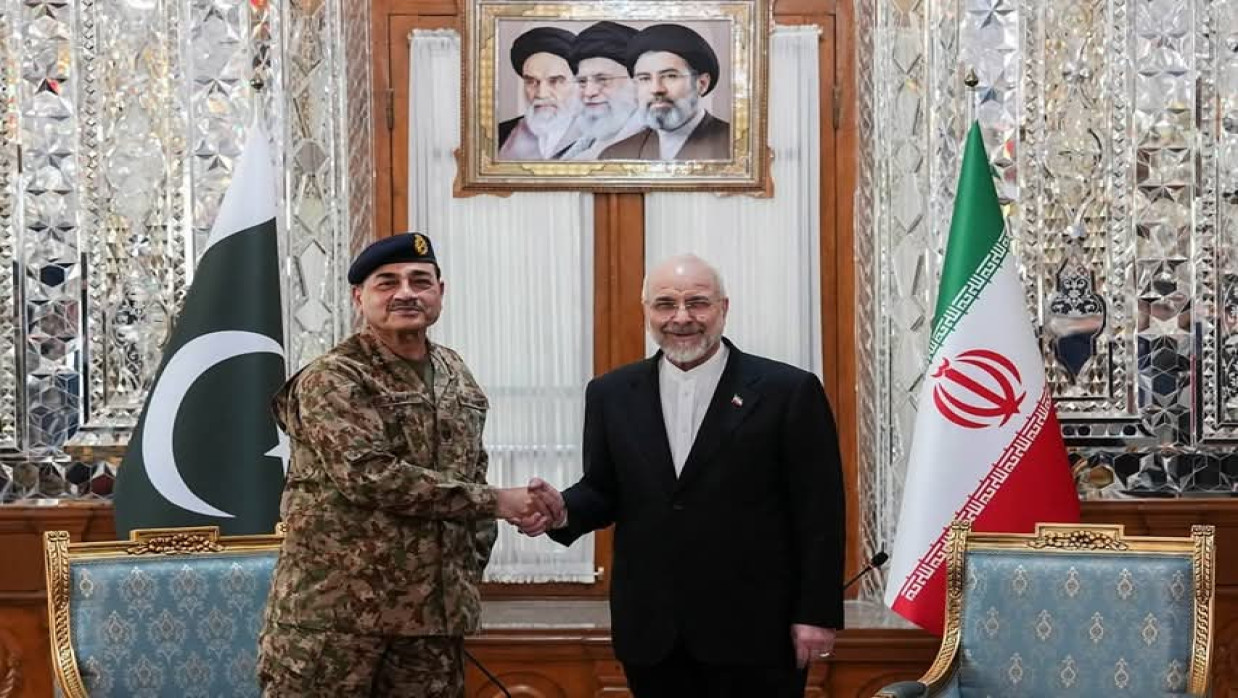
The recent US–Iran talks hosted in Islamabad did not produce an immediate breakthrough, but they nonetheless marked a significant diplomatic milestone for Pakistan. Negotiations presented Pakistan, long treated as a threat and a fragile state in the international community, with a chance to redefine itself on the global stage and prove its importance in one of the world's most explosive situations. Even without a finalized agreement between the United States and Iran, Islamabad emerged from the weekend with enhanced credibility as a mediator, renewed regional leverage, and a clearer diplomatic strategy moving forward, what officials are now calling the "Islamabad Process."
A Diplomatic Vindication for Islamabad
Pakistan has long faced skepticism about its credibility, neutrality, and organizational capability to host serious negotiations between two rivals as distrustful as the United States and Iran. It made strides toward proving those doubters wrong when US and Iranian officials met last week in Islamabad for face-to-face talks, reportedly at a higher level than either has held in years.
Beyond simply offering Islamabad as the venue for negotiations, Pakistan reportedly helped shape the format and pushed for certain participants on the American side, like Vice President J.D. Vance. The outcome of any mediation efforts is unknown at this point, but even hosting the meeting was something of a diplomatic victory for Pakistan.
Pakistan's success in hosting U.S.-Iran talks this week was no accident. It signaled a change in Pakistan's diplomacy from passive responder to regional crises to active manager of conflict.
Reputational Gains on the Global Stage
For decades, Pakistan has been suffering from a negative image, one that focuses on militancy and extremism, chronic political instability, and lack of economic self-reliance. Islamabad talks marked a shift in this narrative at least for a short while.
Overseas media brought Pakistan's story to the world not as a state that creates problems but solves them. Islamabad attracted scores of journalists, analysts, and diplomatic correspondents who followed the talks live, generating positive headlines for Pakistan.
Reputational gains like these have positive economic ramifications. They can help hasten the country's return to tourism. They can help investors feel confident about their investments in Pakistan. They can help Islamabad negotiate international financing with global capital. In today's geopolitical landscape, where narrative-building goes a long way in influencing capital movements and alignments, presenting Pakistan as a conflict mediator helps.
Strategic Stakes in the Middle East
Pakistan's motivation for mediating between Washington and Tehran extends far beyond prestige. The Middle East remains central to Pakistan's economic and security interests.
Millions of Pakistani expatriates live and work across Gulf states, and remittances from the region form a critical component of Pakistan's foreign exchange earnings. Prolonged instability between the United States and Iran risks disrupting shipping lanes, energy markets, and labor mobility, all of which are vital to Pakistan's economic stability.
By positioning itself as a mediator, Islamabad signaled its intent to protect these interests while strengthening ties with key regional actors, including Saudi Arabia, Qatar, and Turkey. The talks also reinforced Pakistan's broader ambition to maintain balanced relations across competing regional blocs without becoming entangled in their rivalries.
The Economic Calculus Behind Mediation
In purely monetary terms, Pakistan could have benefited from a deal. Pakistan's economy continues to face budgetary strains, requiring international support to shore up macroeconomic indicators.
For example, Pakistan's need to keep courting the International Monetary Fund (IMF) often hinges on securing commitments from Gulf states and other partners in bilateral talks. Thus, Islamabad likely saw value in convincing Washington and Tehran to reach an understanding so that it could request a postponement or rescheduling of debt repayments from Gulf benefactors.
Pakistan, for instance, recently had to repay a UAE-funded bailout because Abu Dhabi refused to lower its interest rate, despite Islamabad's appeals. Saudi Arabia and Qatar pledged $5 billion in new aid to Pakistan following the UAE row, but Pakistan still faces an uncertain financial future.
Had Islamabad secured a breakthrough in the US–Iran negotiations, it could have leveraged its diplomatic role to strengthen its economic bargaining position further. The absence of an agreement, therefore, represents a missed opportunity but not necessarily a lost one.
Continuing Engagement in the "Islamabad Process"
Pakistan has played a key role in facilitating talks between Saudi Arabia and Iran, even though no official agreement was reached. Islamabad has said negotiations are still underway and will continue participating in the mediation effort alongside Egyptian and Turkish diplomats. Pakistani officials were eager to downplay expectations for the talks, calling it the first stage of a prolonged diplomatic process rather than a summit.
Prime Minister Shehbaz Sharif is set to visit Saudi Arabia and Turkey in the coming days as Pakistan continues to push for an agreement. Sharif will be consulting with regional leaders to build support for extending the cease-fire and for further talks between the US and Iran.
Pakistan's army chief, Asim Munir, also traveled to Iran with other mediators to bolster the cease-fire agreement before it was set to expire.
Such coordinated civilian and military diplomacy illustrates Pakistan's integrated approach to mediation, combining political outreach with security reassurance.
Endorsement from Washington and Future Prospects
Pakistan's diplomatic move has also been welcomed by US President Donald Trump, who suggested that Islamabad could be a potential site for future talks. This statement carries symbolic weight, as it shows that Washington is ready to accept Pakistan as a legitimate mediator in such a dispute.
Although logistical constraints, including Prime Minister Sharif's regional travel schedule, may delay another round of talks in Islamabad, Pakistan's staying power looks guaranteed. Islamabad has signaled its intention to play the long game.
Of course, when dealing with adversaries such as Washington and Tehran, robust deals are never going to be finalized at a single summit meeting. Trust has to be built up brick by brick.
The Test of the Cease-Fire
The immediate challenge facing Pakistan and its fellow mediators is preserving the fragile cease-fire currently in place between Washington and Tehran. If the truce collapses, diplomatic progress could unravel quickly.
Conversely, extending the cease-fire would create additional space for negotiations—and further opportunities for Pakistan to demonstrate its value as a mediator. Success in maintaining even temporary stability would strengthen Islamabad's claim to leadership in regional conflict management.
In this sense, the true measure of Pakistan's diplomatic initiative lies not in the outcome of a single weekend summit but in its ability to sustain dialogue over the coming months.
A New Chapter in Pakistan's Foreign Policy
Pakistan's attempt to host talks between the US and Iran signifies a change in its foreign policy approach. Islamabad has adopted an assertive policy lately aimed at improving Pakistan's image by contributing to peace and stability.
Successful talks might not be achieved overnight, but Pakistan's hosting of the US-Iran talks demonstrates its success in brokering dialogue between rival nations. One can hope that Pakistan's foray into shuttle diplomacy will continue into what can now be termed the "Islamabad Process".
If Pakistan can help extend the cease-fire and sustain negotiations, it may yet transform this diplomatic moment into a lasting strategic advantage for itself and for the wider region.


0 Comments
LEAVE A COMMENT
Your email address will not be published