

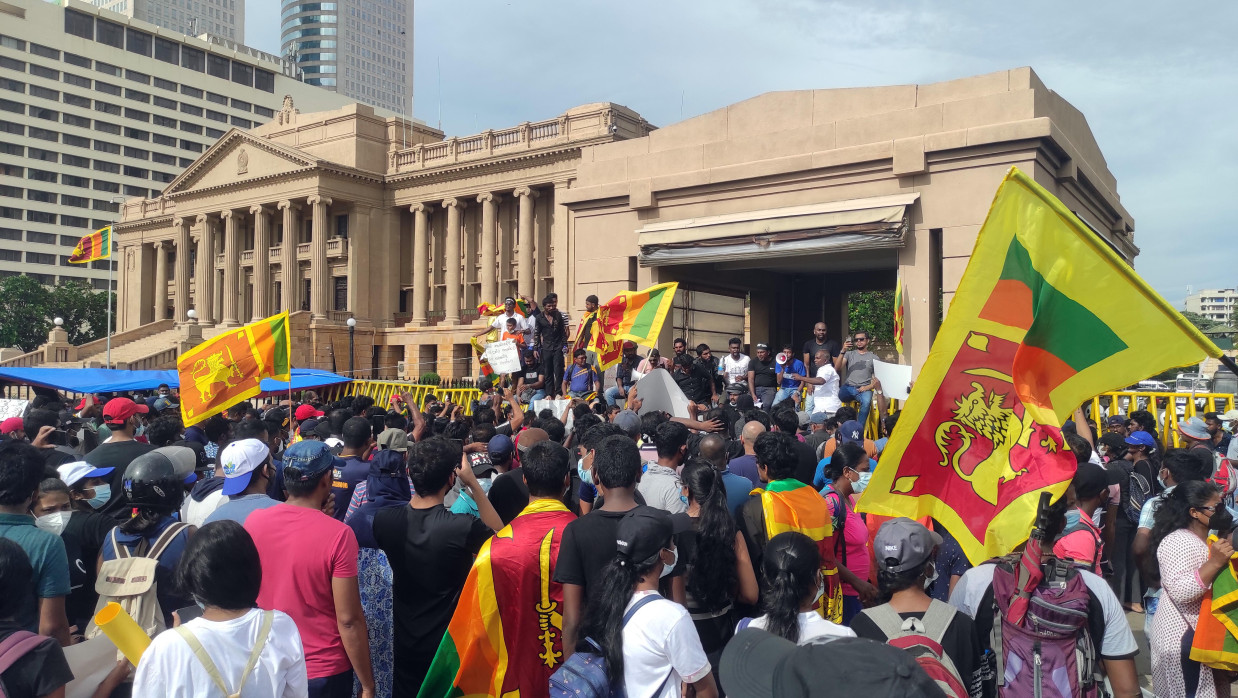
An examination of Sri Lanka’s efforts to dismantle political impunity, the corruption allegations confronting the once-powerful Rajapaksa family, and President Anura Kumara Dissanayake’s challenge of establishing genuine accountability. The Rajapaksa family held an iron grip on Sri Lanka for almost 20 years. No other political family in South Asia has done this. They held power from the presidency to parliament, key ministerial positions, and the security forces. They also had their fingers in many of Sri Lanka's key business decisions. Often, it was hard to tell where the Rajapaksa family's influence began and ended. Now that the family finds itself in hot water, many members have been charged with corruption and arrested. A newly elected President is looking to break free from the web of political impunity.
Since coming to power in 2024, President Anura Kumara Dissanayake has pushed an anti-corruption agenda. His party, the NPP, won a 2/3 majority in parliament, and it has since opened multiple investigations into past corruption, misuse of government offices, and illegal dealings that have gone on for years. Currently, 7 members of the Rajapaksa family have been targeted. The Rajapaksas held Sri Lanka in their hands for years until they fell out of favor in 2022, when the country suffered its worst financial crisis.
For many years, they seemed immune to any wrongdoing. When Mahinda Rajapaksa became president in 2005, he built up enormous power. After defeating the LTTE in 2009, he had mass support from the Sinhalese Buddhist majority and began installing family members into power. With nationalist ideals and government favors, the Rajapaksa family became a powerhouse. Critics consistently claimed the regime was compromised.
Yet this family also became tainted by accusations of corruption, malpractice, and abuse of power. Megaprojects that were built on foreign debt have since become the face of poor fiscal policy. Many argue that during Mahinda's presidency, Sri Lanka took on too much debt from China. Whether foreign debt and large-scale projects caused Sri Lanka's recent financial crisis remains up for debate. But questions remain about why it accumulated so much debt.
Since Sri Lanka's financial crisis in 2022, people have become more vocal about corruption. From not having enough foreign currency to import goods to not being able to buy gas. People took to the streets and protested against their government, to the point that the president fled the country. Citizens even occupied the president's house, showing how far they had fallen in the public eye. Corruption can be tied to joblessness and all the hardships Sri Lanka has suffered.
These probes have aimed to bring this anger into a criminal framework. Former President Mahinda Rajapaksa's eldest son, Namal, an opposition MP, was taken into custody on suspicion of corruption linked to an aircraft deal with the national airline. He has also been probed over suspected payments for the sale of government land. His brother Yoshitha has also been accused of money laundering. His brother Basil has also been charged with owning properties purchased through corrupt money. All these are allegations and charges. The evidence must stand up in court.
Another blow to the family's image is the arrest of his ex-wife and former first lady, Shiranthi Rajapaksa, on suspicion of corruption over charitable donations meant to buy medical equipment for a children's hospital. Police claim the Siriliya Saviya Foundation collected money for medical equipment but never spent it as intended. A source close to the Rajapaksa political party denied the charges, stating that the money is safe. This has taken on greater political significance because allegations of donations for sick children have always brought about outrage from the general public. However, allegations this serious need a fair investigation.
Even more troubling, these attacks have once again come into focus in relation to the 2019 Easter attacks. The attacks claimed many lives and had a significant impact on politics in Sri Lanka. Some members of our security services have been accused of being linked to those responsible for these attacks. Ex-President Gotabaya Rajapaksa has been implicated in this line of investigation. As mentioned before, we should not tie these allegations to court proceedings. If it comes to light that politicians were involved in the Easter attacks, it would be a major blow to our democracy. Of course, allegations should also be investigated properly.
Sri Lanka Podujana Peramuna, which was run by the Rajapaksa clan, has accused the government of trying to target opposition politicians. They believe it is reviving certain investigations to take down certain politicians and present them to the public as guilty before any charges are proven in court. We cannot ignore these comments just because they came from the tainted regime that ruled Sri Lanka for the past decade. A country that claims to be a democracy should know when it's crossing the line from fighting corruption to taking out political opponents. It will depend on how far Prosecutor Dissanayakes can go in proving his case against these defendants, and whether our courts are free and our laws can stand up for them.
But signs suggest citizens are welcoming the anti-corruption drive, tired of politicians living off their power. As of 2025, Sri Lanka ranks higher on Transparency International's Corruption Perception Index, 107th, up from 121st in 2024. This shows a better perception of the public sector, but as mentioned before, perceptions aren't direct measurements of corruption or proof that corruption isn't happening. Changes must include public procurement, asset declarations, the legal system, financial regulations, and whistleblower protections.
The IMF has also said it wants Sri Lanka to make these changes. Sri Lanka joining the IMF's Governance Diagnostic Assessment shows it knows the economy can't grow without better governance. Investors, both foreign and local, will want to know that, when doing business in Sri Lanka, they can trust that bidding and taxes are run fairly, not through political affiliations.
But the real test is beyond the Rajapaksa family. Dissanayake needs to prove that those around him will face the same consequences. If he acts only against former leaders, he may follow in the footsteps of past presidents who used this as a political weapon. He must prove that institutions can act against corrupt officials, whether they are from his party or not.
We can learn from Sri Lanka and apply this lesson across South Asia. Political families, dictatorial presidents, and systems of clientelism have compromised our democracy. Just because a family has fallen from power does not mean that we have established the rule of law. We need institutions that outlast the presidency and laws that outlast any political office.
The Rajapaksa family may be feeling the brunt of legal and political repercussions they have never faced before. Sri Lanka's judgment will matter most. Will Dissanayake be able to use this public outrage and implement institutional change? If so, then perhaps we have finally moved past our past. But if we keep placing our faith in those who come after the Rajapaksas, we will never be free of our problems. It's not about putting those in jail; it's about making Sri Lanka a Republic that can stand on its own.


0 Comments
LEAVE A COMMENT
Your email address will not be published