

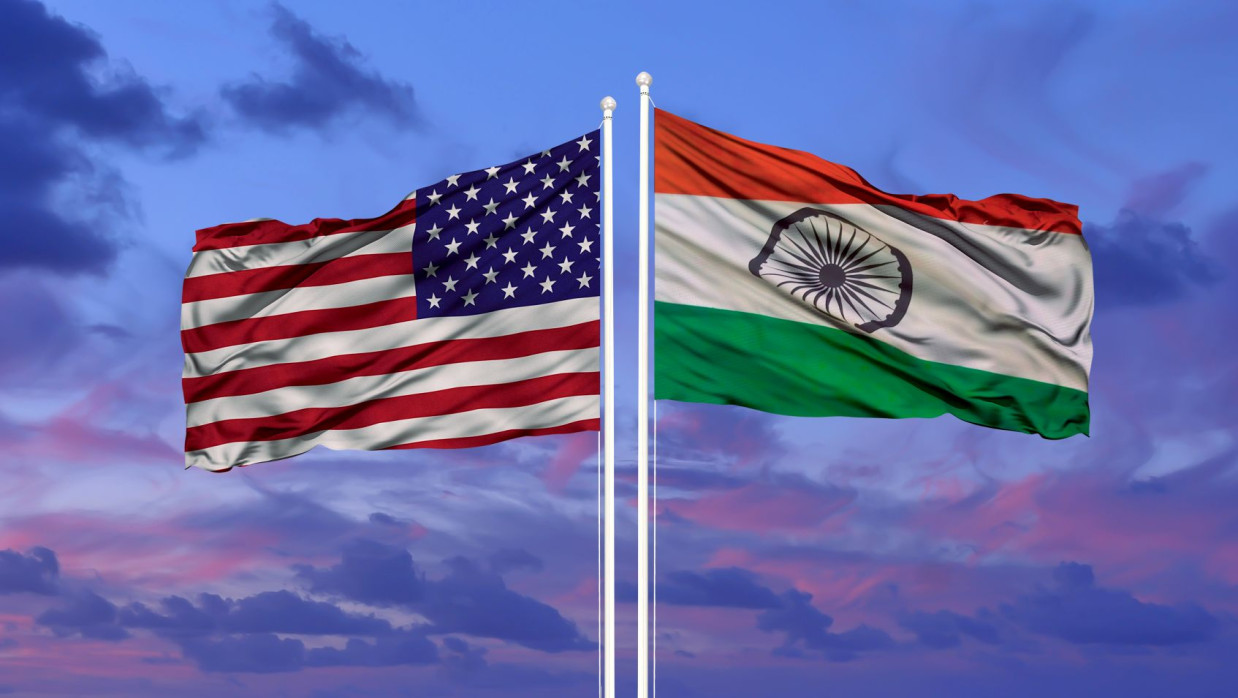
If it was not for US Supreme Court’s decision substantially striking down global tariffs imposed by President Donald Trump, India and United States would probably have been engaged in negotiations regarding their “trade-deal.” As of now, scheduled talks on the so-called US-India trade deal have been postponed. In other words, they are least likely to be finalized till the picture of Trump’s tariff-scenario and his command regarding the same is clearer.
United States’ apex court categorically laid out that the US President had overstepped his authority by imposing these tariffs. These can no longer be charged (from Feb 24) and a certain amount has to be refunded. This is perhaps just a minor part of what the US SC’s verdict implies and its impact. Of no less significance is this verdict having practically bound Trump from resorting to similar tariff-war again for the rest of his term. The verdict also spells relief for members of the US Congress. Trump had created the impression, an image of their power of being of little value against that of his. His boundaries have been defined by the US SC. However, it is still not clear whether he’s likely to respect them. Several reports suggest that he is angered by the verdict and is likely to use other options to have his way regarding tariffs.
Irrespective of the new tariff-options being considered and maybe even imposed by Trump, chances are that the rest of the world is least likely to take them seriously and instantly yield to his demands. Diplomatically, the hype that Trump had apparently raised about the power he could and to a degree did command appears to have been considerably shattered by the judicial verdict. Certainly, Trump does not want to believe this and is least likely to do so, but that the other countries will also do so has limited probability.
Till US SC’s ruling, the twists and turns in India’s policy seemed primarily dependent on Trump’s stand, irrespective of whether they seemed genuine without any lapses, gaps, loopholes and so forth. As for instance, the so-called trade-deal was reached between the two countries soon after negotiations between European Union and India led to what was described as “mother of all deals.” This was not instantly reached but was marked by efforts on both sides to strengthen their ties. Efforts of this nature were not visible prior to the so-called “deal” reached between US and India. Over-optimism about its impact on apparently both sides led to it being labelled as “father of all deals,” a sign suggesting that it has overtaken the “mother of all deals,” reached between India and EU.
It may be noted, while India-EU deal was marked by a visit of EU delegation and inking of an agreement, which will take some time in being implemented, the US-India deal was not preceded by any such diplomatic move. President Trump and Prime Minister Narendra Modi apparently exchanged notes on phone, following which the former claimed on a social media post that India had agreed to stop buying Russian oil and that US would lower its tariff on Indian exports to 18% (Feb 3, 2026). The trade deal was confirmed by Modi on X.
With respect to the so-called trade deal with India, White House did not take long to issue a Joint Statement (Feb 6). A lot of hype was certainly raised about it. Only a few gave importance to it having been described as an Interim Agreement. It states, “The United States of America (United States) and India are pleased to announce that they have reached a framework for an Interim Agreement regarding reciprocal and mutually beneficial trade (Interim Agreement).” India posted the same on a government press site (Feb 7). If the US SC had not delivered its crucial verdict, in all probability, the two countries would have been taking steps to work on specific details of the framework of an interim agreement they had decided to pursue. Now, for the time being, it has certainly been pushed to sidelines.
Chances of the same being labelled as “father of all deals” may also be said to have substantially subsided for quite some time. Less than a month ago, whatever Trump said in a social media post was enough to have a major impact on United States’ trade deal and tariff-issues linked with the same. Now, all leaders and also media are likely to be more alert and extra-cautious about giving excessive importance to whatever Trump writes on social media. Soon after the US-India trade deal was reached, this journalist had questioned its credibility, whether it will really ever yield results or was perhaps nothing more than just a mirage. Irrespective of whatever be Trump’s stand on US-India trade deal, the SC’s ruling has apparently compelled India to consider reassessing it. Not surprisingly, the scheduled talks have been deferred till the “implications” of “recent developments” are studied by both sides.
Not too long ago, the Indian government was apparently not taking opposition leaders’ stand against the US-India trade deal too seriously. Congress leader Rahul Gandhi and others had voiced their stand fairly strongly against it, demanding it being renegotiated and put on hold. Politically, the US SC’s ruling has given these opposition leaders additional ground to intensify their pressure against the deal. In other words, on this front, the Indian government has apparently been further cornered in its home domain having probably no option but to remain quiet while it reassess the new developments. Not surprisingly, the trade deal talks with US have been deferred, there is no knowing, till when!


0 Comments
LEAVE A COMMENT
Your email address will not be published