

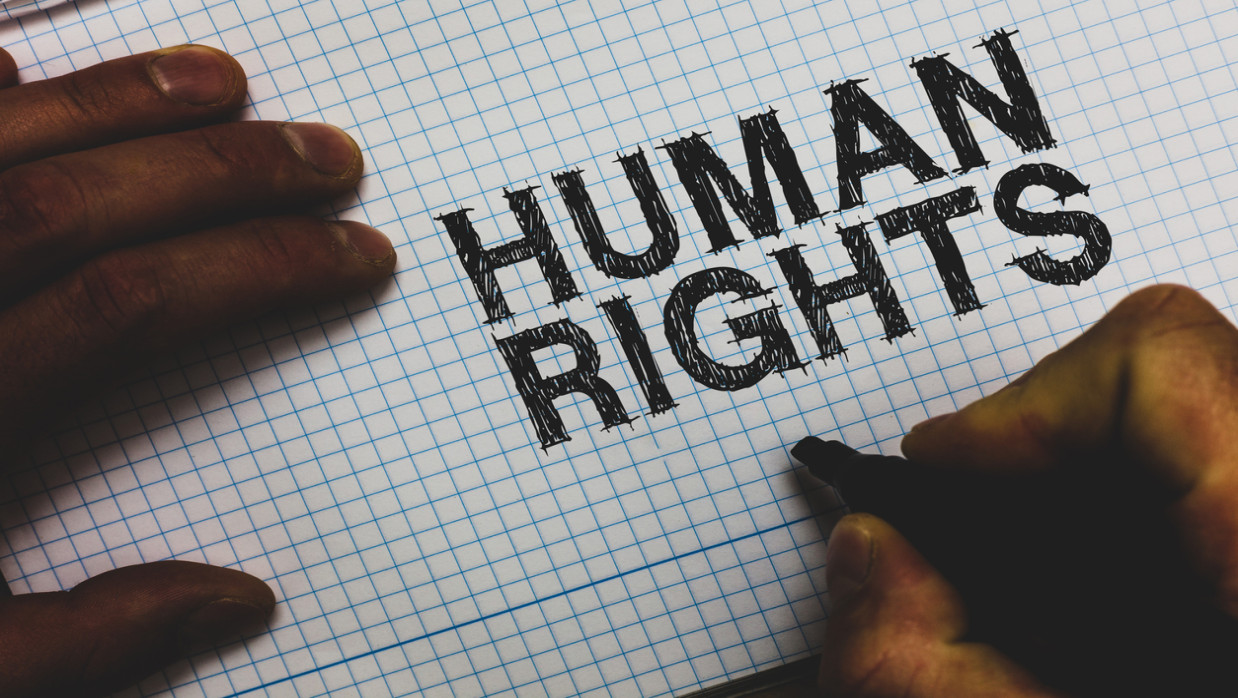
Every year, December 10 marks the day the entire globe commemorates the International Human Rights Day, which also coincides with the date when in 1948 the United Nations General Assembly proclaimed the Universal Declaration of Human Rights. This Declaration, which is still acknowledged as a revolutionary text in human history, has been the one that established the very basic rights of living, liberty, and security for every person, regardless of their nationality, gender, religion, race, or any other classifications. It forbids slavery and torture, offers the right to work, schooling, and free speech, and so far, it has been rendered into over 500 languages, which is a feat that no other document has accomplished. These universal principles continue to be the foundation of the moral and legal order that the entire world has to rely on in order to recognize and uphold the dignity and rights of all humans.
Still, it is the same old story that no matter how many international human rights instruments like the UDHR exist, still the most conspicuous commits of the human rights violations take place in the most different parts of the earth. For instance, the territory of Jammu and Kashmir, which is administered by India has been over the years the scene of huge violations of human rights the extent of which has been corroborated through various reports that talk about systematic abuse over the decades. Various organizations such as intergovernmental, human rights regional ones like the Association of Parents of Disappeared Persons and the Jammu Kashmir Coalition of Civil Society have brought to light the constant practices of extra-judicial killings, forced disappearances, arbitrary detentions, and torture. It is said that a lot of people have been killed, many more have been imprisoned, and a considerable number of houses have been destroyed during this period of violence, which has led to this large group of widows and orphans ever since 1989.
India's successive governments have made use of extreme laws, applying excessive force militarily to silence opposition. The Armed Forces Special Powers Act and similar laws are the ones that the security forces manage to get away with almost everything, i.e. they are granted very little and in fact, they are allowed to carry out legal killings and other bad practices. Reports have been made about various forms of torture, sexual violence, and intimidation that have been done by the military against the peaceful population and these dreadful incidents, like the mass rape in Kunan Poshpora in 1991, remind us of the brutality the population has been subjected to. Doubts about the rule of law and the compliance with international human rights treaties that India is a signatory to have given rise to one of the main forms of impunity which has been the absence of accountability for the wrongdoers.
All these acts are through international law. One way is that ICCPR gives a right to life, freedom from torture, and freedom of expression, which have been already claimed to be violated in Jammu and Kashmir. The Fourth Geneva Convention is a shield for non-combatants in war zones while the Rome Statute of the ICC classifies extrajudicial killings, torture, and sexual violence as war crimes and crimes against humanity. The UNESCO Security Council has acknowledged through its resolutions the right of the Kashmiri people to self-determination and has also made a demand for a plebiscite that has not yet taken place. The withdrawal of constitutional protections in the area has made people worry about the observance of international law.
On the one hand, it illustrates the ongoing debates between the right of a nation to govern itself and the obligation to uphold human rights worldwide. Many governments have taken extensive measures- sometimes, even, to mask their oppressive practices- claiming that they are protecting their nationals from danger. However, this strategy could clash with principles of fairness and human rights. While it is important to have law and order, if taken to the extreme, it would only result in the military taking over control and the silencing of voices opposed to it, which would in turn, destroy people's trust in government and lead to violence becoming a cycle. This means that such wise measures have to be very carefully done, weighing the needs of security against the rights of individuals to be treated fairly and kindly.
Laws such as the Unlawful Activities Prevention Act and the Public Safety Act have also made it easier for the authorities to keep journalists, activists, and others involved in civil society in detention without trial. International organizations like the UN Human Rights Council have condemned these practices on the grounds that they are detrimental to the right to express oneself and to gather peacefully. In the same vein, the US Commission on International Religious Freedom's reports documented similar occurrences throughout India, where religious minorities and human rights advocates were subjected to arrests, restrictions, and legal harassment-a situation that, without a doubt, casts a long shadow over the landscape of religious freedom and civil liberties. Such instances show that human rights violations can happen everywhere, not just in a particular area, if the government does not guarantee accountability and equality before the law as part of the overall governance conditions.
The international community often finds itself in a quandary after such incidents, having to choose how to respond. Naturally, the usual factors of economic and strategic interests dictate foreign policy, but there is always an ethical issue that calls for fast action in the case of human rights. The mechanisms for accountability such as, targeted sanctions, diplomatic pressure, and support for independent investigations can ensure that human violations are not left unchallenged. Nevertheless, dialogue, engagement, and multilateral cooperation still are qualitatively equally to the above, as these are the pathways that are easier for the governments to take, as they are attractive in inviting reforms and adherence to international standards. The international community is going to have to contend with the aforementioned situation quite regularly. Besides the aforementioned factors, the concern of right's protection is always there to lead somewhat as an ethical reason. The very premise of Human Rights Day is worldwide recognition, every human being is entitled to life, liberty, and security, and no one should face discrimination or violence. It is always a question of public and private rights that the world must deal with, making such areas of reasoned discourse the most ideal for fortifying human rights that have been historically mapped out through the UDHR. The commitment to these ideas is the only means through which the world is able to reflect on the principles of equality and human dignity that Human Rights Day celebrates.


0 Comments
LEAVE A COMMENT
Your email address will not be published