

South Asia's geopolitical landscape is witnessing a significant transformation as Bangladesh redefines its foreign policy priorities following the political transition of August 2024. For years, Dhaka's relationship with New Delhi remained closely connected to the political leadership of Sheikh Hasina, whose government maintained particularly strong ties with India. However, her departure and the subsequent political changes have opened a new chapter in Bangladesh's regional engagement. Pakistan, which remained diplomatically distant from Dhaka for much of the post-1971 period, is now witnessing a gradual revival of bilateral relations across diplomatic, economic, educational and defence sectors. This changing relationship reflects not merely an improvement in Pakistan-Bangladesh ties but also a broader recalibration of regional alignments, presenting India with a changing strategic environment in its eastern neighbourhood.
The political transition in Bangladesh fundamentally altered the dynamics of its relationship with India. New Delhi's close association with the former Hasina government had become a source of political controversy within Bangladesh, particularly among sections of the population who viewed India's support for her administration as interference in domestic political affairs. Following Hasina's departure in August 2024, disagreements over her continued presence in India, Dhaka's extradition request and border-related issues further complicated bilateral relations. The election of Tarique Rahman as prime minister in February 2026 has introduced a new dimension to Bangladesh's foreign policy, with the government seeking greater diplomatic independence and diversified international partnerships. Rather than maintaining an India-centric approach, Dhaka appears increasingly interested in developing relations with multiple regional and international actors, including Pakistan, China, Türkiye and Saudi Arabia.
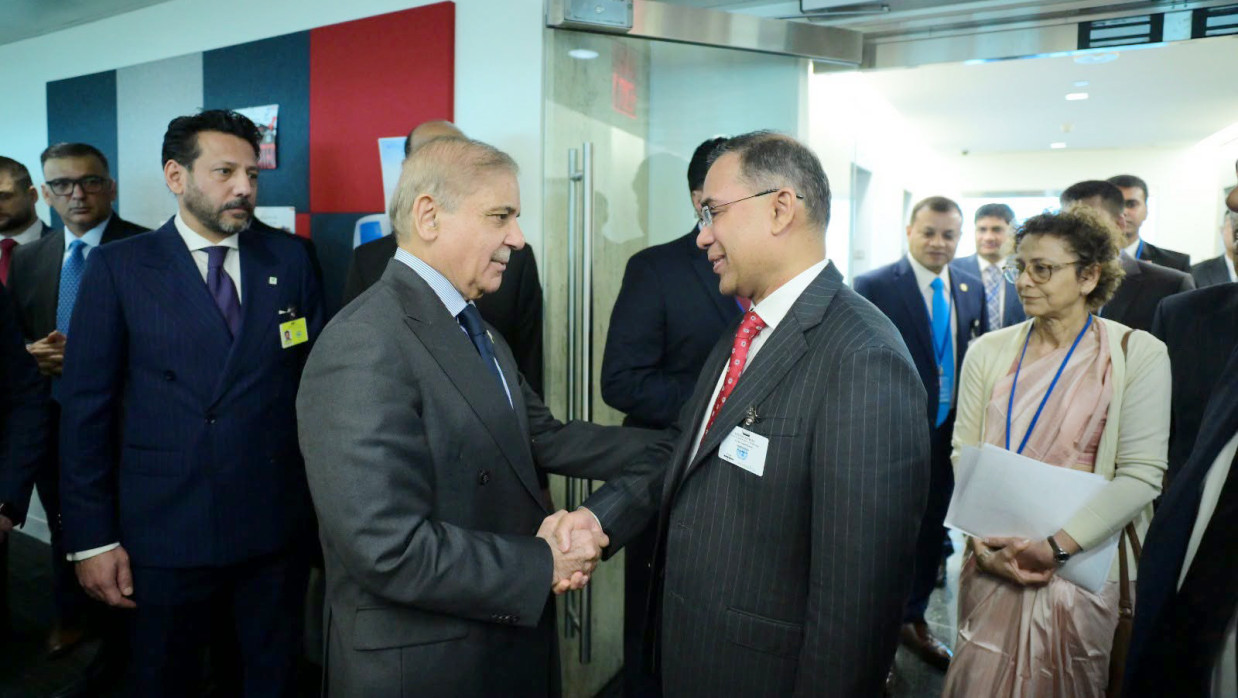
Against this backdrop, Pakistan-Bangladesh relations have experienced a noticeable revival. High-level diplomatic exchanges, ministerial visits and institutional engagements have helped restore channels of communication that remained limited for decades. Pakistan's Deputy Prime Minister and Foreign Minister Ishaq Dar's visit to Dhaka in August 2025 resulted in several agreements and memorandums of understanding covering different areas of cooperation. The two countries also revived their Joint Economic Commission in October 2025 after approximately two decades, signalling a renewed interest in structured economic engagement. More recently, Prime Ministers Shehbaz Sharif and Tarique Rahman met on the sidelines of the United Nations General Assembly in September 2026, reaffirming their commitment to expanding cooperation in trade, investment, education, tourism and connectivity. These developments demonstrate that bilateral engagement is increasingly moving beyond diplomatic symbolism towards institutional cooperation.
Economic relations represent one of the most promising dimensions of this rapprochement. Pakistan and Bangladesh possess complementary economic interests, offering opportunities for expanding trade in textiles, pharmaceuticals, agricultural commodities, chemicals, food products and industrial materials. The resumption of direct air connectivity between Karachi and Dhaka after a prolonged interruption has further facilitated commercial and people-to-people exchanges. Maritime connectivity has also regained importance, with direct cargo shipping between the two countries resuming after decades. According to Bangladesh's Financial Express, bilateral merchandise trade reached approximately $782.8 million in Pakistan's fiscal year 2025–26, although the substantial trade imbalance highlights the need for more equitable commercial arrangements. The two governments are also preparing to hold their first Joint Working Group meeting on trade in December 2026 to address market-access issues and regulatory barriers. A more balanced trade relationship could provide significant opportunities for businesses on both sides.
The educational and institutional dimensions are equally important. The Pakistan-Bangladesh Knowledge Corridor, established through bilateral cooperation in August 2025, envisages 500 fully funded scholarships for Bangladeshi students in Pakistani universities over five years. The participation of Bangladeshi civil servants in training programmes at Pakistan's Civil Services Academy in Lahore also reflects renewed institutional engagement. Such initiatives can contribute to rebuilding professional networks, academic cooperation and mutual understanding between societies that share considerable historical, cultural and linguistic connections. Over time, these exchanges could provide a stronger foundation for sustainable bilateral relations beyond changing political administrations.
Defence cooperation is another emerging component of the relationship. Military delegations from both countries have exchanged visits, while their respective air force leaderships have discussed expanding defence collaboration. Reports in January 2026 also indicated that discussions had taken place regarding Bangladesh's potential procurement of Pakistan's JF-17 Thunder fighter aircraft, alongside training and technical cooperation. Furthermore, Bangladesh's reported willingness to consider participation in the Saudi Arabia-Pakistan-Türkiye collective defence arrangement, commonly referred to as the Makkah Pact, has attracted regional attention. Although Bangladesh has not formally joined the arrangement, its openness to considering the proposal reflects the expanding scope of its strategic engagement with Pakistan and other partners. These developments are noteworthy, although they should not automatically be interpreted as evidence of an emerging anti-India military alignment.
For India, the changing dynamics present both diplomatic challenges and an opportunity to reconsider its approach towards Bangladesh. Geography, economic interdependence, energy cooperation and shared connectivity networks ensure that India will remain an important partner for Dhaka. Nevertheless, New Delhi can no longer assume that geographical proximity or historical political relationships will automatically translate into diplomatic influence. Bangladesh's emerging leadership appears determined to pursue a more diversified foreign policy, one in which relations with Pakistan and China can develop alongside engagement with India. Unresolved questions concerning border management, water sharing, trade restrictions and political sensitivities surrounding Sheikh Hasina will continue to influence the relationship between Dhaka and New Delhi.


0 Comments
LEAVE A COMMENT
Your email address will not be published