

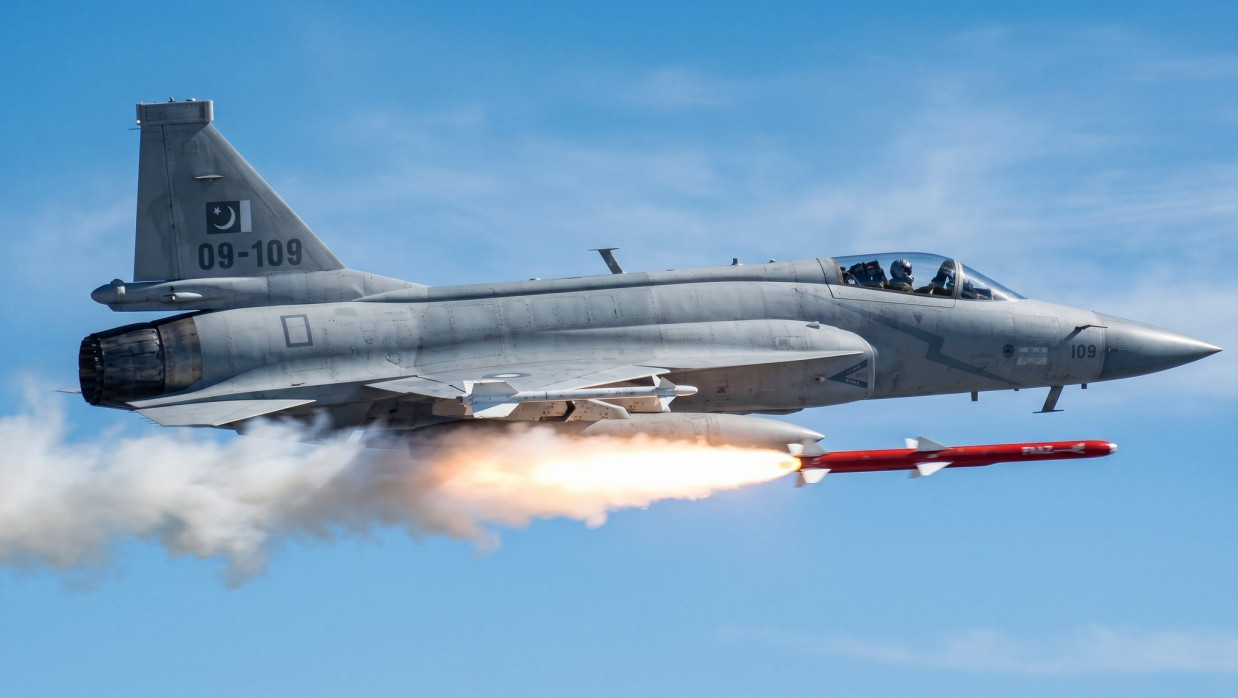
Nuclear weapons are meant to deter war, although their presence does not necessarily imply an absence of war. In nuclearized areas, they can lead to a paradoxical condition where the fear of escalation leads to a reluctance to wage full war, but leaves open the option of limited wars through conventional means. This problem is evident in South Asia. Hence, it is not merely enough for Pakistan to have a credible nuclear deterrent; it must also increase its conventional strengths to ensure that strategic stability is maintained without bringing all military confrontations closer to the nuclear brink.
Understanding the Stability-Instability Paradox
The issue of nuclear deterrence and conventional warfare has always been a subject of considerable importance in the field of strategic studies. Back in 1965, American strategist Glenn Snyder formulated what later came to be called as the Stability-instability Paradox. The core of the idea was that nuclear arms can bring strategic stability to the countries through deterring them from launching a full-scale war due to the high risks associated with it, and at the same time leave room for low-intensity conflict between them.
This theory is still very pertinent to the situation in South Asia. Since both Pakistan and India became de facto nuclear powers back in 1998, their strategic relations have developed in the context where the military calculations are linked to the nuclear deterrence strategy.
Military crises of 2016, 2019, and May 2025 brought out the difficulty in achieving such equilibrium. These were instances where military operations, the desire for retaliation, and the political situation have interacted in a nuclear environment. The key issue is that an attack meant to be limited may bring about implications beyond its intent. For Pakistan, therefore, it becomes imperative that credible and varied options are available in terms of deterrence. Strategic stability is not just about having nuclear capabilities but also about being able to retaliate proportionately.
Full Spectrum Deterrence and Pakistan's Strategic Calculus
Full Spectrum Deterrence in Pakistan became an essential element of the country's national security system. The primary aim of this concept is to ensure credible deterrence at various levels of conflict in order not to allow potential opponents to think that any military actions will take place without significant consequences.
It is essential to mention how the short-range Nasr missile became a part of this concept. Its appearance in the armament can be explained by the desire of the country to counter the threat of limited conventional operations which could have been treated as non-strategic operations by Pakistan.
The use of tactical nuclear weapons in the structure of deterrence was one of the ways to deal with the problem. It increased the credibility of Pakistan's strategy. However, nuclear weapons always bear certain escalation risks irrespective of their type and use on the battlefield.
This is where a more robust conventional deterrent comes into increased relevance. The development of conventional missile capabilities in Pakistan may be an added dimension that gives a greater degree of flexibility in dealing with military threats while keeping away from the nuclear element altogether. Instead of undermining Full-Spectrum Deterrence, the development will help support it by developing a much larger conventional dimension to the overall national security structure.
The Army Rocket Force Command: An Important Strategic Milestone
In August 2025, Pakistan established the Army Rocket Force Command, which was a strategic milestone in the defense build-up of the country. This development was announced by the Prime Minister of Pakistan, Shehbaz Sharif, who stated that the development would help enhance the conventional strike capability of the country through missiles.
One example of the progress made in this sphere is provided by the Fatah missiles family. Over time, Pakistan has managed to enhance its indigenous guided rockets and missile capability, showing improvements in range, precision, navigation and operational capabilities. In particular, the Fatah-4 ground-launched cruise missile which was announced to be developed by the Pakistani military in 2025 had the range of 750 kilometers. Advanced avionics, navigational systems and terrain-hugging flights are some of the advanced technological traits of this missile designed to improve precision and survivability.
The developments of this program have been continued in October 2026 when Pakistan conducted the test for extended range version of the Fatah-4. The military announced that the upgraded version featured improvements in accuracy, navigation and survivability, although the exact range was not revealed.
Undoubtedly, this accomplishment is significant for reasons other than its military value. Development of such complex missile systems requires certain efforts in engineering, navigation, guidance technologies, and defense research. The progress achieved by Pakistan in all these spheres proves the growing maturity of the Pakistani defense industry.
In summary, the formation of the Army Rocket Force Command as well as the development of the Fatah missile system should both be considered as part of the larger strategic move towards the enhancement of Pakistan's conventional deterrence through the development of indigenous technology and organizational reform.
Raising the Nuclear Threshold through Conventional Deterrence
The most important strategic significance of all these initiatives can be found in their contribution to increasing the nuclear threshold. It does not necessarily mean that Pakistan will give up on nuclear deterrence. Instead, it implies that the country will try to enhance its arsenal of conventional measures which can be taken prior to reaching the nuclear domain.
Having a credible conventional missile system would change the nature of strategic considerations of the military confrontation. If one's opponent thinks that his or her aggression will face a significant conventional challenge, the idea that limited military actions do not involve serious consequences is no longer realistic. For Pakistan, it would create an opportunity to enhance its deterrence while making nuclear deterrence the least likely instrument to be used at the initial stage of a military conflict.
The relevance of such an outcome is rooted in the correlation between credibility and restraint. The use of the deterrence system does not need to increase its reliance on nuclear deterrence; it can be made more sustainable by making sure that conventional capabilities offer viable alternatives to avoid having to use nuclear weapons when a conventional solution is available.
This is how the development of conventional missile capabilities of Pakistan may help make the deterrence system more balanced. Nuclear weapons will keep playing their main strategic role, while conventional capabilities will handle everything below that level of threat.
The Risk of a New Conventional Competition
However, conventional missiles need to be developed with caution due to the strategic implications of the stability-instability paradox, which will persist regardless of the improvement in conventional capabilities of the states.
Should both countries grow more and more certain that their conventional missile strikes do not imply any nuclear retaliation, the cost of a limited military confrontation may lower. This could encourage risk taking especially under politically volatile conditions.
Another challenge that is brought by the missile technology is the issue of escalation dynamics. It concerns the speed, range and uncertainty that missiles bring into the equation of strategic calculations. Uncertainty about the nature of the payload, the intended target and the strategic aim of the attack is likely to arise from the presence of a striking missile.
The dangers outlined above make it all the more important to engage in a responsible management of deterrence strategies. Pakistan's efforts at conventional modernization should be complemented with effective strategic signalling, crisis communication and military de-confliction measures.
Conventional deterrence and strategic restraint are not mutually exclusive concepts; on the contrary, they complement each other and enhance stability in the region through assuring that military readiness does not amount to the intention to escalate tensions.
A More Balanced Deterrence Posture
The emergence of increasingly advanced conventional missile capabilities allows Pakistan to build on the correlation between conventional readiness and stability in the realm of nuclear deterrence. The doctrine of Full Spectrum Deterrence set the foundations of a multi-level approach to threat management. The development of even more advanced conventional missiles would only help to enhance this approach, offering additional options for responding at the conventional level.
The development of the Fatah missile and the creation of the Army Rocket Force Command prove that the country's defense modernization is not limited to its existing nuclear arsenal alone. Advances in indigenous technology, precision, and institutionalization of conventional capabilities represent real successes in the sphere of national defense.
More importantly, they allow for a strategic message to be conveyed. The strategic goal of Pakistan should be that of maintaining deterrence at all levels while at the same time maintaining the difference between a conventional response to a situation and escalation to the nuclear option. This way, one would be able to achieve national security goals while avoiding nuclearization becoming the defining issue in all disputes.
In essence, the measure of deterrence should not be measured by the extent to which military capacity is displayed but rather by how much they actually deter conflict. The growing capabilities of Pakistan's conventional missiles can help with this by increasing the credibility of the non-nuclear response.
The stability of South Asia will be determined by how well these two nuclear powers will be able to maintain credible defense systems without having conventional disputes become the path to escalation. For Pakistan, the true value of its evolving missile architecture will be this: the reinforcement of conventional deterrence, avoidance of nuclear escalation and deterrence of war. The true victory of a stronger conventional deterrent force is not in bringing the nuclear weapons closer to the battlefield but in making them unnecessary there.


0 Comments
LEAVE A COMMENT
Your email address will not be published