
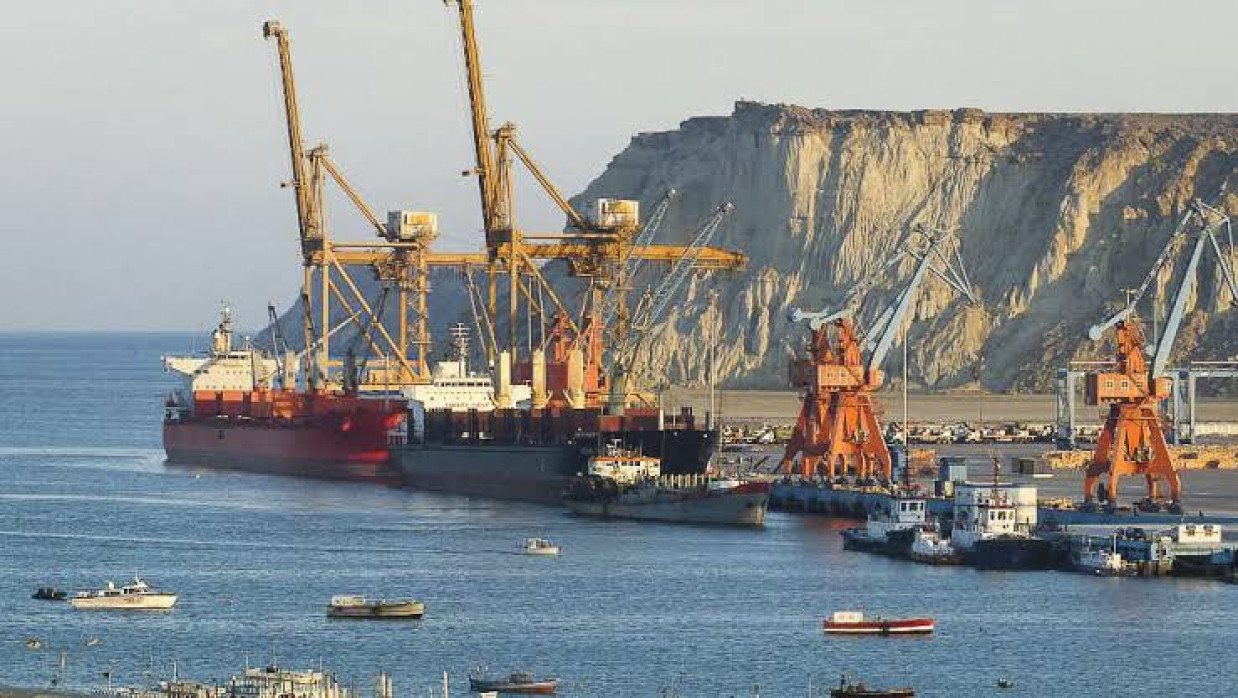
According to a report published in August 2026 by the Business and Human Rights Centre, the local communities, fishermen, and experts reported that development of Gwadar port by China Overseas Port Holding Company Pakistan has resulted in serious ecological damages and social impacts. The construction of the port and its infrastructures has changed coastal and marine ecosystems, resulting in habitat loss and biodiversity decrease. The people of the area claimed that they had no real participation in the decision-making process, mitigation measures, and environmental impact assessment. It is also said that the project affected the traditional fishing grounds of the local fishermen and that access to the sea was limited due to the Eastbay Expressway construction. It was reported that this led to decreasing catches and incomes, forcing fishermen to search for another, less stable means of living. The construction of new roads destroyed old drainage systems, leading to water stagnation in some areas. The company didn’t answer any questions in regards to the Center’s inquiry.
The present study's empirical groundwork is provided by these results. The paper discusses the impact of the environmental pressures as a result of the large-scale project of the China-Pakistan Economic Corridor (CPEC) on issues of human security and geopolitical struggles in Balochistan. The argument for Gwadar Port serving as an environmental-security threat multiplier is supported by the work of the authors Notezai (2026), Dad (2025), Butt (2025), Anees (2024), and Khan (2026). The interaction of vulnerable coastal ecosystems, historic local grievances, and strategic and commercial objectives develop risks that challenge the viability of the communities and the corridor as a whole. The purpose of this analysis is to place the Gwadar issue in the context of environmental security, which implies that ecological change being an important factor of fuelling social tensions, undermining legitimacy, etc.
Background: From Fishing Harbour to Strategic Maritime Node
Gwadar, located on a low-lying area of a peninsula that sits between the Iranian border and the Strait of Hormuz, provided a natural port for the local communities in Balochistan and nearby fishing settlements for centuries. However, Gwadar’s transformation began in earnest when it was selected as the sea port for the China-Pakistan Economic Corridor. This project aims to minimize the dependency on long shipping routes through Strait of Malacca and enable Pakistan to fulfill its vision of becoming a regional commercial hub at the same time offering western China an alternate land route to get to the Arabian Sea. The first part of the port began operating in 2007 and the China Overseas Ports Holding Company gained control of the operations afterward. Later investments led to the building of an airport, the Eastbay Expressway, free-zone facilities and roads. Negotiations regarding CPEC 2.0 have remained focused on future energy and industrial plans. However, the inhabitants of the town (around 90,000 to 100,000 people) have received little additional advantage from the investments. Access to drinking water still poses a challenge and the power supply is not stable at times, part of electricity being procured from Iran. Security measures have been strengthened and access to specific sites such as Koh-i-Batil has been restricted. These security measures have deeply impacted the life in the region.
The collection of communities' grievances from the Business and Human Rights Center demonstrates an occurrence of insufficient participation of the local community and minimal consultation on environmental transformations. This occurrence connects with the general criticism regarding infrastructural development in remote territories, where strategic goals are typically prioritized over inclusive planning and equitable distribution of benefits.
Ecological Damages and Livelihood Impacts
The growth of ports, dredging activities and reclamation along with intensification of shipping operations have changed coastal and marine ecosystems greatly. Habitat destruction has significantly decreased the breeding and feeding areas for important commercial species and endangered sea turtles. Besides, disturbances caused by coastal modifications, silt resuspension and underwater noise are still affecting marine biodiversity in various ways (Notezai, 2026).
Previously used fishing grounds are no longer accessible. As the natural port turned into a port, fishermen lost access to certain fishing territories they had been using for years. The Eastbay Expressway construction blocked more direct ways to the ocean. Moreover, the underpass was inadequate. Fishermen also started to deal with competition of huge fishing vessels that worked all day and night and used the most advanced technologies. Such traditional fishing practices could not resist the competition at all, being much less efficient. Fishermen claim that their ten days of work allow them to catch as much as large industrial trawlers can catch in only one night of fishing operation. Some fishermen had to look for alternative ways of earning money, though the alternatives could be legally unacceptable (Dad, 2025; Notezai, 2026).
Newly constructed roadways have disturbed drainage systems and are responsible for underground flooding and flooding caused by water accumulating where water used to flow to the ocean. Residents contend with saltwater ingress pumping, property destruction, and sporadic displacement. The problems are compounded by the high water table and permeability of geological materials in the region (Butt, 2025; Anees, 2024).
Climate Vulnerability and Corridor-Wide Risks
These local phenomena intensify the pre-existing stressors of climate. The low elevation, coupled with its location, exposes Gwadar to the Arabian Sea from three sides. The effects of the rising sea-level, intrusion of seawater, warming of oceans, and heavy rainfall are already visible in the city. Moreover, due to the location of the city being in the Makran Subduction Zone, it faces the danger of earthquakes, the memories of which can be recalled by the inhabitants of this city. While seawalls help in protecting the structures, they also create problems in terms of the erosion of surrounding beach areas and fishermen’s problems (Anees, 2024; Butt, 2025).
Gwadar is experiencing difficulties that form part of climate variability that impacts the wider CPEC route. The corridor serves as a bridge between glacier-fed mountains in the north and drought-prone southern plains and coastline. The Karakoram Highway had to undergo rerouting following various natural occurrences such as landslides, glacial lake outburst floods, and increased amount of rainfall received during every monsoon season over the years. Many of the major CPEC 2.0 special economic zones were located in flood-prone regions, and the 2022 floods severely impacted many of the districts.
The 1st phase of the project played a key role in increasing the percentage of coal in the energy mix of Pakistan, thereby creating stranded asset issues while the 2nd phase of the project aims at green growth in the region. However, even after the increase in the joint scientific collaboration via the creation of the research centers and holding conferences, no climate-risk screening mechanism is in place and there are no financial resources for the green adaptation projects (Khan, 2026).
Geopolitical Dynamics and Security Challenges
Baloch grievances regarding the misuse of resources, social exclusion, and demographic shifts are aggravated by environmental changes and loss of livelihoods. The feeling of isolation is further intensified due to scarcity of water, lack of gainful employment opportunities in the region, and instances where perceived benefits of development do not go to locals, but instead to outsiders. This alarming feeling is reinforced by the fact that the region is heavily militarized. Signs of terrorism targeting Chinese nationals and CPEC-related initiatives are showing signs of increase, including both the number of attacks and their sophistication. The deterioration of the security situation leads to more and more unfavourable attitudes of Chinese observers toward Pakistan's efforts to combat terrorism. Climate change also leads to the damage of infrastructure, meaning more expenses and time delays for the already challenged program (Khan, 2026; Notezai, 2026). Because of its proximity to the Strait of Hormuz, as well as its position as the southern end of the highway linking western China to the Indian Ocean, Gwadar remains strategically valuable. This area also has climate, ecological and political vulnerabilities. Therefore, the project operates in a geopolitical context marked by competition among superpowers, tensions in the relationship between the center and the periphery of Pakistan and the increase of the impacts of climate change.
Analysis of the Environmental-Security Nexus
The Business and Human Rights Centre's research, supported by the field investigations carried out by Notezai, Dad, Butt, Anees, and Khan, establishes a direct connection between development based on infrastructures and environmental insecurity. The damage done to the environment and lack of access to natural resources harm people's livelihoods. The effect is that the collapse of the livelihoods, along with experience of procedural injustice, leads to loss of legitimacy of the projects among affected communities and widens the gap between grievances. Reactive securitization aggravates the situation as well, resulting in alienation of the local population and higher costs for protecting the external employees and goods.
The practical construction choices and the risk information available at present are always in conflict. The slow transition from scientific collaboration to legal certainties and the carbon-intensive character of Phase 1 investments reveal the weaknesses of governance that cannot be remedied by security alone. That is the reason why environmental strain acts as one of the active factors influencing the safety of the corridor and its long-term geopolitical sustainability instead of being merely a consequence of development.
Conclusion
The allegations of environmental damage, curtailed fishermen's access, malfunctioning drainage infrastructure, lopsided consultations, and lack of corporate accountability, as identified by the Business and Human Rights Centre in 2026 and following the inquiries of Notezai (2026) and others such as Dad (2025), Butt (2025), Anees (2024), and Khan (2026), reveal the existence of wider environmental security challenges at Gwadar Port in the context of CPEC. The consequences of the environmental threat operate in a complex interaction with climate vulnerability, collapse of sustainable livelihood systems, local grievances, and geopolitical rivalry and make up a serious threat multiplier. Environmental pressure should not be treated as a simple by-product of infrastructure development, given its significance for the security and geopolitical viability of the corridor. If the current trends hold, Gwadar will demonstrate that strategic infrastructure may increase vulnerability instead of diminishing it in both climate-exposed and politically contested areas. The decisions made during the planning of CPEC 2.0 will affect the final outcome, determining whether the port becomes a sustainable resource or continues creating environmental and social problems and political tension.
Policy Recommendations
A collaborative action plan that simultaneously tackles environmental, economic and security challenges is needed to address these linked issues. Notezai (2026) and the Business and Human Rights Center (2026) believe that independent environmental and social impact studies should be performed before any future expansion can take place. Free, prior and informed consultation with the affected fishing communities and residents must be included in such studies; findings must be publicized in an accessible manner; and proper grievance procedures must be established. According to Dad (2025) and Notezai (2026), coastal bans on harmful fishing and long-term and continuous access to the sea are essential to restoring livelihoods in fisheries without losing the local communities’ interests.
In order to solve problems connected to drainage and resilience to climate change, it is necessary to make the designs of systems in urban areas reliable by unblocking natural drainage systems that are blocked by highways and employing green solutions adapted to local water management practices (Anees, 2024; Butt, 2025). The new CPEC long-term strategy must include a required climate risk check that covers climate dynamics, extreme precipitation, and resilience to seismic impacts. Furthermore, applied research initiatives have to lead to the emergence of a set of adaptation actions that are funded and verified independently (Khan, 2026). Governance must be more inclusive which is possible through public involvement in decision-making, careful procedures regarding land appropriation and revenue distribution, as well as the alignment of the activities aimed at safety provision and human security improvement related to the provision of water and opportunities for living. This complex approach is the only one that can help in the elimination of threats connected to environmental safety in Gwadar.


0 Comments
LEAVE A COMMENT
Your email address will not be published