
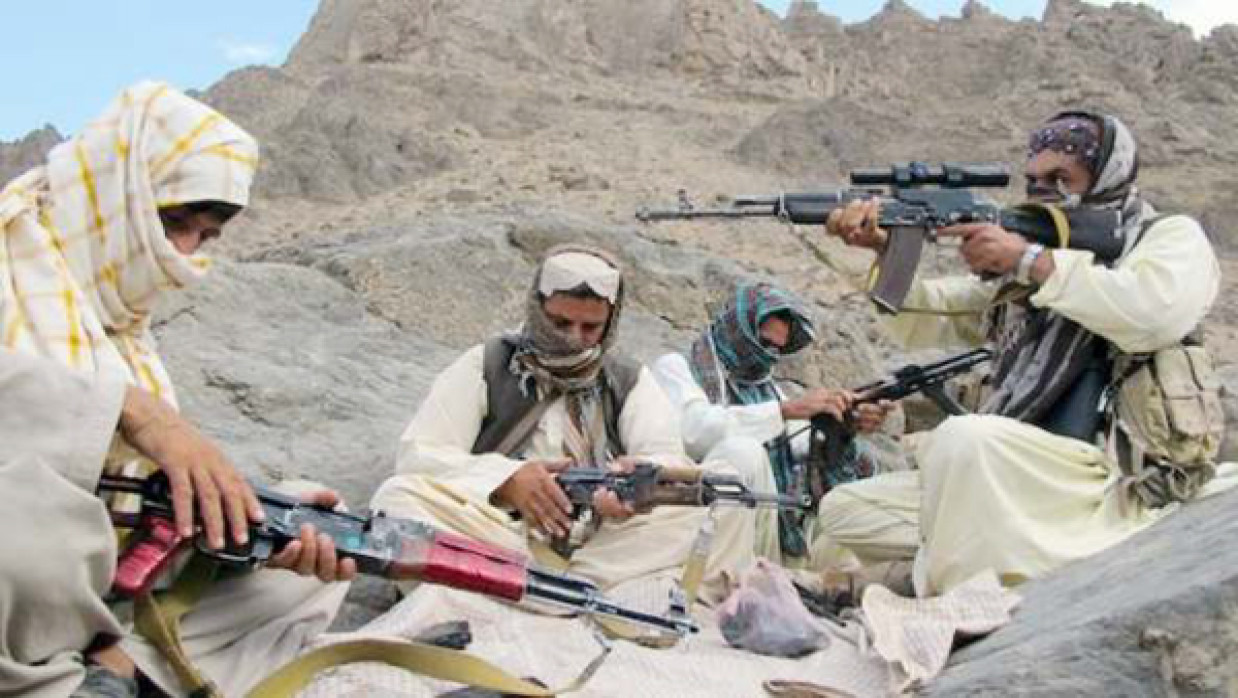
The future of Balochistan is determined by the development of the region, which is why Balochistan’s youth are so important to the conflict. A major security concern in Balochistan is the presence of banned terrorist groups, namely the Balochistan Liberation Army (BLA) and Balochistan Liberation Front (BLF). The relationship between student groups, networks of ideas, and terrorist organizations is complicated and requires in-depth research. It is critical to distinguish between productive and unproductive links in order to stop radicalization waves while also allowing a free space for political action without militant associations.
Organisations such as Baloch Students Organisation-Azad (BSO-Azad), among others, have featured prominently in discussion surrounding the politics of Baloch youth, and the concerns regarding the possible links between certain individuals, organisations and militant outfits are understandable. The issue is one of determining whether certain individuals or networks have exploited the space of student politics, ideology and relationships to encourage activism that has since turned to terrorism – and in doing so, distinguishing between unacceptable terrorist recruitment and legitimate activism.
The reported ties between Allah Nazar Baloch – a former member of BSO-Azad who would later become a prominent leader of the BLF – and Bashir Zaib – a former BSO-Azad chairman who would later become a BLA leader – illustrate the concerns regarding the possible linkages between certain student backgrounds and militant recruiting. However, the experience of individuals such as Zaib and Baloch cannot be extrapolated to suggest that an entire student organisation serves as a recruiting mechanism for any particular militant outfit – an assessment must take into account the decisions made by individuals, organisations and the contexts in which radicalisation occurred.
Other reported cases including those of Sufiyan Kurd, Adnan Faqir and Haroon Rasheed Buzdar have also raised concerns regarding possible recruitment channels. Buzdar, for instance, is reportedly a former Baloch National Movement and BSO-Azad member who later joined the BLA an illustration of the possible mechanisms by which individuals may come to support militancy. Each of these cases warrant further investigation, and the experiences of the individuals in question – as well as their families and organisations must be carefully considered in order to determine factors that may lead certain young Baloch to embrace terrorism.
Universities are another vital aspect of the concerns regarding the radicalisation of Baloch youth. The institutions serve as a meeting ground for young people who are shaping their political, professional and social outlooks, and the exchanges both ideological and personal that occur there can leave a lasting impression. Certain individuals and organisations may seek to take advantage of the perceived naiveté of impressionable young people, promising them that violence is a viable solution to perceived injustices and encouraging them to take up arms. The reported case of Dr. Usman Qazi a Grade-18 Pakistan Studies lecturer at the Balochistan University of Information Technology, Engineering and Management Sciences (BUITEMS) has raised concerns regarding his reported role as a recruiter for the BLA, having reportedly influenced Baloch students to further the organisation’s cause. This has been cited as a potential factor in the November 2024 Quetta railway station bombing an attack that has so far left 26 people dead – but the matter should be investigated with due diligence in order to establish whether the accusations have any basis in truth. If they are found to be accurate, the case serves to highlight the need to prevent such recruitment from occurring in the first place.
The online sphere is yet another arena in the battle against terrorism in Balochistan, as organisations and individuals routinely use the medium to spread propaganda that encourages violence and justifies it as a means of achieving political change. By using easily-accessible content and word-of-mouth marketing, militants and their supporters can reach potentially thousands of impressionable young people, convincing them that targeting civilians, businesses and institutions is an acceptable way to further their cause. The repeated exposure to such rhetoric can lead vulnerable individuals to accept extremist views as the only viable solution to a perceived injustice.
The reported account of Talat Aziz a Punjab University Political Science student who allegedly received a Balochistan government scholarship serves to illustrate the potential consequences of such recruitment. According to the report, Aziz who has since been seen as a supporter of Balochistan independence was convinced to join a BLA training camp by a number of Baloch activists, including those who frequented online forums and discussion boards. There, he is said to have seen preparations for attacks on civilians before ultimately leaving the camp an account that, if proven true, could highlight the role played by online discussions, personal connections and encouragement from like-minded individuals in convincing Aziz and others to consider violence as a means of self-expression. His account, as well as those of others, must be investigated in order to determine whether any recruitment has occurred, and if so, to what extent.
The linkages between student networks, advocacy organisations and outside entities – both in Balochistan and abroad must be carefully examined to ensure that recruiters do not take advantage of young people’s frustrations to manipulate them into recruitment. It is entirely reasonable for organisations to advocate for the rights of Balochistan’s people however, if credible evidence reveals that a particular entity has worked to recruit volunteers, provide resources, or otherwise facilitate terrorism, it must be investigated accordingly. The same should be done for any such activity conducted by organisations and individuals outside Balochistan – regardless of the political stance that they take.
The recruitment of women into militant organisations presents its own unique set of challenges, as organisations may take advantage of familial, romantic and ideological connections to convince women to further their cause. In addition, the involvement of women in militancy may be used as an instrument of propaganda to encourage others to recruit or to hold certain viewpoints – or to justify the targeting of civilians. Women’s involvement in organisations such as the BLA and BLF should not be viewed as a sign of empowerment, but one of coercion the choice to participate in acts of terrorism should always be entirely voluntary, and any individual who makes that choice should be held accountable for their actions. Preventative measures must be made to ensure that women are not coerced into recruitment or violence, and that those who do engage in such acts are brought to justice.
Ultimately, Balochistan’s brightest minds are its greatest strength and the loss of promising young people to organisations such as the BLA and BLF represents a dilution of the region’s potential. Countering such losses requires a multipronged approach that includes investigating credible evidence of recruitment, protecting those who might otherwise be recruited and offering families, universities and organisations the tools that they need to educate young Baloch on the dangers of recruitment and the attractions of legitimate activism. Individuals who disengage from militant organisations should be encouraged to take full advantage of the resources that Balochistan offers or, alternatively, those who wish to pursue a life outside of Balochistan can be provided with a suitable education and employment elsewhere.
Balochistan cannot build a bright future on the foundation of fear and violence its prosperity will only be ensured if the region protects its most promising minds from being convinced or coerced to take up arms against their own people.


0 Comments
LEAVE A COMMENT
Your email address will not be published