
The controversy surrounding Burhan Wani’s legacy has once again brought the Kashmir conflict into the political spotlight. Nearly a decade after his death, a statement by Peoples Democratic Party (PDP) leader Abdul Kabir has reignited debate over political expression, militancy, civilian suffering, and the competing narratives through which Kashmir’s history is interpreted. The episode raises a question that extends beyond the choice of a single word: how should a democracy respond when political speech challenges the state’s official account of a contested conflict?
On October 8, 2026, Kabir described Wani as a “martyr” during a party event in Kishtwar, Jammu and Kashmir. He also questioned reports that BJP leaders had visited Wani’s family and offered compensation following his death. When challenged over his terminology, Kabir defended his right to express a personal opinion. He was subsequently arrested, according to media reports, prompting renewed debate over the limits of political expression in the region.
The significance of this episode lies partly in the competing meanings attached to Wani’s name. Indian authorities identified him as a commander of Hizbul Mujahideen, an armed militant organisation. For many supporters, however, his image became associated with resistance to Indian rule in Kashmir. His use of social media helped him acquire prominence among sections of Kashmiri youth, turning his death into an event with consequences far beyond the immediate security encounter in which he was killed.
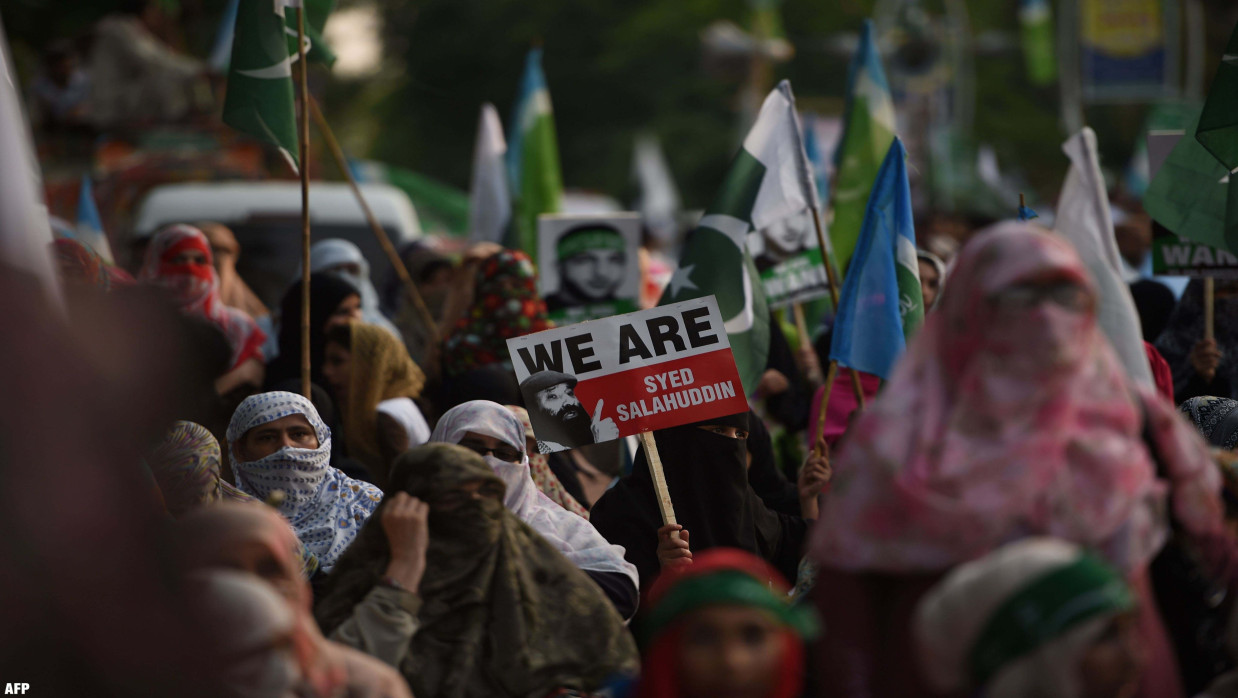
On July 8, 2016, Wani was killed in an encounter with Indian security forces in south Kashmir’s Anantnag district. His death triggered widespread protests across the Kashmir Valley, followed by prolonged unrest, restrictions on movement, and clashes between demonstrators and security personnel. The demonstrations also exposed the depth of political alienation among sections of the population and the difficulty of addressing Kashmir’s grievances through security measures alone.
The state’s response attracted substantial international scrutiny. Human Rights Watch called for an investigation into the use of lethal force during the unrest, emphasising that stone-throwing did not give security forces unrestricted authority to use force against demonstrators. The organisation stressed that law enforcement must employ force proportionately and use lethal force only when absolutely necessary to protect life.
The use of pellet-firing shotguns became particularly contentious because of the severe injuries sustained by protesters, including damage to eyesight. Contemporary reporting documented the treatment of injured civilians and concerns raised by medical professionals and human rights organisations. These incidents intensified public anger and contributed to the broader debate over accountability, crowd control, and the protection of civilian rights in Kashmir.
Nevertheless, the human cost of the unrest should not obscure the circumstances surrounding Wani himself. He was an armed militant commander, and his death occurred during an encounter with security forces. Calling him a martyr is a political and moral interpretation, not a universally accepted description of the event. Equally, the state’s designation of an individual as a militant does not eliminate the need to examine the conduct of security forces, the treatment of civilians, or the political conditions that sustain conflict.
This distinction is essential to any serious discussion of Kashmir. Recognising the suffering of civilians does not require endorsing militancy, just as acknowledging the security challenges faced by the state does not justify excessive or indiscriminate force. A credible approach must recognise both the consequences of armed violence and the obligations of authorities to protect life, uphold due process, and provide meaningful avenues for peaceful political expression.
Kabir’s arrest adds another dimension to the controversy. Democracies routinely confront difficult questions about the boundaries between free expression, public order, and the glorification of armed violence. The appropriate response depends on the applicable law, the precise circumstances of the statement, and whether the legal threshold for any offence has been met. Arrest alone does not establish guilt, and political controversy should not substitute for a transparent legal process. Authorities must demonstrate the legal basis for coercive action and ensure that due process is respected.
Ultimately, Kashmir’s political future cannot be understood solely through competing labels attached to individuals from its conflict. The persistence of such controversies reflects unresolved disagreements over political identity, representation, security, and the legitimacy of competing historical narratives. Suppressing debate may temporarily limit public controversy, but it cannot resolve the grievances underlying it.
The lasting lesson of the 2016 unrest is that security measures alone cannot produce durable political stability. Accountability for abuses, protection of civilian rights, meaningful political engagement, and credible channels for peaceful dissent remain essential. Kashmir’s history will continue to be interpreted differently by the state, political parties, and sections of the population. What matters is that these disagreements are addressed through evidence, lawful processes, and political dialogue rather than coercion or the glorification of violence. A sustainable future requires not the erasure of competing memories, but an environment in which human rights, public accountability, and peaceful political expression are protected.


0 Comments
LEAVE A COMMENT
Your email address will not be published