
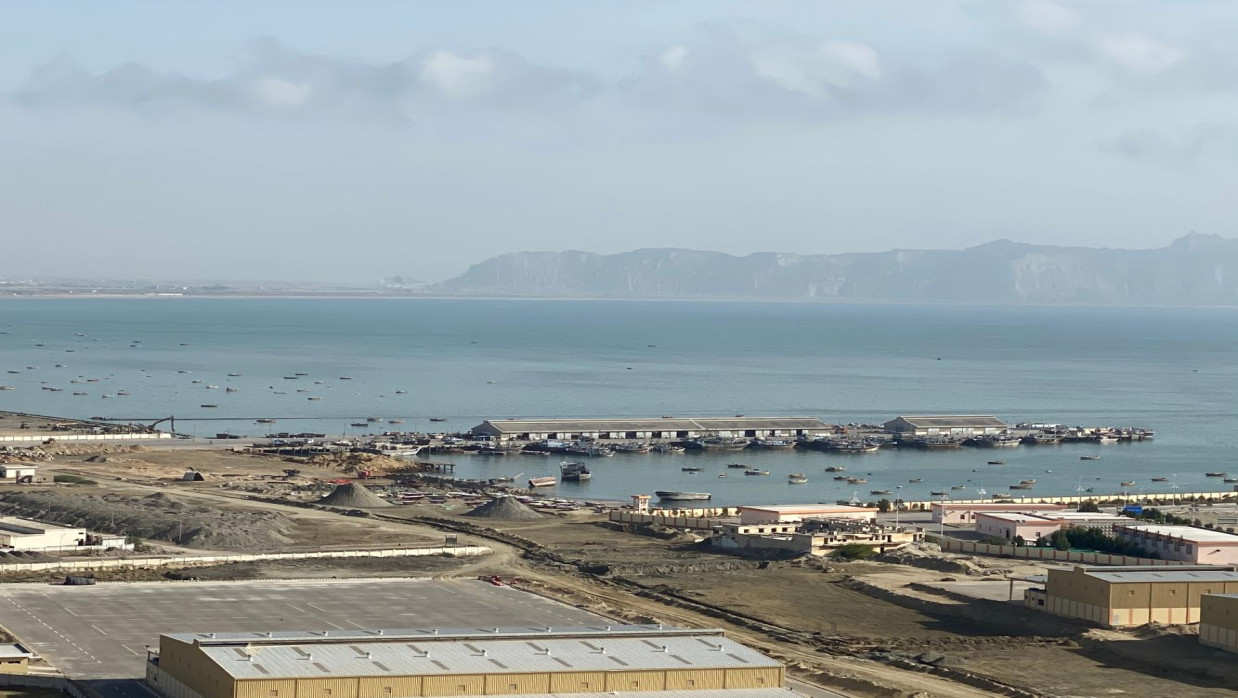
Pakistan continues to take practical steps towards enhancing their positioning of Gwadar Port as a regional gate to facilitate commercial exchange, improve transit facilities and tackle issues that hinder cargo transportation. The effort demonstrates Islamabad’s desire to turn Gwadar into an increasingly involved trading centre, connecting with other regional counterparts and contributing significantly to the national economy. By boosting the exchange with Pakistan’s neighbours, and particularly by addressing the transit issues with Iran, Islamabad can facilitate increased commercial activity, attract private sector engagement and enhance the city’s overall economic contributions.
On October 8, 2026, government agencies, customs officials and private business owners have held a meeting on the matter of boosting land-based trade through Gwadar. Taking place at the Directorate General of Transit Trade, Customs House Karachi, the meeting was chaired by Gwadar Port Chairman Noor-ul-Haq Baloch and saw the participation of Pakistan Customs, Gwadar Port Authority, chambers of commerce, traders and clearing agents. The participants of the meeting have discussed a number of measures for facilitating Iranian transit trade and improving TIR facilities, as well as ways of addressing existing commercial and transit bottlenecks in light of the region’s economic development.
The meeting demonstrated the necessity of developing coordinated policies, as well as the need for inter-agency cooperation in terms of enabling Gwadar to become a major commercial centre. The participants have planned a following meeting in Gwadar to receive additional recommendations from the government and private business owners, which can be instrumental in addressing existing issues and identifying the main principles for boosting transit trade.
Improving Transit Procedures and Facilitate Commerce
Efficient transit procedures are of utmost importance for any major trading hub, which typically involves multiple stages of transportation management. Despite the potential advantages of having a strategically located deep-water port, additional challenges stemming from documentation, administrative delays, standardization of procedures and lack of efficient coordination can add to the overall cost of transportation and hinder businesses’ interest in utilizing the facilities.
In particular, the emphasis on facilitating Iranian trade, which is currently hindered by a number of existing issues, demonstrated the significance of Islamabad’s interest in facilitating cross-border exchange. Considering the closeness of Iran, enhanced commercial ties with Islamabad’s neighbour can generate additional benefits for businesses, as well as provide shippers with an alternative to other regional transit routes and hubs. Enhanced coordination between customs and port authorities, as well as commercial stakeholders, can help address some of the current concerns and promote more efficient operations.
Similarly, the improvement of TIR facilities is of significant importance, particularly with regard to the establishment of smoother procedures for the international transit of goods. Being an international agreement concerning the simplification of customs procedures for commercial vehicles, TIR Convention, when fully utilized and leveraged, can provide additional benefits for shippers that seek to use Gwadar Port as a point of departure for their goods.
As for Gwadar itself, the establishment of smoother procedures will enable smoother connections between transport infrastructure and local customs, which are likely to alleviate some of the current concerns and contribute to a more competitive position vis-à-vis other regional hub.
The Strategic Positioning of Gwadar
Situated at the eastern coast of the Arabian Sea and at the opening of the Strait of Hormuz, the Gwadar Port is strategically located to become a major distribution hub for Pakistan. The very position of the territory has the potential to contribute significantly to the commercial growth of the region, as well as serve as a bridge between local markets and those of Pakistan’s neighbours. Nevertheless, despite the potential advantages of its positioning, Gwadar is unlikely to succeed as a major commercial hub solely on its geographic coordinates. With multiple other potential hubs and transit routes, businesses will remain to select between distribution options on the basis of efficiency, cost and other factors. In order for Gwadar to be competitive, businesses must be certain in terms of efficient transportation of goods from the seaport to other destinations, as well as customs inspections and other issues.
Enhanced land-based trade has the potential to become a major catalyst for the transformation of Gwadar into a major trading centre. By establishing additional commercial opportunities beyond maritime shipping, the expanded use of roads and transit facilities can enable Gwadar to provide businesses with multiple options for international shipping. Furthermore, enhanced coordination between private business owners and government agencies can contribute to the establishment of additional commercial and logistic services that supplement the transportation of goods.
In light of Pakistan’s economic development and commercial interests, the enhanced connectivity provided by Gwadar is of significant importance for the country. The increased use of the regional infrastructure can enhance the competitiveness of local traders, as well as provide businesses with an alternative to other regional trade routes. Nevertheless, the success of such initiatives will remain dependent on the actual volumes of cargo transported through the local infrastructure, as well as the expenses incurred.
Commercial Opportunities For Balochistan
The development and enhanced commercialization of Gwadar can provide significant economic opportunities for the region, particularly in view of its current developmental needs. In particular, the anticipated increase in commercial activity can lead to the creation of new job opportunities, as well as additional investment in the local infrastructure. Particularly, businesses within Balochistan can benefit from the growing demand for transport and logistics services, both as shippers and as suppliers to those companies.
Furthermore, local companies can provide businesses with a wide range of associated logistic services, ranging from transportation and warehousing to customs inspections. With the increased competition for services at the local level and enhanced opportunities for businesses to enter the market, the development of Gwadar can significantly contribute to the economic growth of Balochistan. Nevertheless, in order to capitalize on the emerging opportunities, the local business community must have access to the necessary opportunities and resources.
In this regard, the inter-agency coordination and cooperation with private business owners will remain of paramount importance. By identifying and addressing the key obstacles, as well as facilitating the necessary infrastructure developments, government agencies can empower local businesses and traders to engage in commerce and generate economic growth.
Moving Towards Greater Commercialization Of Gwadar
The efforts made by Pakistan to facilitate increased land-based trade through Gwadar can be seen as a step towards the enhanced commercialization of the regional infrastructure. The recent meeting, which gathered government agencies, local port authority and private business owners, demonstrated the recognition of the current issues, as well as the willingness of multiple stakeholders to improve the situation and promote the development of Gwadar. The next crucial step will be the actual implementation of the suggested initiatives, which will require enhanced inter-agency coordination, efficient procedures and continued support of the private business community.
In particular, the enhanced procedures and utilization of existing infrastructure can facilitate smoother transportation with fewer delays, as well as contribute to the reduction of costs, which will ultimately encourage businesses to utilize Gwadar’s transportation infrastructure. By monitoring and analyzing the volumes of cargo, processing rates, costs incurred and the private business engagement, Pakistan can build upon the already-made improvements and continue to enhance the efficiency of Gwadar.


0 Comments
LEAVE A COMMENT
Your email address will not be published