

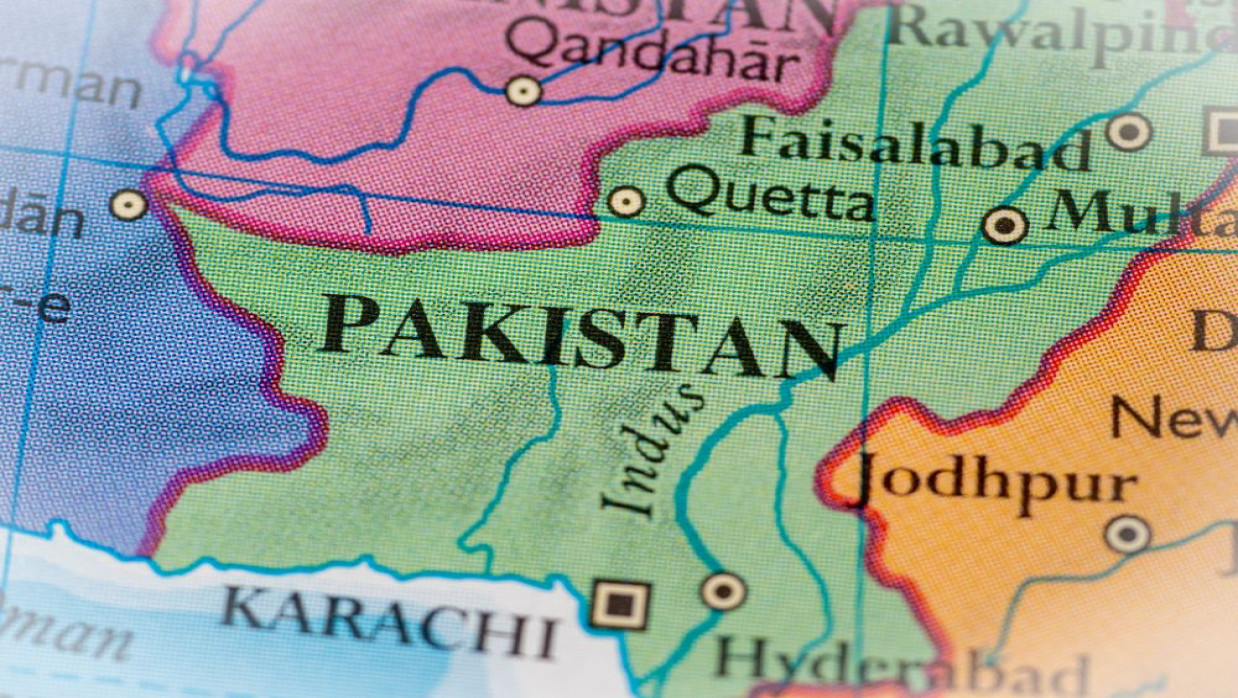
According to the reports, Interior Minister Mohsin Naqvi is tossing around estimates in the vicinity of fifteen to thirty new provinces. The Planning Minister Ahsan Iqbal initially made the demand first in June for the creation of as many as fifteen provinces. A senior official of the government who told Dawn about the fact that this discussion is a precursor to a Twenty-Eighth Constitutional Amendment. Both of these men exhibit the attitude of redrawing the map, apparently thinking of it as an issue of political will which ought to be verified before finalizing the number.
India provides the latest clear case in point. It was in June 2014 that Telangana was separated from Andhra Pradesh after a three-decade long struggle for identity, carried out according to a national law specifying how the two states should divide their property, liabilities, and human resources. Among other arrangements, Hyderabad served as a common capital of both states during the next ten years until June 2024. And even after that the process of separation is ongoing. Such properties as 1.4 lakh crore rupees – about $17 billion – have never been divided since then, with 91% of the real estate and many movable properties found in Hyderabad. In 2022, Andhra Pradesh brought the case to the Supreme Court. Nearly 9,500 employees are contacted to work separately in both states, belonging to the two civil services based on their residency. The two states are still dealing with such simple issues as distribution of the Krishna river water, and Andhra Pradesh is still building its new capital since it has lost the center of taxes and IT industry to Telangana. India has its constitutional process of state formation in place and has the federal bureaucracy functional, yet it took 10 years to settle the issues regarding the capital.
Pakistan has attempted this shortcut in a limited way in the past. For example, in 1955, the One Unit scheme brought together the provinces of Pakistan west of the river Indus in the name of efficiency and equality. Instead of allaying regional resentment, the scheme resulted in concentration of power and led to the resentment of the regions themselves. The scheme was abolished 15 years later and resulted in the separation of East Pakistan.
Consider the question differently. Rather than focusing on how many provinces Pakistan should have, we should ask who is responsible for budget decisions. Who provides the services and who is accountable in the case of a teacher being absent from school or in the case of flooding.
There is confusion regarding the situation. Punjab has made some advances including passing the Punjab Local Government Act, 2025, completing the delimitation process, allocating a budget of Rs12.52 billion for the elections and the Election Commission giving nods to conduct polls between December 15, 2026, and January 15, 2027. Sindh has already elected Karachi mayor Murtaza Wahab, who took office in June 2023, but it is a cautionary tale. Murtaza Wahab won by thirteen votes, 173 to 160, while Jamaat-e-Islami claimed that thirty-one members of union councils opposed to the ruling party were denied the right to vote, but the party denied the claim. No court has resolved the controversy. Simply scheduling them does not guarantee that they will be conducted. Khyber Pakhtunkhwa has been run by the same party since 2013 while Punjab has been ruled for more than thirty years by a party and hence no local elections would be much different to the provincial elections.
Pakistan has experienced real devolution, although it was only short-lived. In 2001, General Pervez Musharraf’s local government strategy provided elected district nazims with real budgets and instituted a formal system whereby local government bureaucrats became subordinate to elected local authorities for the very first time. The plan was put in place by an unelected regime which had no consent of the provincial assemblies, and this resulted in opposition from many political parties and the local nationalist movements in Sindh, Balochistan, and what is now Khyber Pakhtunkhwa. The plan effectively came to an end in 2008 following the return of civilian administration to the provinces; there was nothing in the law that could have forced civilian administrations to keep the plan in place.
The principles applied here have been used previously. The Eighteenth Amendment of the Constitution of Pakistan (1973) and the award made to provinces under the NFC Award in 2010 made it possible for provinces to claim 57.5 percent of federal divisible pool, whereas Article 140A also states that all the provinces must have a local government system with real funding – this requirement, however, has always been considered optional. The last provincial finance commission award in Sindh was made in 2007-09 while Punjab's last award took place in 2016, but Pakistan Institute of Development Economics has noticed a drop in local government shares of provincial transfers from 28 percent in Punjab and 15.7 percent in Sindh in 2012 to 19.1 percent in Punjab and 5.8 percent in Sindh respectively in 2026.
The review made by the World Bank in July 2026 goes down the same route nationally: the local government's share of total public expenditures reduced from approximately 10 percent in 2005 to less than 5 percent in 2024, and more than 80 percent of the provincial budget in FY23 went to recurrent expenditures, not allowing it to finance schools or clinics. According to the same report, a new NFC Award is being developed, which is a real opportunity to write a local funding guarantee in the next allocation.
The Punjab province's budget for 2026-27 contains Rs803.88 billion that the local government will receive as part of its PFC award. The December elections will show whether the money actually goes to the elected councils rather than to the administrators. The case of Rawalpindi and many other cities in Punjab, which is very well acquainted with the phenomenon of the last term of local bodies. A line in the budget does not constitute devolution until the officials responsible for spending it have been elected by the people.
The same test can be utilized in Karachi and Faisalabad. It is frequently said that Karachi produces most of the federal tax income: estimates may vary from around 25% to more than 50% depending on what is included in it. One must be cautioned against a single number. It is indisputable that Karachi’s port and industry, alongside Faisalabad's textile mills which alone add around 5 billion dollars to the GDP. It makes both cities significant on the national level and need a transparent equalisation formula rather than provinces hoarding the income and distributing it before any rules are in place.
Naqvi points to New York's Zohran Mamdani and London's Sadiq Khan as examples of how elected mayors have the knack for running a city better than a distant capital. Both men manage cities that are invested with budgets and police powers that are not available to any Pakistani mayor for now. The actual concern that Naqvi raises with his analysis is whether any Pakistani mayor would be granted that authority or only the title, and Telangana throws into question even a straightforward answer taking years.
The points above do not mean that there is no case for provinces; and the reasoning behind them is not entirely cynical. The distance of South Punjab from Lahore is real, the geography of Balochistan does not allow for uniform governance, and it is possible that Karachi would need a proper metropolitan authority. The emergence of new provinces could also break the monopoly of the two major parties in Punjab and Sindh and allow other politicians not tied to either of the parties to run the provinces. This could be seen as a potential positive outcome of the development, rather than a reason for dismissing it. This still does not help to address the question that the argument has not really responded to. A new province still needs someone who can provide drinking water, electricity, and staff the schools, and a new chief minister or chief secretary in the new provincial capital is justly to fail in this regard as their counterparts in Lahore or Karachi, does it? The new map of the provinces only changes the office holders.
The reason behind this notion is that the making of provinces should ideally follow both the fiscal process and the constitutional process, not circumvent them. According to Article 239, the amendment of the boundaries of a province should have a two-thirds majority vote in both Houses of Parliament and a two-thirds majority vote of the provincial assembly. A referendum under Article 48(6) can start only after the joint sitting is held and cannot be a substitute to this process. It seems that the power centers in Pakistan are treating the current efforts the same way, i.e., as another top-down experiment in the name of reforms. The previous two experiments of this kind, One Unit and the local government plan of Musharraf, were also promoted in the same way and both failed once the individuals behind their creation lost power. The country that continues skipping the process should not expect different results. Even the vice president of the PML-N, Hamza Shehbaz remarked that much of the current demands could have been avoided if the government had established empowered local councils initially.
It is crucial to perform steps in sequence. The local elections that are already scheduled must begin with Punjab in December, and be made fair and properly policed so that there are no disputed results such as in Karachi. Secondly, more importantly, the financial situation must be fixed: guarantee council tenure and provincial revenue share based on a formula through the next NFC award so that it is a law and not subject to provincial judgments. This brings us to point three where parliament must consider new boundaries on the basis of financial and demographic facts and decide beforehand new divisions of revenue, debt, workforce and water. Telangana needed a decade to determine its capital city based on a working federal system. A country that is planning thirty new units out of order is not reforming but repeating the process over again expecting different outcomes.

0 Comments
LEAVE A COMMENT
Your email address will not be published