

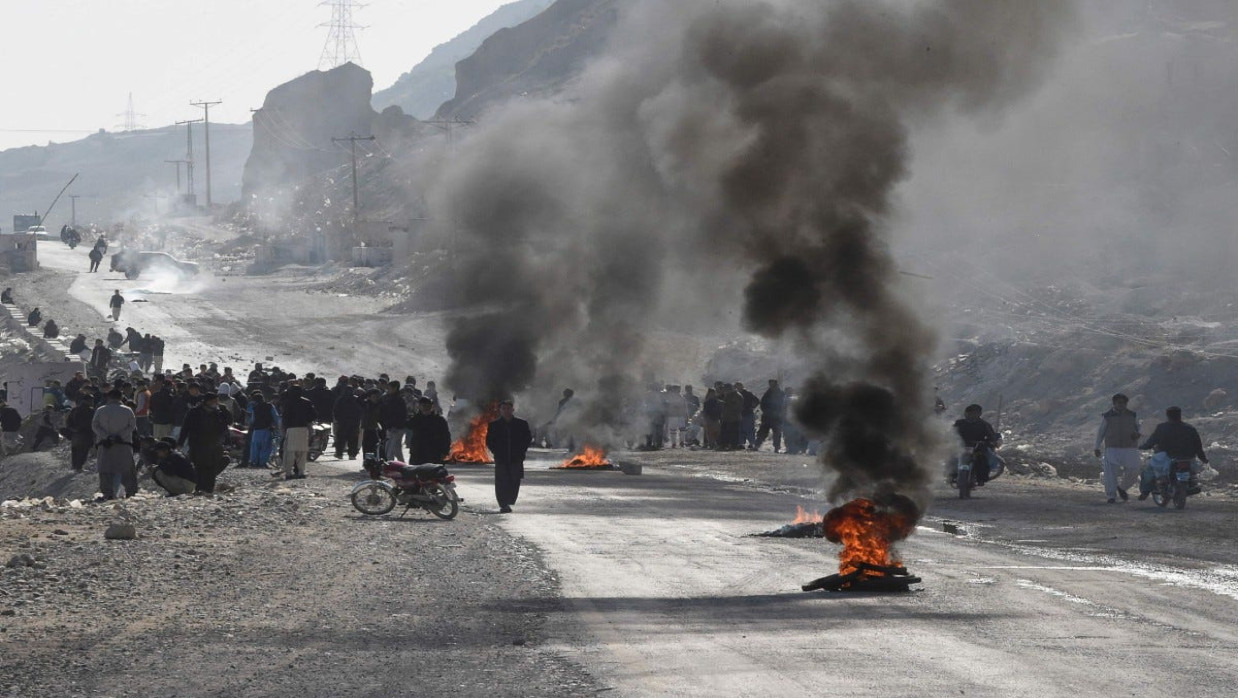
Pakistan’s western frontier is increasingly becoming a multi-domain security theatre. The latest developments—eight drones reportedly entering Pakistani airspace from Afghanistan and being intercepted, an attempted militant infiltration in the Kurram sector, and the killing of 19 militants in separate Balochistan operations—illustrate how the threat environment is evolving beyond conventional cross-border infiltration. It now combines kinetic attacks, unmanned aerial systems, intelligence-based operations and contested border space.
On September 23, Pakistani security sources reported that eight drones entering from Afghanistan were brought down near Torkham and Kohat, with four intercepted in each area. The sources said Pakistan’s air-defence network detected and engaged the drones, while wreckage was being recovered. These claims have been reported by Dawn, although independent verification of the drones’ origin and intended targets remains unavailable.
Whatever the ultimate attribution, the incident demonstrates an important shift in the character of the western-frontier challenge. The border is no longer merely a line across which militants may attempt infiltration. It is becoming a contested battlespace involving surveillance, drones, artillery, intelligence operations and counter-infiltration measures. The security implications are consequently broader than those associated with traditional militant movement across the frontier.
The drone episode also occurred against an already deteriorating security environment. Pakistani authorities had recently reported an attempted infiltration in the Kurram sector, while Pakistan subsequently conducted airstrikes against alleged militant targets inside Afghanistan. Reuters reported that Pakistan said its September 21 strikes killed 28 militants, while Afghan authorities and the UN reported civilian deaths. The competing accounts underline the increasingly dangerous cycle in which militant attacks, cross-border accusations and military responses reinforce one another.
The central strategic problem is therefore escalation management. Once cross-border militancy begins to generate aerial and ground responses, the possibility of miscalculation increases. A drone entering Pakistani airspace may be interpreted as reconnaissance, an attack platform or part of a broader operation. Similarly, a Pakistani strike against a suspected militant position can be interpreted by Kabul as an attack on Afghan sovereignty. Without effective deconfliction mechanisms, individual incidents can rapidly become catalysts for wider confrontation.
At the same time, Pakistan is confronting a separate but interconnected militant challenge in Balochistan. According to ISPR, security forces killed 13 militants during a clearance operation in Shaban, Quetta, after intelligence agencies identified multiple hideouts. Six additional militants were reportedly killed in separate operations in Kech and Quetta West on September 22 and 23. Weapons and ammunition were recovered, while Subedar Muhammad Jamil, 39, was killed during one of the engagements.
The significance of these operations lies in the emphasis on intelligence-led counterterrorism. Rather than waiting for militants to initiate attacks, intelligence-based operations seek to identify hideouts, disrupt networks and neutralise threats before they can translate into attacks against civilians or security installations. This represents the logic of a proactive counterterrorism posture.
Yet tactical successes should not obscure the strategic challenge. Killing militants can disrupt an organisation, but durable counterterrorism requires dismantling the ecosystem that sustains militant activity: recruitment networks, financing, weapons supply, facilitators, safe havens and propaganda infrastructure. Otherwise, attrition may degrade one cell while another regenerates elsewhere.
The western frontier consequently requires a layered security architecture. Air defence must address drones and other aerial threats; border forces must prevent infiltration; intelligence agencies must identify militant networks; and counterterrorism forces must conduct precision operations against established cells. Diplomatic engagement remains equally important because military pressure alone cannot permanently stabilise a frontier shared with a neighbouring state.
The Balochistan operations also demonstrate that Pakistan's security challenge is geographically dispersed. The same week has witnessed pressure in Khyber Pakhtunkhwa and along the Afghan frontier while security forces have been conducting operations in Balochistan. This creates a two-theatre counterterrorism burden, requiring sustained intelligence, manpower and logistical resources.
The immediate priority should therefore be to prevent tactical incidents from developing into an uncontrolled cycle of escalation. Pakistan needs robust border surveillance, integrated air defence, intelligence fusion and carefully calibrated responses. At the same time, allegations regarding external sponsorship of militant organisations should be supported by evidence that can withstand international scrutiny.
The latest developments send a clear strategic message: Pakistan's western security environment is becoming increasingly hybrid and multidimensional. The threat is no longer confined to militants crossing a border at night. It encompasses drones in the air, armed networks on the ground and increasingly complex interactions between domestic terrorism and cross-border security tensions. For Pakistan, the challenge now is to convert tactical interception and counterterrorism successes into sustainable deterrence and border stability—without allowing the western frontier to become an arena of perpetual escalation.


0 Comments
LEAVE A COMMENT
Your email address will not be published