

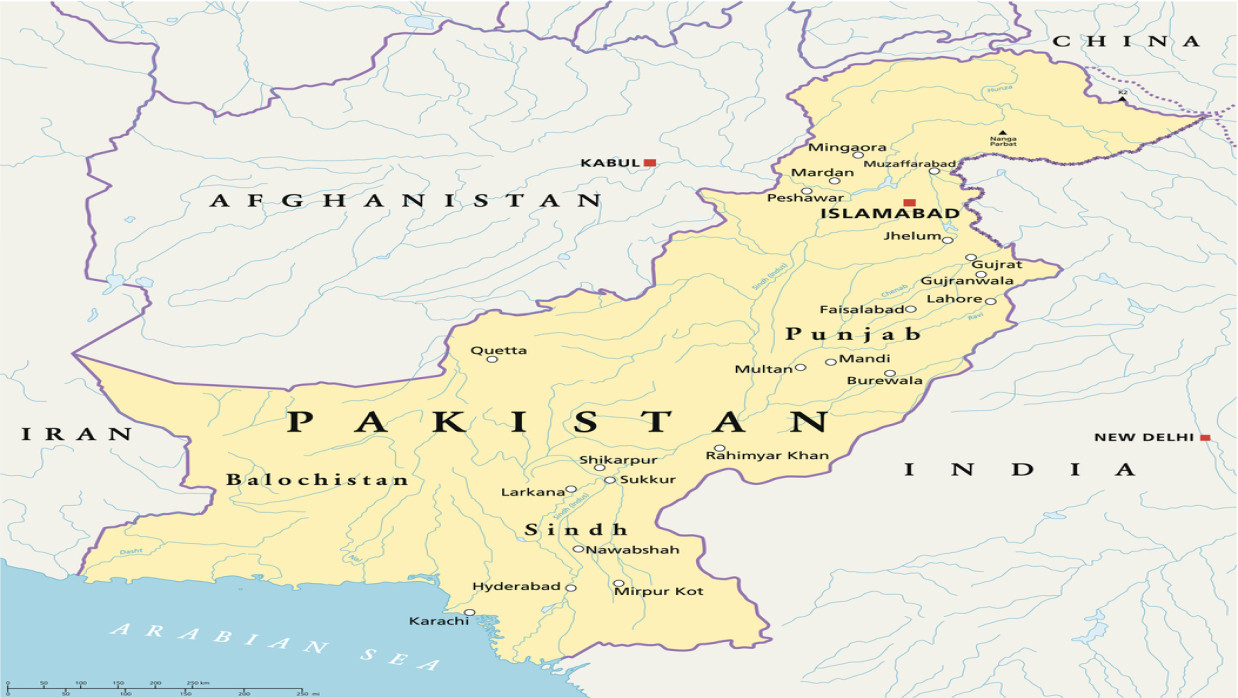
In the talk about security issues, Balochistan is often only recognized through militancy and political instability. It kinda becomes a tight little lens that does not quite factor in a bigger change that is happening right now in the province, like the state institutions gradually getting stronger. You can see it in the reform of the police, border guards, customs, and financial crime investigators—those things point toward a movement away from quick, short-term security measures, and more toward a broader, institutional path by the state. The whole point is to shape competent, accountable and professional bodies, not only to deal with violence after it already happens, but also to build institutions that reduce violence in advance, uphold the law, and make the state’s authority real in every district.
A major institutional change has been to incorporate Levies-administered areas into the regular policing system, basically. Traditionally, Balochistan’s administration was built on the concept of two different systems, where the rural parts of the province were being administered by the Levies Force while the urban areas were handled by the police. The Levies system was rooted in a traditional administrative approach, but it also produced inconsistent systems for inquiry, prosecution, chain of command, and professional standards. The Levies-to-Police merger should give an opening to build a more coherent law enforcement arrangement, with more exact responsibilities and clearer oversight too, along with standardized operational procedures.
But the institutional merger cannot be just a matter of identical uniforms, administrative labels. Incorporated staff need training that covers criminal investigation, evidence handling, forensic skills, plus human rights and community engagement. Police stations should be equipped with communication tools, a protected data network, investigation devices, and a dependable mode of transport. Promotions and appointments have to be based on merit, on real performance, not on informal influence. Numbers can’t create a professional police force on their own. The real ingredients are discipline, the assurance that institutions actually stick, and technical ability, together with public trust.
The unique geographical location of Balochistan really has to be considered in modern policing practices, otherwise things just don’t line up right. There are operational challenges there that are not exactly like what police deal with in densely populated provinces, mainly because of huge distances, harsh terrain, a dispersed population and limited road access. Still, these limitations can be reduced or even overcome with the right kind of technology. For example, digital crime databases, geographic information systems, drone surveillance, and biometric identification, plus integrated emergency response platforms, can be very helpful for the state when it comes to tracking criminal networks and responding to incidents. And intelligence sharing between provincial police, federal agencies, customs, and border forces should become routine, not something that happens on an ad hoc basis every once in a while.
Border management is equally important, because Balochistan has long and sensitive international boundaries. If border routes are weakly supervised or poorly monitored, they can be exploited to smuggle weapons into and out of the country, move drugs, assist people to travel illegally between countries, traffic human beings, and even move militant networks. In practice, these criminal activities rarely exist in clean isolation from one another. Different criminal or terror organizations often keep using the same transit corridors, the same facilitators and similar financial conduits. So, border security should be treated as a core national responsibility, not just a local or isolated task for one unit within security and law enforcement.
Checkpoints are not the only things you need for modern border management. There is also surveillance equipment, electronic records, biometric screening, some level of mobile patrolling and the sharing of information in real time, as it happens. The legal border crossing should be reinforced, so legitimate trade and travel can go on without hindrance, and the illegal routes can be systematically cut. Effective border control should not feel like a punishment for communities, whose livelihoods are affected by legal trade. Instead, the state has to put in place regulated trade facilities, markets, transport options, and employment possibilities, so criminal networks can’t really exploit economic hardship.
Customs enforcement fits into this approach as well. Smuggling damages the formal economy, it takes away government revenue, and it gives organized crime networks more political and financial muscle. Fuel, vehicle, arms, drugs, and consumer goods trafficking can create parallel economies, which harms the proper functioning of the legal economy and also reduces the authority of the state. Digital declarations, cargo tracking, risk-based inspections and better internal accountability, as part of Customs modernization, can help reduce chances for corruption and strengthen enforcement. Law enforcement should also happen through joint operations between different agencies (customs, police, border forces and financial investigators), and this effort should be aimed not just at small traders and transporters, but really at dismantling the big smuggling networks.
Maybe the biggest new angle in Balochistan’s security reforms is how hard it is to deal with financial crime, but honestly that thread runs through everything else too. Militancy, trafficking, and organized crime don’t really last long without money. Criminal organisations need financial networks, not only to recruit people but also to acquire weapons, to shuttle individuals, and to pay facilitators as well as to cover all the bills that keep the whole machinery moving. Law-enforcement agencies can hit these systems using anti-money laundering measures, anti-illegal remittance actions, anti-suspicious property steps and even anti-front companies work, so the violent networks are weakened right at the center.
So financial investigations have to be part of nearly every major case involving terrorism, trafficking, and smuggling. Yes, it remains important to arrest field operatives, but that alone falls short, because if financiers, facilitators and beneficiaries are left in place, the cycle simply restarts. Provincial investigators should get specialized training covering bank records, financial transactions, asset tracing, and financial intelligence, the practical stuff that helps them connect the dots. There’s also a clear need to coordinate further with banks, regulatory bodies, and federal financial-monitoring institutions. Any assets that come from criminal activity should be tracked quickly, seized, and then kept in an open, accountable manner through the proper legal process.
There is this need to deal with human trafficking, like urgently, because it’s not something you can just leave for later. In the sensitive zones of Balochistan, because of where it sits geographically, people get pulled into criminal trafficking routes that move migrants who are basically in dire need of a better life. During those perilous journeys, the same networks extort and misuse, they force people into labour, and in some cases, they even kill individuals. A victim-focused method, where trafficked people are only seen as criminals, is not really working, it ignores how the real criminal machinery operates and how it keeps facilitating the whole trafficking process. So, the law enforcement attention should instead go toward recruiters, transport organizers, document falsifiers, corrupt facilitators, and the financial operators who profit from other people’s suffering.
More than anything, the success of these reforms will be measured by the everyday life of ordinary people. Citizens should be able to feel that police stations are reachable; that courts are running solid and reliable investigations; that borders are being managed fairly and without too much loophole space; and that criminal influence keeps shrinking steadily. Security institutions have to follow the law and take responsibility, because public trust is one of the most solid pillars for a state’s authority.
No real need for a temporary security campaign in Balochistan, because what it actually needs are strong, steady institutions. These should help enforce the rule of law, protect communities, and nudge economic growth forward, not just handle crises for a short time. Modernising policing, achieving full administrative integration, tightening the borders and disrupting criminal financing are among the steps that point the way.
The state can replace scattered reactions with something like a coherent system of governance, by putting money into professional capacity, upgrading technology, strengthening accountability, and improving inter-agency cooperation. If Balochistan is going to be secure, it won’t show up only as a battle won against armed groups. It will also come through building institutions that are more formidable, more trustworthy and more effective than the groups that oppose them, and keep threatening them.


0 Comments
LEAVE A COMMENT
Your email address will not be published