

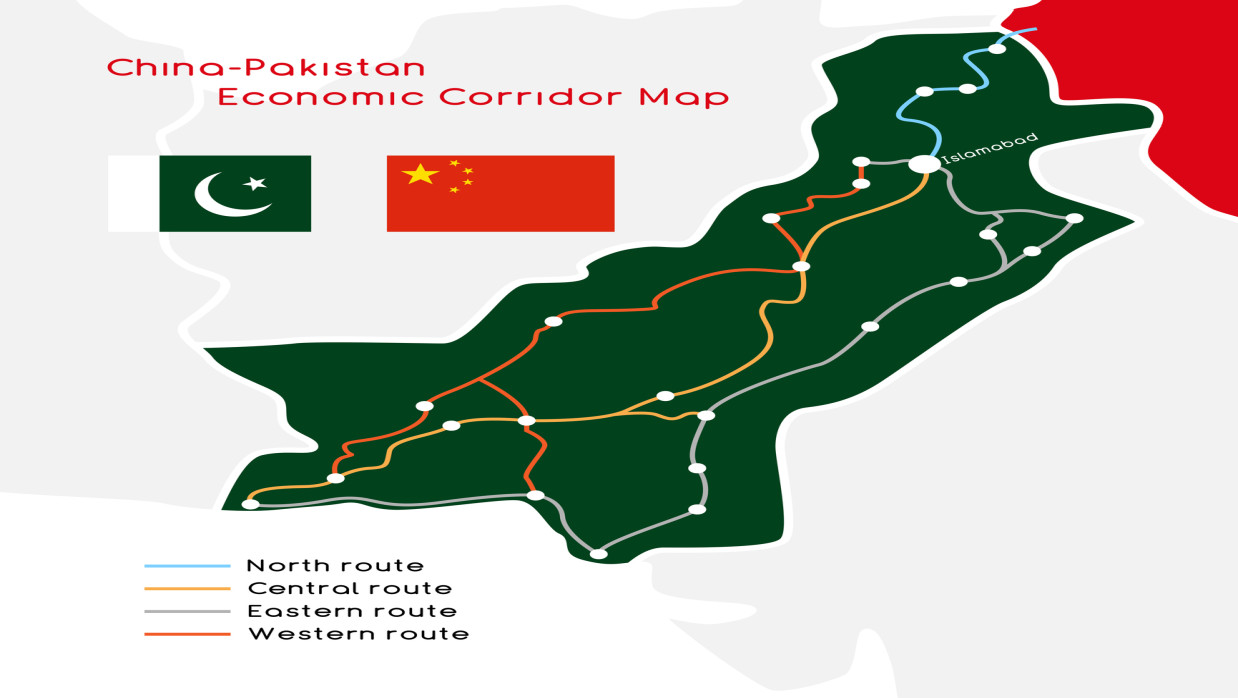
The China-Pakistan Economic Corridor has for the most part been linked with highways energy plants industrial zones ports, and general regional connectivity. But, as Pakistan and China mark 75 years of diplomatic relations in 2026 their partnership is now shifting into a more advanced and strategically important stage. Scientific collaboration is starting to become really central to safeguard CPEC from climate linked dangers, that can harm the infrastructure, throw trade routes off balance, strain local livelihoods and erode billions of dollars in longer-term investment.
Pakistan is among the countries most exposed to climate change even though it contributes only a small portion of global greenhouse-gas emissions. In fact, its geography makes it especially easy target for glacier melt, glacial lake outburst floods, landslides, droughts, bouts of extreme heat, erratic rainfall, river flooding, coastal erosion, and rising sea levels. A lot of these dangers cut right across both the physical route and the economic assets connected to CPEC.
In the north, the Karakoram Highway runs through some of the planet’s most environmentally fragile mountain zones. The Hindu Kush-Himalaya system, frequently called the Third Pole, holds an enormous share of glaciers. It supports the Indus River and provides water for farming, power generation, industry, and millions of homes. But when glaciers retreat fast, slopes become unstable, permafrost breaks down, or rainfall turns violent, then roads, bridges, tunnels, settlements, and hydropower infrastructure can take a hit.
Further south, drought, desertification, lack of water, and heat stress are already weighing on agriculture as well as industry development. Along the coast, in and around Gwadar, they are seeing danger linked to sea level rise, storm surges, shoreline erosion, the decline of marine ecosystems, and also water scarcity. So, basically these vulnerabilities show that CPEC will not be shielded using conventional engineering alone. It needs ongoing scientific checkups, better forecasting tools and practices, durable build standards, plus coordinated eco planning that is not treated as a one-time thing.
Pakistan’s catastrophic floods of 2022 kind of underlined the scale of the threat. Climate change has really pushed up the intensity of extreme rainfall, and that extreme rainfall helped drive widespread destruction. Roads, bridges, homes, farms, schools, health facilities, and also energy infrastructure were damaged across the country, in many places. What the disaster made clear is that infrastructure built without enough climate risk planning can end up sort of quickly vulnerable, no matter how much financial investment went into it.
So, realising these realities Pakistan and China have kind of expanded their cooperation beyond just physical construction. CPEC 2.0 puts more weight on growth, livelihoods, innovation, green development, and also regional connectivity. This shift is an important strategic change you could say. Rather than treating environmental protection as some secondary matter, the new approach more and more frames climate resilience as a prerequisite for sustainable development.
In this context the China-Pakistan Joint Research Center on Earth Sciences has come up as one of the most important institutions for enabling this move. It was created through cooperation involving the Chinese Academy of Sciences and Pakistan’s Higher Education Commission and the centre gathers scientists, engineers, academics, and policymakers. Together they look into natural hazards, glaciology, hydrology, geospatial technologies, climate modelling, and resilient infrastructure too.
Its expansion into specialised research sub centres at NUST, UET Lahore, NED University, BUITEMS and UET Peshawar helps strengthen Pakistan’s institutional capacity in a way that is kinda steady. These universities are spread across different geographical regions, so the research can deal with diverse issues in real life. Engineers in the north can concentrate on earthquakes, landslides, hazards linked to glaciers, and mountainous infrastructure stability, while institutions in Punjab can dig into flood management, hydrology, urban resilience, and agricultural adaptation. Meanwhile researchers in Sindh and Balochistan can look at coastal vulnerabilities, water scarcity, desertification, and also the structural resilience of ports together with industrial facilities.
And yeah, the cooperation is also reaching into agriculture. Climate change threatens food security not only because water availability drops, but also because soil gets degraded, heat stress rises, and drought events show up more often. Joint efforts on drought resistant crops, precision farming techniques, smart irrigation systems, solar powered greenhouses, and artificial intelligence can help farmers produce more food with fewer inputs. This kind of innovation is especially useful for arid areas near CPEC routes, and close to the prospective Special Economic Zones.
Joint oceanographic research around Gwadar is just as important, but it kinda depends on how you look at it. Gwadar Port is a major piece of CPEC, still its long-term success relies on coastal ecosystems that stay healthy, trustworthy freshwater supplies, sustainable city planning, and a more exact understanding of marine conditions. Scientific surveys can make things clearer about currents along the coast, erosion trends, fisheries, biological variety, contamination levels, and even the real storm risks. With that kind of information, port planning can be improved while local incomes, and the environmental assets people depend on, get protected in a more thoughtful way.
The June 2026 training workshop on disaster risk reduction and green development showed that scientific cooperation is getting linked more and more to policy. Specialists from both sides talked about early warning systems, climate resistant infrastructure, green planning, and decisions based on evidence. That link really matters, because research doesn’t do much unless its outcomes are turned into building codes, funding choices, emergency readiness, and project standards you can actually enforce.
Pakistan’s PSDP 2026–27 keeps showing, more and more state backing for CPEC 2.0, Gwadar buildout, railway upgrades, industrial teamwork, academic links, and research. But money amounts by themselves won’t really be enough for resilience, I mean not automatically. For every big CPEC venture, there should be a mandatory climate risk check, before any approval. The planning should include how things might look under future temperature, rainfall, floods, droughts, earthquakes, and coastal conditions, rather than betting everything on historical patterns only.
At the same time green financing mechanisms should be set up, not just as a nice idea, but to actually pay for resilient construction, renewable power, ecosystem repair, water saving, and climate smart farming. Pakistan and China could also team up to pull in funds from development banks, climate funds, commercial lending institutions, and green bonds. If CPEC projects get aligned with Pakistan’s climate responsibilities under the Paris Agreement, that will likely add real international credibility and open the door for more climate finance.
The greatest value in Pakistan-China scientific cooperation is mostly in capacity building, you know. Things like joint laboratories, university partnerships, technical exchanges, scholarships, training programmes, and technology transfer can really help lower Pakistan’s reliance on outside know-how. Over time, Pakistani institutions should get better at crafting local answers, keeping monitoring systems running, spotting environmental threats early and dealing with disasters in a timelier way.
About CPEC’s future, it will not only come down to how many roads, ports, railways, and industrial zones get built. It’s also about whether they hold up when environmental shocks get stronger and stronger. With shared science, advanced technology, and coordinated policy, Pakistan and China are basically turning their strategic partnership into something practical as a shield against climate risk. Their cooperation also hints that the iron brotherhood is not just stuck to infrastructure and diplomacy, no. It’s turning into a science-driven alliance that can protect development, strengthen communities, and help construct a more sustainable regional tomorrow.

0 Comments
LEAVE A COMMENT
Your email address will not be published