

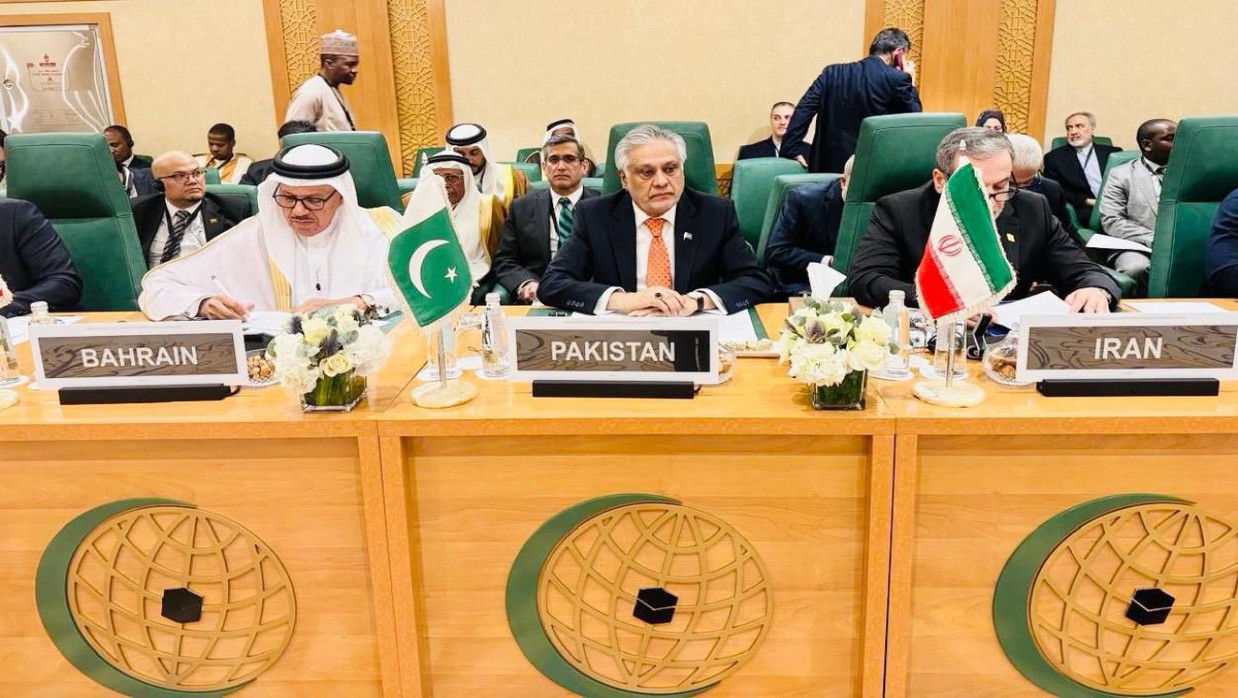
Pakistan is hosting the 9th OIC Ministerial Conference on Women in Islamabad on 12–13 July 2026, and really its more than just setting up another international meeting. It seems to show the country’s diplomatic momentum within the Organisation of Islamic Cooperation (OIC), plus a clear dedication to advancing women empowerment in a way that matches Islamic principles. Also, there is an obvious aim to tighten collaboration among Muslim nations on common social and growth-related matters.
By bringing together ministers, along with senior delegates from across the OIC member states, the conference makes Islamabad the main stage for a meaningful conversation on inclusive progress, learning opportunities, women’s economic participation, and what comes next for women’s role across the Muslim world.
The OIC still sits as the second-biggest intergovernmental organization after the United Nations, and it brings together a rather diverse community of Muslim-majority countries, spread across Asia Africa Europe, and the Middle East. Even if its usual agenda keeps leaning toward political solidarity and global collaboration, in the last few years more focus has been added to things like sustainable development, social inclusion, education, health and pushing forward women’s advancement. So, when Pakistan hosts the ministerial conference, it gets a chance to contribute in a real way to one of the organizations most vital developmental conversations, even if the wording sometimes sounds a bit formal.
For Pakistan, this conference basically underlines its role as an engaged and constructive member of the OIC. By receiving ministers, policymakers, specialists and officials from across the Muslim world, Islamabad turns into a kind of meeting ground where member states can trade lived experiences, spot shared difficulties and look at practical paths for cooperation. These kinds of interactions, strengthen diplomatic ties as well as show that Pakistan is ready to help enable dialogue on matters that shape the social and economic tomorrow of Muslim societies.
Women empowerment is, kind of, turning into a key part of national development strategies everywhere. In OIC member countries, governments keep moving forward with policies that aim to widen entry to schooling, make healthcare better, raise economic involvement, back entrepreneurship, and also strengthen women representation in public life. The Islamabad conference, in particular, creates an important space for sharing those successful initiatives, talking through policy novelties, and encouraging cooperation which still respects the cultural and religious variety within member nations while working toward shared development targets.
Pakistan also, over the years, has carried out multiple steps to open more chances for women in education, commerce, technology, health services, public administration and entrepreneurial activity. By hosting the conference, Pakistan can show what it has done to an international audience, but at the same time it gets a chance to take in what other OIC members have achieved. These interactions help with circulating proven practices, technical know-how, institutional experiences, and joint answers, that could support every country taking part.
Beyond those policy debates, the conference has real diplomatic weight. Big international get-togethers of this size create chances for side conversations, meaning bilateral meetings between ministers and high-ranking officials. In that way, countries can strengthen what they already have, but also see fresh possibilities for practical, kind of work together. Even when talks go past the main conference agenda, they usually drift into trade, investment, schooling and education, joint scientific efforts, cultural interactions, humanitarian support, and regional steadiness. For Pakistan, these kinds of encounters help broaden its diplomatic footprint, while also supporting its image as a dependable partner across the Muslim world.
If Pakistan hosts a ministerial conference well, it also quietly signals institutional capacity and organizing skill. Handling the logistics, security, protocol, and all the coordination needed for delegations from dozens of states shows that Pakistan can manage complicated global gatherings without too much friction. When this runs smoothly, it builds trust with international organizations, as well as with partner countries. As a result, Pakistan’s chances of being selected again for future regional and global conferences become higher, more credible, and easier to pursue.
The conference also brings tangible economic benefits. When foreign delegations arrive with diplomats, media representatives, and support staff, it helps generate more activity across Pakistan’s hospitality, aviation, transportation, tourism, and service industries. Hotels, conference venues, eateries, and local companies gain from the extra international visitors, yet at the same time the event is also a stage that highlights Islamabad as a modern capital, able to handle high-level diplomatic engagements.
Just as crucial is the chance to reinforce Pakistan’s international image. Global attitudes are usually formed not only by political developments, but also by constructive diplomacy and effective international involvement . If discussions are enabled around women’s empowerment, sustainable progress, and cooperation among Muslim nations, Pakistan is seen as a country that values conversation, partnership, and optimistic regional guidance. And because international media covers the conference, these efforts can be viewed by people far beyond the participating states.
The conference also reinforces the bigger idea that sustainable progress means women need to be fully involved across every sphere of society. Education, healthcare, business creation, innovation, governance, and community advancement, all tend to improve when women get real chances to bring in their skills and leadership. Through joint policymaking and simple knowledge exchanging, OIC member states can speed up progress together toward more welcoming growth while still tackling common social and economic problems.
Perhaps, most importantly the Islamabad gathering shows just how lasting is the need for unity across the Muslim world. Even with different geographies, varying levels of economic development, and sometimes mismatched national priorities, OIC member states still hold many of the same hopes for peace, better living, education, family welfare, and human development. Gatherings like the Ministerial Conference on Women encourage conversation that leans on mutual regard, shared convictions, and collective responsibility. In this way, the cooperation spirit, becomes stronger and it stays underneath the entire organization.
As the conference wrap s up, its meaning will reach past just endorsing declarations or pushing policy recommendations. It will be, more or less, one more benchmark in Pakistan’s diplomatic outreach with the Muslim world and its ongoing pledge to promote collaboration on matters that really shape the daily lives of millions across OIC member states. When Pakistan manages to host the 9th OIC Ministerial Conference on Women, it quietly signals leadership that blends statecraft with development, showing its perspective for an empowered, inclusive, and cohesive Ummah ready to face what’s ahead. Prepared to deal with the prospects and the hurdles of the future, even if the road gets complicated.

0 Comments
LEAVE A COMMENT
Your email address will not be published