

by Muhammad Shoaib, Hammad Waleed
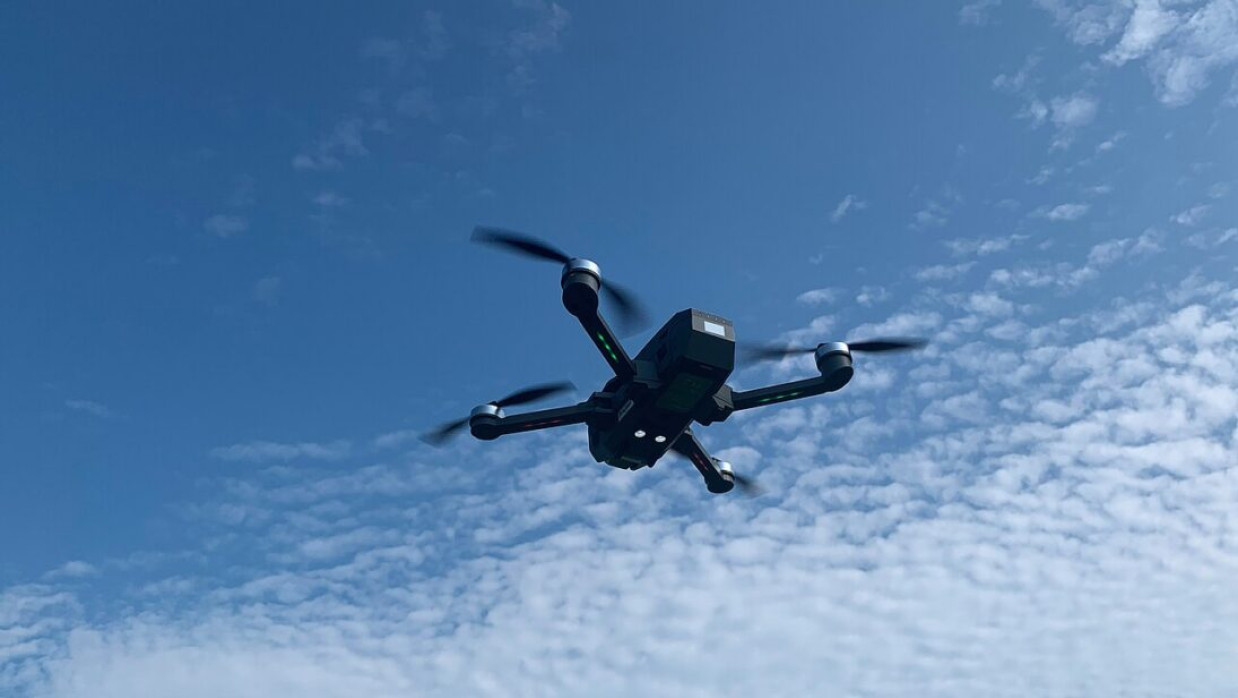
In recent years, drones have become a common sight in many areas of Khyber Pakhtunkhwa (KP), thanks in large part to their use by Tehreek-i-Taliban Pakistan (TTP) and their affiliates against Pakistani law enforcement agencies (LEAs). These groups have used drones, especially quadcopters, to carry out increasingly sophisticated strikes against police and army positions and to record their operations for social media posts. Indeed, the publicly-stated numbers from Pakistani authorities paint an alarming picture: A May 2026 report from the KP Police claimed there were 246 instances of drone attacks in 2025, with 215 attacks recorded in Bannu alone. The Pakistani military puts this number even higher; in December 2025, the army spokesperson, Lieutenant General Ahmed Sharif Chaudhry, publicly acknowledged the phenomenon of TTP using drones for the first time, pointing to a total 405 such attacks in 2025.
This extensive use of drones, especially in recent years, raises serious concerns for Pakistani decision-makers. As the state apparatus struggles to counter this mounting threat, Pakistan should adopt a long-term plan to include an anti-drone doctrine, integrated air defense systems, and a willingness to pursue suppliers.
What Is Happening?
In December 2025, the TTP orchestrated at least 11 strikes through drones in three days. In Dera Ismail Khan, the group targeted a security installation with four drone attacks and employed quadcopters to target a Frontier Constabulary post in Kurram. In 2026 alone, multiple instances of quadcopter attacks have been reported across the province, including the target killing of a police officer in Hangu and an attack on a check post in Tank. In January 2026, the police department in Bannu district (KP) claimed that there were 20 such attacks, which killed nine civilians and injured 19 policemen. These attacks reflect an increase in scale and demonstrate an uptick in expertise and confidence on the part of the TTP.
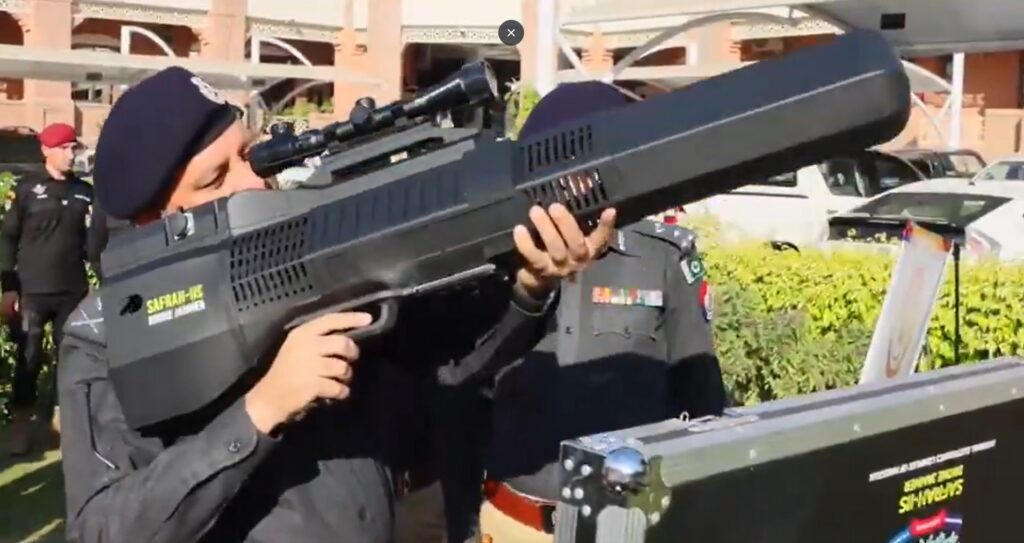
Videos posted by pro-TTP accounts show a similar surge. Unlike in the past, when TTP- affiliated accounts focused on ideological narratives, recruitment campaigns, and religious literature, these accounts are now replete with graphic visuals of drone attack videos. One such video showed a quadcopter delivering mortar shells over an airstrip in Miranshah that was housing helicopters. In another video, the TTP fighters showed a captured anti-drone gun, which resembled GIDS SAFRAH-II EW System, an indigenously-developed drone-jamming gun capable of eliminating drones from a range of 1500 meters via multi-frequency jamming. It is noteworthy that the provincial government had recently handed over these guns to KP Police units serving as the first line of defense; the militants likely acquired the system by attacking law enforcement installations.
The fact that a quadcopter can hover above and damage critical military assets, or that militants can capture weapons from LEAs with relative ease, is disturbing. The videos of these incidents serve TTP affiliates in their psychological operations and remind the audience of the Pakistani forces’ struggle to defend against drone strikes. Operationally, these attacks allow them to refine drone tactics, identify security gaps or unpreparedness especially among police and paramilitary forces, and demoralize defenders.
“These attacks reflect an increase in scale and demonstrate an uptick in expertise and confidence on the part of the TTP.”
Capabilities and Patterns
The attack videos show that the TTP drone operators have gradually been upping the ante. The TTP affiliates often follow a saturation strategy, attacking via drones and militants armed with sophisticated infantry weapons, stretching the presence of security forces, and then inflicting a lethal blow through blasts (mostly vehicle-based IEDs). They use low-tech, cost-effective, and easy-to-produce one-way attack (OWA) systems at scale. Such systems complement their strategy and help them circumvent the ground-based check posts and monitoring stations, allowing them to reach their target in a few minutes and surprise enemy forces.
This style of drone warfare requires a degree of specialization for munition handling (especially mortar fuses), 3-D printing of brackets for dropping munitions, image analysis from a sensor suite, radio communications, and anti-jamming capabilities, implying comprehensive technical support to augment the drone supply chain, localized assembly, and training. The TTP is unlikely to have been able to acquire commercial drones and retrofit them for this role on its own, hinting at potential assistance from the Afghan Taliban.
Additionally, operating these drones is not equivalent to recreational or commercial drone flying. The lesson from Ukraine and other theaters where similar systems have been employed is that training such operators entails practice in retrofitting explosive projectiles, map and geographic analysis, technical repairs, signals and communications, intra-operation coordination, memorizing formation tactics, and the ability to launch and retrieve drones. For the TTP drone operators to have this level of training sophistication implies that the lethality of their attacks is likely to increase and may later escalate to attack strategic locations in Pakistan.
TTP’s fighting record in recent years demonstrates that it has the potential to control the scope and scale of operations. In recent years, the group has adapted substantially to evade direct, lengthy confrontations with security forces and attack when feasible. Operationally, the Afghan Taliban’s takeover of Afghanistan has provided the TTP with the necessary strategic space to retreat, regroup, train, and launch attacks. Their support has enabled the group to benefit from the host’s experience and resources. In the future, the Afghan Taliban’s tactical and operational support could help the TTP target Pakistani military infrastructure, especially with drones. A UNSC Report of the Analytical Support and Sanctions Monitoring Team, which highlights that the Afghan Taliban seeks sustained support in the drone warfare domain, raises concerns that the TTP may ultimately gain access to new capabilities. To that end, TTP’s next step could be first-person-view (FPV) drones, which are faster, more maneuverable, and harder to intercept than quadcopters.
Counter-Drone Approaches and Challenges
The TTP’s use of drones has further complicated the challenge facing Pakistan in the northwest. Drones launched from contiguous, populated zones can be difficult to trace and the state’s response to drone attacks, like other terrorist attacks, comes at the cost of massive search operations in neighborhoods, making the local population restive.
Importantly, drones are already a contentious topic in the erstwhile Federally-Administered Tribal Areas due to the legacy left behind by U.S. drone strikes during the war on terror. For many residents, therefore, the conflict between TTP and the Pakistani armed forces seems like the continuation of a foreign war. As the Pakistani army and LEAs extensively employ quadcopters in counterterrorism (CT) operations, several reports of local outcry due to collateral damage have emerged in recent months. In May 2025, for instance, locals in Waziristan staged protests after a drone attack killed five people, four children, and one woman. In response to the criticism, the military categorically denied any involvement in the attack, claiming it had been falsely implicated. This demonstrates the challenges facing local communities in attributing responsibility for quadcopter-delivered munitions.
So far, no department has published a conclusive forensic report about the attacks. This lag complicates the situation for the LEAs. As a result, concerns are often directed toward state authorities, with some residents questioning the adequacy of existing security measures to protect civilians and property.
In the face of these challenges, Pakistan has adopted some measures. The KP provincial government, for example, has banned drone flying. However, this is only a temporary ban, and in any case does not structurally address the problem: It restricts civilian drone use, but lacks any enforcement mechanism against militant operators who already evade the law. Second, police forces are undertaking modernization efforts, with the KP police setting up a dedicated drone training school in Nowshera. Third, the military has rapidly evolved drone and loitering munition tactics, carrying out large-scale exercises in recent months. One such exercise, “Maiden Strike,” was dedicated to quadcopter and FPV drone tactics. In November 2025 and February 2026, the military employed drones as part of its efforts to take out terrorist infrastructure inside Afghanistan. More importantly, it has upped the ante, increasing the number and scale of Pakistani counter terror operations that utilized drone strikes and reconnaissance missions in the border areas. But there is more the Pakistani state can do to effectively counter the drone threat.
“Pakistan needs a comprehensive anti-drone doctrine that covers everything from kinetic response options to real-time threat monitoring and curtails off-the-shelf access of these systems to subversive actors.”
What Should Pakistan Do Now?
Securing and stabilizing Pakistan’s northwest requires the state embrace a proactive approach involving robust perimeter defense, equipment, and training in parallel with local LEAs, especially the KP Police, Frontier Corps, Counter Terrorism Department, and peace lashkars; a dedicated intelligence-fusion center that synergizes civilian and military authorities into a single response unit; and operations to dismantle the source of these drones, which requires intelligence-based operations to locate the sources of TTP drone procurement both inside and outside the country.
First, Pakistan requires a standardized counter-UAS system encompassing both kinetic and non-kinetic responses across all segments of law enforcement and civilian agencies, rather than a reactive and ad-hoc distribution of anti-drone systems. This also requires specialized training in the identification of threats and choosing response options.
Second, civil-military intelligence fusion covering the drone threat is crucial. In 2025, Pakistan set up its National Intelligence Fusion and Threat Assessment Centre (NIFTAC), which synergizes around 50 federal and provincial organizations into a unified architecture. While currently focusing more on traditional intel-sharing, coordinating counter terror operations, and giving threat advisories to relevant authorities, this framework should also focus on tracking drone procurements, attack patterns, operator networks, and intelligence analysis from multiple sources. This would obviate bottlenecks in federal-provincial coordination and promote inter-agency collaboration to counter rapidly evolving threats such as drones.
Third, focusing on defense alone cannot suffice: Central to a counter-drone policy is a vertical response that targets TTP and its affiliates’ drone assembly sites, procurement networks, and smuggling channels. This can be done via intelligence-based operations and exerting diplomatic pressure on the Afghan Taliban to restrict drone supply to proscribed groups. In addition, Pakistan should engage with commercial drone manufacturers to urge them to monitor access to their equipment in the region through licensing mechanisms and geo-fencing restrictions.
With such significant stakes, Pakistan cannot afford to ignore the drone threat emanating from its northwest. To meet this challenge, Pakistan needs a comprehensive anti-drone doctrine that covers everything from kinetic response options to real-time threat monitoring and curtails off-the-shelf access of these systems to subversive actors. As the threat grows ever more serious, Pakistan must accelerate the pace of innovation, or risk being outstripped by the TTP and its affiliates.
The article appeared in the southasianvoices

0 Comments
LEAVE A COMMENT
Your email address will not be published