

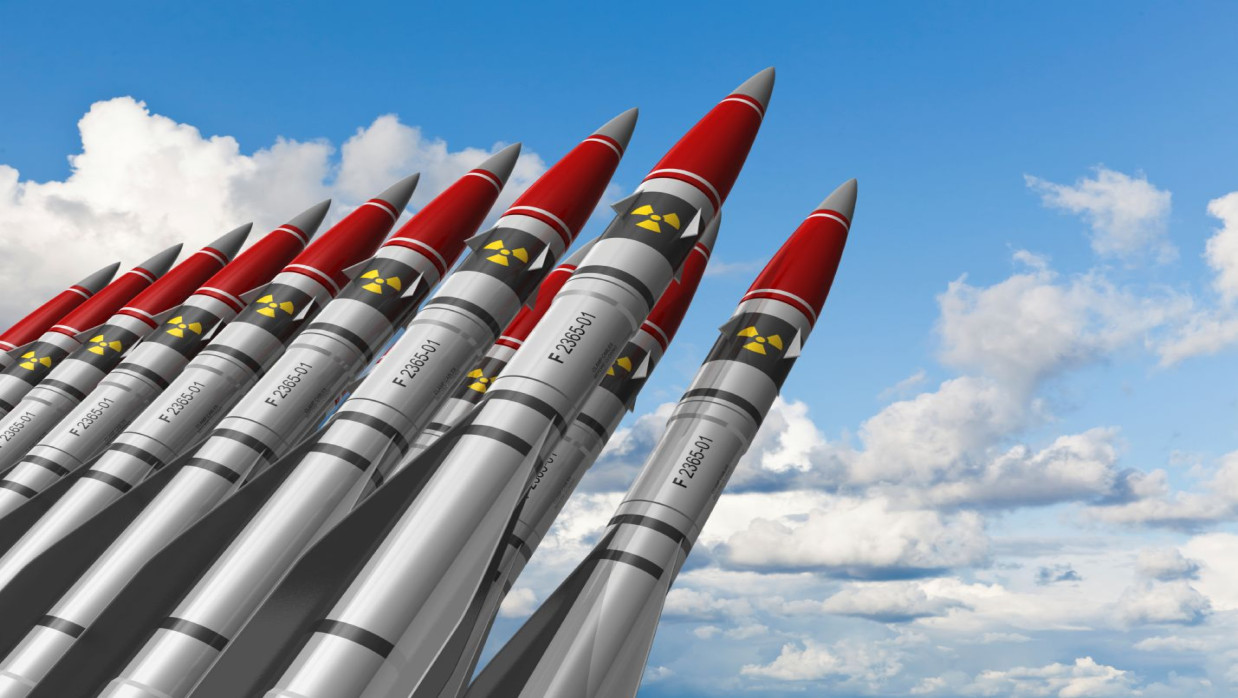
The South Asian region is home to India and Pakistan; two nuclear-armed, territorially contiguous neighbouring states which have remained embroiled in a perpetual state of rivalry since their creation as independent states. In this regard, the month of May has been of particular significance, since both states conducted their nuclear tests in this month. India conducted its first nuclear test, the Pokhran-I on May 18, 1974. In 1998, India formally declared itself as a nuclear-armed state as it conducted a series of nuclear tests – the Pokhran-II, on May 11 and May 13. Along with the nuclear tests, Indian political discourse swelled with hyper-nationalist threats against Pakistan. In response, Pakistan carried out the Chaghai-I and Chaghai-II nuclear tests on May 28 and May 30 respectively, whilst restoring strategic stability in the region.
This year’s May marks 28 years since the overt nuclearization of South Asia. Over this period of nearly three decades, the India-Pakistan nuclear dyad has avoided a full-scale bilateral military confrontation. However, crises – albeit small-scale, have nonetheless erupted; a phenomenon that strategic scholars refer to as the ‘stability–instability paradox’; that while nuclear weapons reduce the likelihood of total war, however, at the same time, they may enable lower-level military adventurism and recurring brinkmanship.
Most recently, the two countries entered into a four-day long, direct military confrontation in May 2025. The military escalation was short but intense involving artillery exchanges, drone warfare, and even ballistic and cruise missile strikes, and cyber and information warfare. While a Washington-brokered ceasefire demonstrated the role of nuclear weapons in restraining escalation, nonetheless, the crisis underscored an increasing volatility in India-Pakistan strategic dyad.
The nuclear deterrence theory, mainly developed by nuclear strategists Thomas Schelling and Bernard Brodie, in response to the Cold War-era nuclear proliferation and arms race argues that owing to their sheer destructive power, nuclear weapons render traditional warfare ‘irrational’; thereby necessitating the formulation of a strategy that can prevent conflict. Hence, mutual vulnerability creates strategic restraint.
In the case of South Asia, this notion of nuclear deterrence has prevailed, despite small-scale crises. Following the region’s militarisation, small scale crises indeed erupted including: the 1999 Kargil crisis, the 2001–2002 military standoff, the 2008 Mumbai attacks, the 2016 Uri attacks, and the 2019 Pulwama–Balakot episode. However, during these crises, ‘rationality’ and nuclear deterrence prevailed to quite a degree.
However, this trend now appears to be weakening, primarily because New Delhi is pursuing destabilising offensive actions, most notable among which is its ambition to wage a limited war below the nuclear threshold. New Delhi is already making quantitative and qualitative advances in conventional and strategic capabilities, while expanding its counterforce nuclear posture. Furthermore, under the hyper-nationalist Bharatiya Janata Party (BJP) government, escalatory rhetoric has become increasingly normalised.
Consequently, since BJP’s ascendence, the eruption of crises appears to be becoming episodic, recurring, and escalatory. This has rendered escalation quicker and easier, whereas, the role of ‘rationality’ which had traditionally maintained stability at the strategic level in the India-Pakistan dyad, now seems to be dwindling. The four-day India-Pakistan conflict is the case in point. Also, according to the Indian political leadership, India’s Operation Sindoor has not ended.
With the ascendance of BJP, there has been an increased coercive posturing and nuclear signalling, specifically around electoral campaigns and during crisis situations. Following the 2019 Pulwama-Balakot crisis, the BJP administration projected a narrative that India was no longer constrained by Pakistan’s nuclear deterrent. Following the crisis, during his campaign rallies, he made statements declaring that New Delhi was no longer “afraid” of nuclear threats, and that India’s nuclear weapons were not mere fireworks. Likewise, following the 2025 four-day military confrontation, PM Modi publicly made statements suggesting that Pakistan’s nuclear capability could no longer limit India’s conventional military options.
On one hand, the proliferation of such rhetoric indicates that under the current Indian administration, nuclear weapons are increasingly being instrumentalised for nationalist signalling and for garnering domestic political legitimacy. On the other hand, and rather more significantly, this heightens the risks of escalation and crisis instability within an already fragile India–Pakistan nuclear dyad because of India’s inability to understand the role of nuclear deterrence.
With escalation cycles prone to becoming faster and more volatile due to ideological developments within India as well as New Deli’s offensive actions, South Asia’s escalation dynamics may become a direct casualty. Fiery and militarised rhetoric, and its integration into domestic political discourse can push states toward rapid demonstrations of resolve. At the same time, the fact that in New Delhi, ‘rationality’ is being increasingly constrained by ideational and hyper-nationalist discourses, and domestic political motivations remains equally destabilising for the region’s strategic stability.
In a time of crisis, the Indian government could be expected to be prone to take politically-motivated, yet grossly risky and destabilising actions for electoral gains or nationalist consolidation. Hence, amid an increasing demonstration of military resolve to secure political dividends, the functioning of strategic restraint and rationality becomes increasingly difficult. The 2025 confrontation also highlighted precisely the same danger, where military exchanges rapidly evolved across multiple domains including drones, missiles, cyber operations, and information warfare within an exceptionally short timeframe. This underscores that three decades since the region’s nuclearization, the region needs to sit on the logic of nuclear deterrence and reinforce rationality and restraint.


0 Comments
LEAVE A COMMENT
Your email address will not be published