

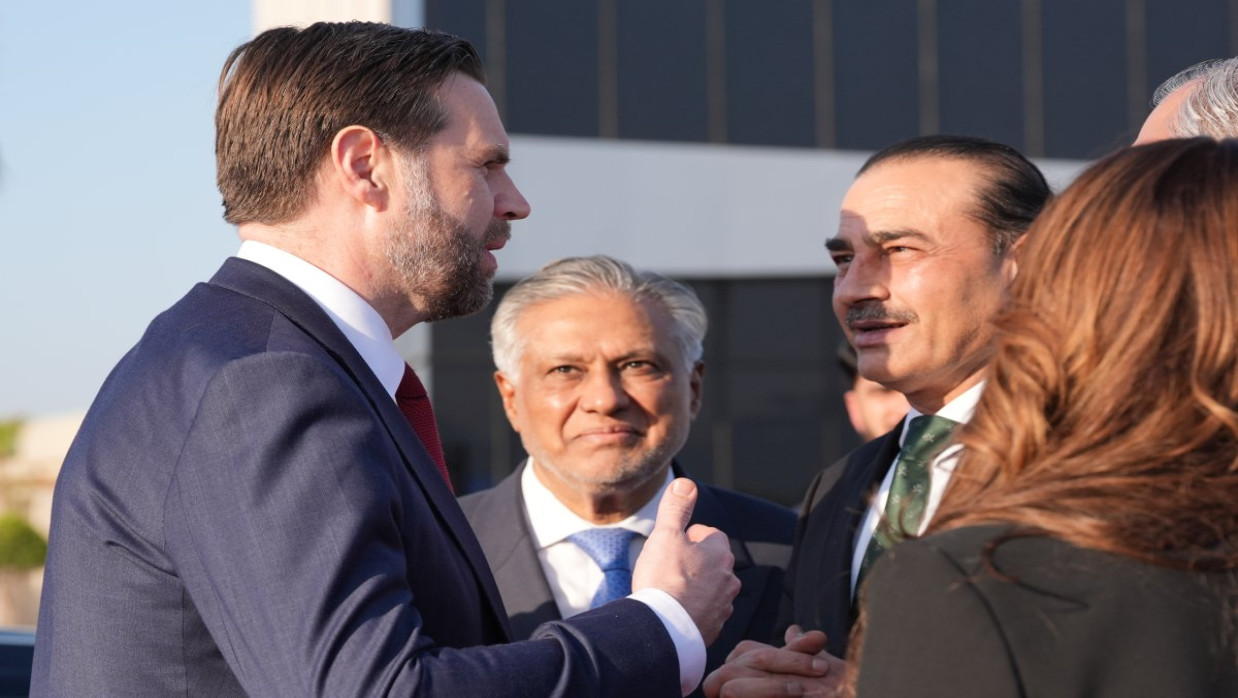
Pakistan demonstrates its current diplomatic activities which start discussions about its current position in global politics. For years, global discourse often portrayed Pakistan primarily through the lens of terrorism, political instability and economic fragility. The actual situation has developed into a more complex reality. Through its strategic diplomatic efforts and security partnerships and its ability to manage relationships with different nations, Pakistan has established itself as a middle power which can influence regional outcomes beyond its actual resources.
International law has traditionally evaluated state power through measurable factors which included economic power and military spending and technological development and geographic territory. Modern international politics now understands that intangible factors create active diplomatic power which produces results through empirical evidence. The concept of soft power which Joseph Nye developed allows states to control public opinion and diplomatic outcomes through their diplomatic work and their international standing and their planned activities without using force. Robert Dahl defines power as the ability to make other people change their conduct. Pakistan demonstrates through its recent diplomatic activities that it can now influence regional affairs and develop relationships with major international powers throughout different geopolitical territories.
Pakistan has developed its new international role through its capacity to keep diplomatic ties with countries which have hostile relations with each other. Countries today face alliance systems which limit their diplomatic options because the world is becoming more divided. The government of Pakistan has chosen to follow a path which allows it to make strategic decisions. The country maintains strong bonds with China while it continues military partnerships with the United States. The country maintains positive diplomatic relations with Gulf monarchs while it keeps contact with Iran in spite of their geographic conflicts. Pakistan used multi-alignment to establish itself as a reliable mediator during times of regional conflict.
The recent diplomatic crisis between Iran and the United States showed Pakistan's diplomatic importance. Pakistan managed to establish contact between Washington and Tehran despite their fundamental differences in their worldviews and strategic approaches during a period of regional conflict. The capacity of Islamabad to work with both parties resulted from its strategic trust and diplomatic neutrality which existed in its relationships with both parties. Pakistan became an acceptable mediator for Iran because of its historical and cultural ties which had existed for centuries together with its friendly diplomatic relations between both countries. Pakistan established military and intelligence operations with the United States which created a secure method of communication that permitted transmission of messages to Tehran without creating tensions or ideological conflicts.
Pakistan has achieved growing diplomatic credibility which corresponds to a change in its strategic international standing. India was considered the dominant military and economic power throughout South Asia for more than 40 years while Pakistan appeared to the world as a nation that faced internal security problems and responded to external threats. The latest security advancements together with Pakistan's military readiness demonstrations have weakened some of the existing assumptions. The nation presents itself as a security consumer which can potentially safeguard regional peace through its ability to enter into joint defense agreements. The Saudi Arabian partnership has developed into a strategic relationship which brings Pakistan deeper connections with Gulf states because of its increased diplomatic ties.
The status of middle powers comes from their economic size which does not determine their standing as middle powers. Many nations with extensive economic resources have found it difficult to convert their existing material power into actual international diplomatic power. The strategic ability to move between different diplomatic approaches together with their power to form alliances enables middle powers to achieve their diplomatic objectives. Pakistan functions as a major global power because it can simultaneously work with different international partners while maintaining its separate international identity. The country operates at a higher level of achievement than conventional national power measurements would predict.
Pakistan's strategic value for the future grows because of its geographical location. Pakistan serves as a vital regional trade and connectivity center which connects South Asia with Central Asia and the Middle East and the Arabian Sea. The rising operational activities at Karachi Port together with the ongoing progress at Gwadar Port demonstrate Pakistan's economic significance in the geoeconomic sector. Pakistan will gain major strategic advantages because Asian trade routes will increasingly follow Indian Ocean paths.
The middle-power status of a nation requires diplomatic and military achievements to sustain its status. The process of achieving permanent growth needs three elements which include economic changes and political stability and institutional stability. Pakistan faces internal challenges that endanger its progress in international relations. Political divisions that persist in society create challenges for governmental operations and hinder policy development and lead to doubts from international business partners. Pakistan needs to establish a national agreement on its important strategic goals because its international status is rising.
The process of modernizing the economy stands as the most important task of all. Pakistan has failed to transform its strategic partnerships into sustainable economic progress despite having a large population base. The projections from Goldman Sachs and other organizations show that Pakistan will become one of the largest global economies but these results will not automatically happen. Pakistan needs to build a dependable business environment which includes continuous economic development plans to unlock its growth potential. The development of human capital stands as a fundamental requirement for all emerging fields including artificial intelligence and robotics and semiconductors and quantum computing and green technology.
Pakistan needs to resolve its security problems because they harm its international reputation. The two main factors that prevent foreign investment and economic growth in Pakistan are its ongoing terrorist attacks and its unstable areas which include its Afghan border regions and Balochistan territory. India has used two decades to develop its reputation as a worldwide business hub which brings both investments and technological partnerships to the country. Pakistan needs to develop stable internal security systems which will enable it to present itself to the world as a secure economic nation.
Pakistan needs to expand its diplomatic efforts beyond its existing international partnerships. Europe has developed into a powerful independent global force which India has actively worked to establish relationships with European governments. Pakistan needs to establish a strong relationship with Europe through strategic cooperation climate partnerships trade negotiations and security agreements because it will not reach economic parity with India in the coming years.
The Middle East continues to develop into a region that offers multiple new business opportunities for expansion. The United States has achieved strategic advantages in Pakistan because of its shifting partnerships and its decreased Iranian power and its new focus on China. Pakistan requires its leaders to maintain their current diplomatic approach which keeps the country from joining any one specific power bloc in the complicated political environment that exists in the region.
Pakistan today stands at an important crossroads. Through its diplomatic efforts and strategic balancing initiatives and its commitment to regional cooperation Pakistan has restored its status as a middle power which most people thought would never return. Pakistan needs to achieve more than occasional diplomatic victories to maintain its present advancements. The country requires political commitment, economic development, institutional strength and efficient counterterrorism methods to convert present temporary military victories into permanent national defense capabilities. Pakistan has shown that it can affect situations which exceed the economic and territorial boundaries that limit its power. The country now faces the task of transforming that power into a solid and permanent structure which will support its extended national development.

0 Comments
LEAVE A COMMENT
Your email address will not be published