

The brief but intense military conflict between India and Pakistan which occurred during May 2025 showed two main results through its impact on South Asian regional peace. The conflict which started with India's sudden attack Operation Sindoor on 6-7 May turned into one of the most important military fights between two nuclear powers in modern times. The conflict showed that India military forces needed to defend their reputation of invincibility while Pakistan military forces showed their capacity to fight with exact precision and strategic objectives.
Indian military operations used their first attacks to hit civilian targets throughout Pakistan which resulted in the deaths of unarmed women children and elder citizens. Pakistani forces successfully defended their essential military assets which included their entire operational capacity against hostile attacks that struck their Nur Khan and Murid and Shorkot airbases. The attacks violated international law and state sovereignty which led Pakistan to execute its self-defensive rights as provided by the UN Charter.
Pakistan responded through Operation Bunyan-un-Marsoos which served as a precise military operation for retaliation that Pakistan chose to execute at its preferred location and time. The operation demonstrated strategic patience because it did not lead to emotional escalation. On 12 May 2025 DG ISPR Lieutenant General Ahmed Sharif Chaudhry publicly confirmed that Pakistan’s armed forces had targeted 26 Indian military installations directly linked to earlier attacks on Pakistani civilians and infrastructure. These strikes marked attacks on Indian Air Force and Army facilities throughout various locations which included Suratgarh Sirsa Adampur Bhuj Naliya Bathinda Poonch Barnala Harwara Avantipur Srinagar Jammu Mamoon Ambala Udhampur and Pathankot which resulted in major operational destruction.
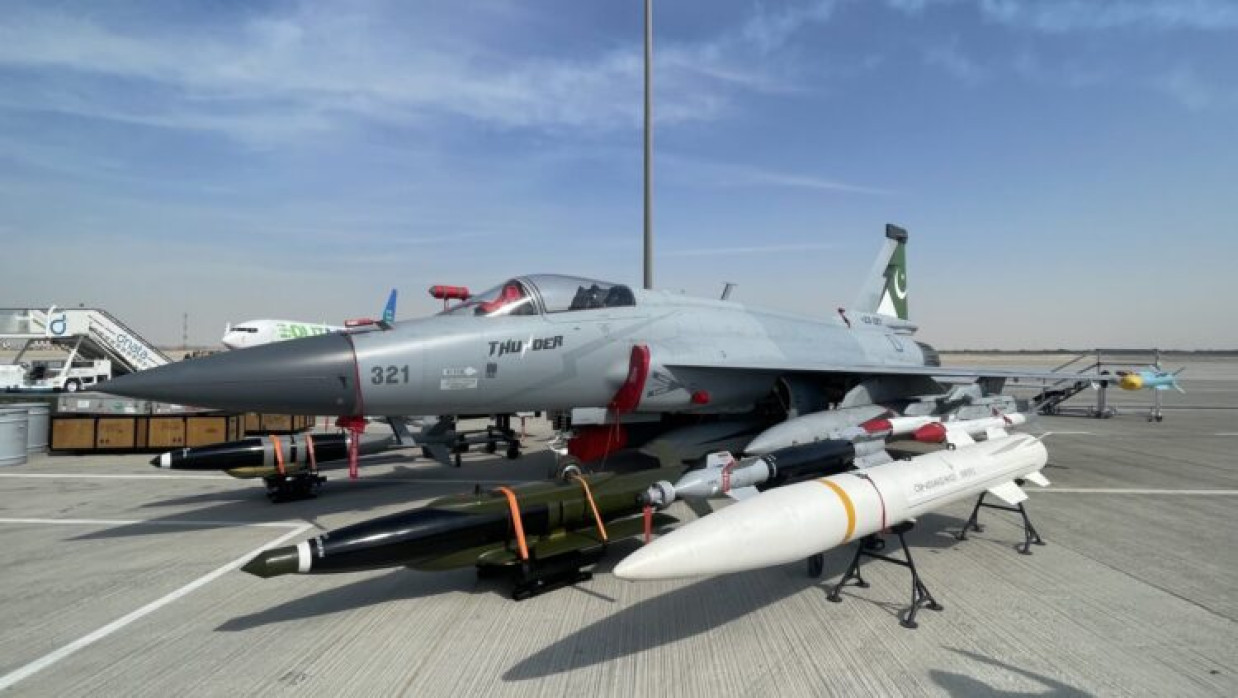
The missile storage facilities at Fayaz and Nagrota and Beas suffered complete destruction which represented a major setback for India. The Pakistani military announced that it had destroyed two S-400 air defense systems which included one system that was reportedly destroyed when a JF-17 Thunder aircraft launched a hypersonic missile attack near Udhampur. The Pakistan Air Force functioned as the main support unit for the mission because it operated with advanced organizational skills and electronic warfare capabilities while maintaining successful air combat operations against a stronger enemy force. Pakistan provided evidence that its military forces shot down 84 Indian drones which included multiple Israeli-made drones that supported the belief that expensive imported military hardware cannot ensure victory in combat.
Pakistan conducted a cyber-attack against essential Indian facilities which allowed the conflict to spread into cyberspace according to reports. The operation according to official statements disrupted energy systems and railway networks and communication infrastructure and government portals while it also compromised databases and surveillance systems. The verification process shows that all claims cannot be confirmed but cyber vulnerability serves as a psychological weapon in contemporary warfare throughout South Asia.
The examination of victory claims in India started to question their authenticity. Modi delivered a speech in Adampur which described the conflict as a victory although it failed to match the actual military and reputation damage which India experienced. The alleged downing of six Indian frontline aircraft, which included three Rafales, became a symbolically damaging development for New Delhi. The Rafale, which the Indian military modernization program had promoted as its topmost asset, started to show signs of weakness instead of military strength. The strategic shock which occurred because of market instability and investor confidence loss which resulted in billion-dollar losses created an economic impact.
The international community started to discuss the S-400 air defense system because its defense capabilities reached their full operational potential. The widely advertised defensive system which claims to be the most advanced system worldwide failed to show its operational viability during modern electronic and missile combat situations. The destruction of Israeli drones, which India used, destroyed another vital component of India’s advanced military image.
International observersand defence analysts confirmed that Pakistan demonstrated operational expertise throughout the entire conflict. Multiple international media organizations together with strategic institutions conducted investigations into Pakistan's implementation of combined airpower and electronic warfare and precision targeting operations. The analysts demonstrated that the conflict revealed two essential elements through which military personnel should operate their equipment with trained capabilities and their command structure should manage their battle plans and their entire strategic system. Pakistan conducted military operations that aimed to establish economic costs while maintaining nuclear power security through controlled military actions which observers considered essential for safeguarding peace between two nuclear states.
Lieutenant General Ahmed Sharif Chaudhry showed through his statements that Pakistan acted to defend itself rather than try to expand its territory. He explained that Pakistan would use the same military strength which other countries employed against Pakistan as a response to any future territorial integrity violations while he confirmed Pakistan's status as a responsible nuclear power. Pakistan announced that it had no Indian pilot under detention which helped the country to avoid creating a situation that could worsen existing military tensions. The United States diplomatic mission led to a ceasefire which prevented the conflict from spreading into a large-scale regional war.
The escalation demonstrated how information warfare and hyper-nationalist propaganda spread dangerous threats beyond the battlefield. Social media enables political narratives to collapse within hours when battlefield realities challenge them. The original claims of military supremacy now face demands for improved operational readiness and better military coordination and enhanced strategic decision-making abilities. The conflict proved that successful military campaigns depend on planning and discipline rather than television commercials and social media content and political speeches.
The May 2025 confrontation will probably serve as the most important event which shaped South Asian strategic history. The event showed Pakistan that violations of their sovereignty would lead to serious repercussions. The event showed India that they could not achieve their goals through military threats which they made while maintaining nuclear capabilities. The advanced warfare period showed that arrogance functions as a greater risk than caution and that illusions will vanish more rapidly than governments anticipate.

0 Comments
LEAVE A COMMENT
Your email address will not be published