

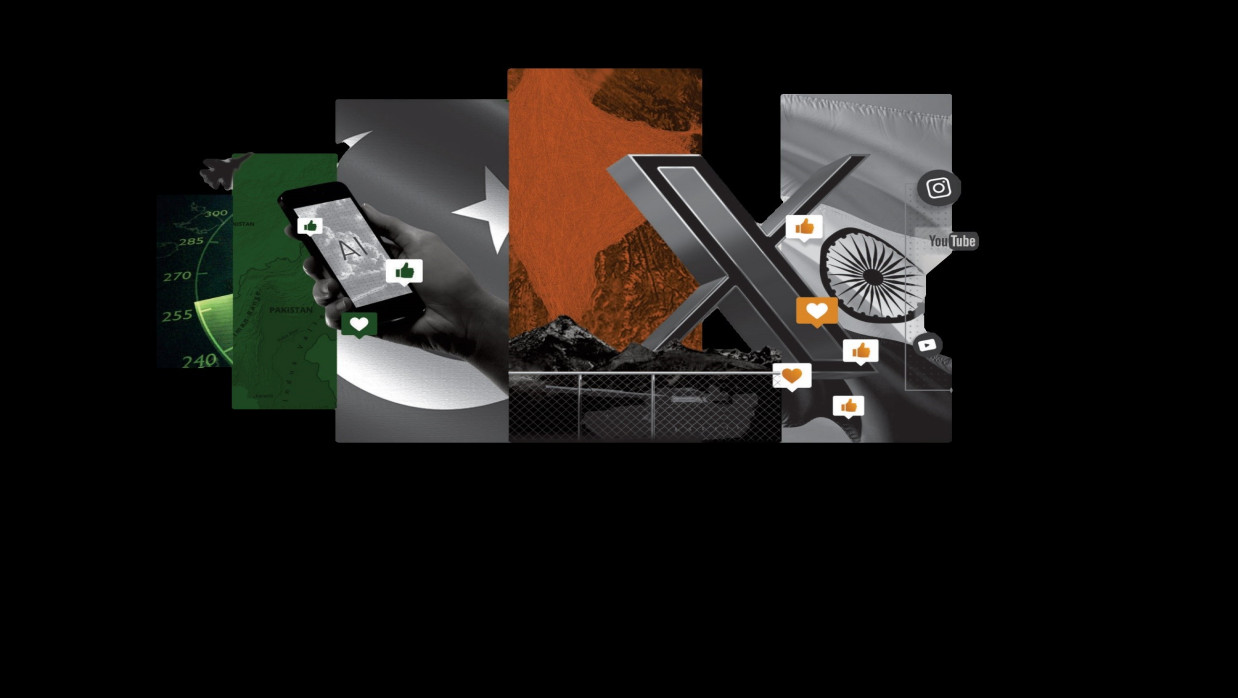
Modern society uses information as its primary means to establish power which now functions without needing military strength or economic influence. Digital platforms enable worldwide distribution of constructed narratives which people actively build and dispute through their online presence. Pakistan faces advanced information warfare operations that continue to develop through the current global information environment. The digital era has transformed propaganda into an institutionalized system which Al-Mirsad represents as its central platform.
The Al-Mirsad media outlet functions as a part of a larger network which conducts coordinated influence operations to shape public perceptions about Pakistan. The platform emerged after the Taliban regained control of Afghanistan to establish an integrated strategic communication system which replaces its previous disorganized messaging methods. The system which controls its operations and distribution of content shows that it intends to establish permanent informational control instead of temporary propaganda responses.
Al-Mirsad does not operate like conventional media outlets which aim to build dedicated viewer bases because it values audience size and content repetition more than anything else. The organization creates its content from a central location which it then shares through various platforms such as Telegram and X and YouTube and WhatsApp while providing content in multiple languages including English and Urdu and Pashto and Arabic and Hindi. The organization uses multiple platforms and multiple languages to achieve maximum audience reach throughout the region and worldwide. The organization seeks to establish permanent information dominance by delivering continuous content to the public.
Al-Mirsad achieves its unique qualities through both its extensive content and its established operational procedures. The narratives of this work present their content through structured storytelling which combines chosen facts with deliberate contextual omissions. The system presents its information through partial truths which it organizes to direct viewers toward specific outcomes. The system uses subtle manipulation techniques which create unfixed boundaries between reality and falsehood to create harder problems for its opponents to fight against.
The primary method through which Al-Mirsad constructs its narratives shows Pakistan as a country that creates instability and operates without legitimacy. The organization aims to create public distrust toward state institutions while it works to dissolve national unity and destroy Pakistan's international reputation. The organization uses its most effective method through religious weaponization. The organization establishes ideological and religious frameworks as its select method to present security and political issues which results in turning policy discussions into ethical conflicts. The change makes it harder to use logical counterpoints because audiences become involved with emotionally intense stories which connect to their cultural background and personal beliefs.
The platform uses selective amplification to strengthen its communication strategy. Narratives extend beyond their original source because they get redistributed and transformed through various affiliated accounts and supportive voices and unidentified participants. Over time this process creates an appearance of widespread agreement which obscures the actual organized efforts taking place. Through its ecosystem-based strategy Al-Mirsad sustains its storytelling power because it prevents direct identification of its sources.
The organization spends a substantial portion of its content to validate violent attacks by militants while it shifts the blame to different parties who back these operations. The organization presents attacks in Pakistan as legitimate or essential, yet it intentionally minimizes the presence of militant groups that conduct operations from Afghan territory. The organization employs selective silence as a deliberate strategy to safeguard certain individuals while shifting the responsibility for existing issues. Al-Mirsad helps to shape public perception while it makes violent actions seem acceptable to society.
The platform uses its messages to reach audiences across international boundaries. The organization works to shape international perceptions about Pakistan which focus on its essential partnerships and its international relations activities. The narratives which question Pakistan's stability show that they want to create doubt among international stakeholders because they want to harm Pakistan's diplomatic relations and economic ties. Al-Mirsad uses global issues which affect Muslim communities to spread its messages through emotional and ideological frameworks.
The entire operation depends on technology for its essential functions. The AI-assisted tools produce content which companies can translate and share with audiences during emergencies to spread their messages. The verification process needs more time because different accounts of the same event start to develop within minutes. The public perception already exists by the time the actual facts need to be corrected.
Al-Mirsad maintains its operational framework through its existing fault lines which include political divisions and societal mistrust and information gaps. The system exploits existing vulnerabilities because it does not create any new vulnerabilities. In such environments, narratives do not need to be entirely convincing; they only need to reinforce existing doubts. Modern information warfare presents its main difficulty because it requires operations which maintain credible appearance but do not need to achieve complete accuracy.
Defense against this type of threat requires organizations to establish proactive response systems. The process of fact-checking and rebuttals takes more time to complete than the narratives which they aim to disprove. The process of debunking misinformation arrives too late because its effects have already become established. The more sustainable response lies in building credibility—through consistent communication, transparency, and the presence of independent voices that audiences trust.
The capacity of societies to recover from challenges depends on their members' ability to understand digital technology and think critically. The growing availability of information together with its decreasing trustworthiness requires people to develop the skill of source assessment and content evaluation as their primary protective measure. People who possess the ability to recognize genuine information from deceptive content become immune to various forms of influence operations.
For policymakers, the challenge is one of balance. The attempt to suppress narratives through overreaction creates an unintentional effect that increases the power of the suppressed narratives. The design of successful solutions requires both controlled and strategic actions which acknowledge the current status of communication as a competitive space.
Al-Mirsad serves as a propaganda platform which also demonstrates the advancement of information warfare methods through its operational functions. The system demonstrates how modern warfare develops through the combination of three essential elements which include technological advancements and ideological beliefs and strategic military planning. In this environment, power functions as a fundamental element which creates perception throughout the system.


0 Comments
LEAVE A COMMENT
Your email address will not be published