

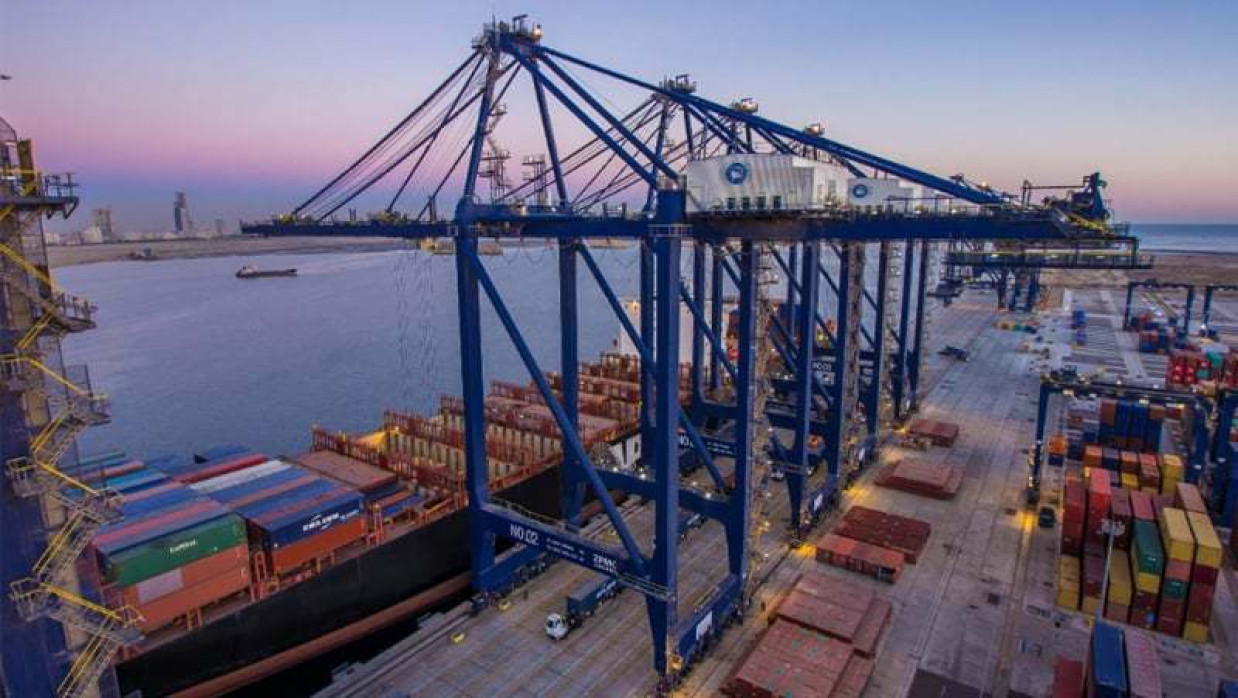
For more than half a century, the United Arab Emirates (UAE), particularly Dubai, has been one of the most remarkable economic transformations in modern history. Dubai grew from small desert towns to a global center for aviation, finance, logistics, and tourism. It became a synonym for ambition, execution, and planning. But hidden behind this success story was a regional economic policy that saw Dubai assert itself as the gateway for trade among South Asia, the Gulf, Africa, and the world. Due to Pakistan's chronic supply chain failures, economic fragility, political instability, and inefficient ports, Dubai flourished for almost 20 years as South Asia's essential trading partner. Changing geopolitics in the Gulf, new regional partnerships, and the stabilization of Pakistan's economy through Karachi and its new gateway, Gwadar, will begin to change that notion once written in stone.
Today, Pakistan stands at a crossroads. If managed wisely, recent developments could mark the beginning of a major maritime and geopolitical rebalancing in the northern Arabian Sea.
Dubai's Rise and the Logic of Regional Dominance
Dubai's rise as a logistics hub was not a happy accident. It was decades of port-centric, aviation-focused financial services development built around regulatory openness. Jebel Ali Port alone handles some of the world's highest transshipment volumes, connecting not just the Gulf but also South Asia and East Africa.
Pakistan's ports, particularly Karachi, stagnated for years below their potential. Political instability, infrastructure congestion, security, and erratic policy trends hindered competitiveness, allowing Dubai to emerge as the region's dominant redistribution hub for goods flowing into South Asia and beyond.
Dubai capitalized not just on geography, but on certainty. Business always favors certainty over dependency. Pakistani imports, exports, and money began flowing through Emirati intermediaries more than ever, diminishing Pakistan's leverage at sea.
Graphic: The Third Pole
Financial Assistance and Strategic Influence
Financial support is one area where this support has manifested itself. Abu Dhabi placed deposits with Pakistan's central bank from time to time when the balance of payments came under pressure. Pakistan was able to shore up its foreign exchange reserves during periods of market stress thanks to these deposits. Pakistan also bolstered macroeconomic confidence and eased pressure while negotiating with the IMF.
But this support also underscored the unevenness of the relationship. All aid comes with strings attached. Financial assistance creates leverage. When Pakistan began approaching Gulf partners in recent years to restructure some deposits or request extensions of repayment terms, the reaction of these partners spoke volumes about their recalibrated interests.
It doesn't mean they are no longer Pakistan's friends. But, there is less certainty now that ties with Gulf countries will translate into blank cheques. In fact, the relationship is becoming more transactional as Gulf States increasingly use their financial leverage to extract political concessions.
Karachi's Years of Violence and Economic Disruption
Karachi, from 2008 to 2015, suffered through what was arguably the worst urban terrorism crisis in South Asia. Organized crime, intimidation rackets, sectarian conflict, and party politics interrupted trade throughout Karachi. Companies moved operations overseas, investors hesitated to invest in Karachi business ventures, and Pakistan's port faltered.
Karachi's turmoil didn't just impact Pakistan, though. As South Asia's main port suffered, others took the opportunity to fill the gap. Dubai, known for its stable trade environment, saw some of that business come its way.
At times, suspicions have arisen that funds were being funneled from elsewhere to keep these crime syndicates afloat, but such theories are hard to substantiate. One thing that can be said for certain is that Dubai and other Gulf ports benefited from Karachi's troubles.
The restoration of order in Karachi after security operations beginning in 2013 marked a turning point. Violence declined dramatically, investor confidence began returning, and port operations gradually stabilized. This recovery is now reshaping the regional maritime equation.
Gwadar and the Strategic Competition of Corridors
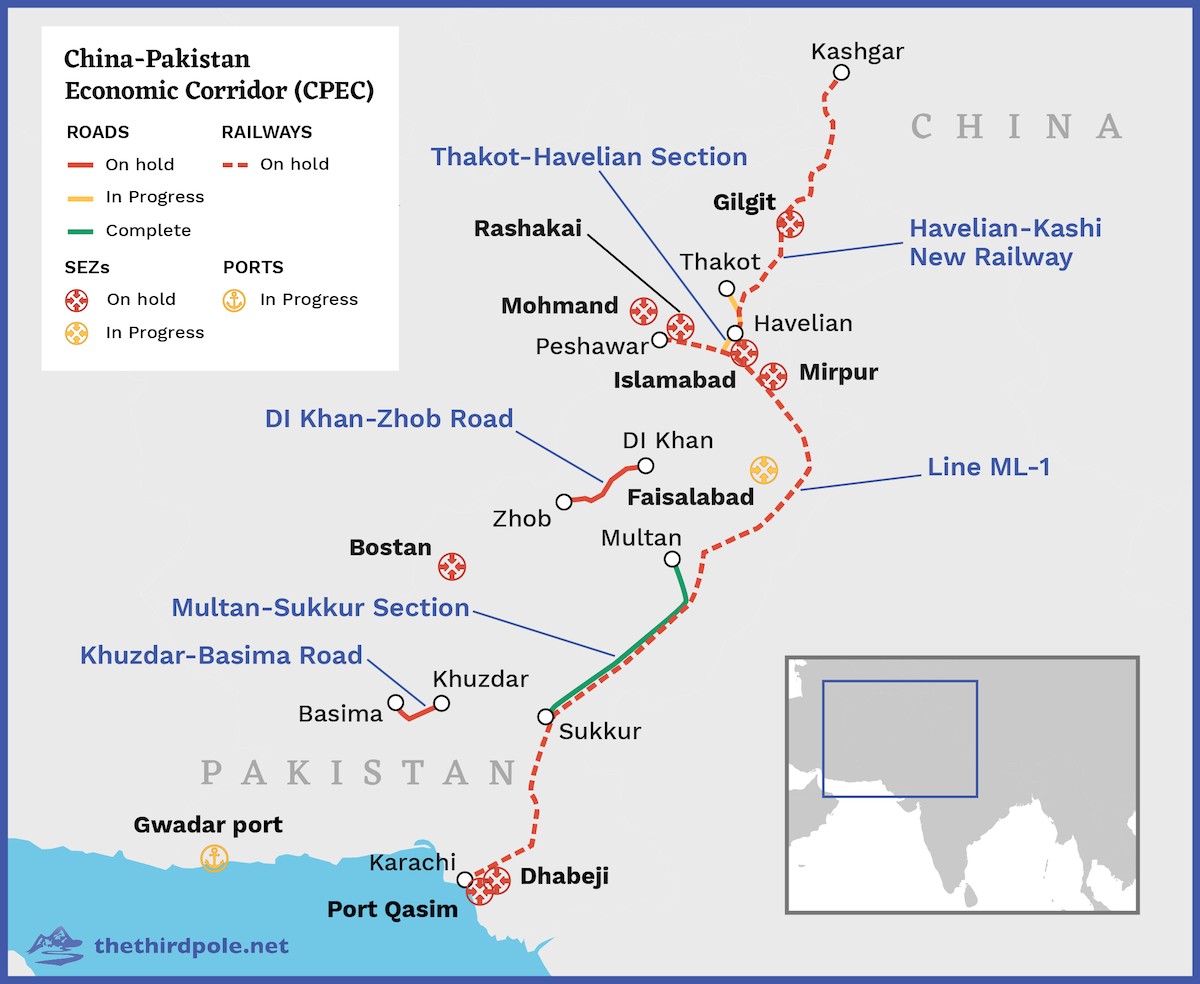
Gwadar Port is arguably one of the biggest port projects in Pakistan's history. It has been constructed with Chinese assistance as part of the China–Pakistan Economic Corridor (CPEC) and is envisioned to connect western China with Central Asia and the Arabian Sea.
For years, security challenges in Balochistan slowed the project's momentum. Insurgency, infrastructure gaps, and governance issues delayed its operational expansion. Yet despite these obstacles, Gwadar retains enormous long-term strategic value.
In contrast to container transshipment hubs, which are focused on commercial services, Gwadar is located at the crossroads of continental land routes. Gwadar has strategic significance due to its proximity to the Strait of Hormuz and Central Asia's overland transit routes, rather than to trade volumes. When infrastructure is in place and regional connectivity initiatives are fully developed, Gwadar has the potential to shift trade patterns on the Eurasian landmass.
The Abraham Accords and Changing Perceptions in the Islamic World
In September 2020, the United Arab Emirates agreed to normalize ties with Israel as part of the Abraham Accords. Officials then stated that there would be collaboration on "cutting-edge technology," as well as on investment, defense, and intelligence. They also reiterated their commitments to their alliance with Washington.
The UAE government welcomed normalization with Israel as part of its ambition to restructure its economy and security partners. In various Muslim countries, public opinion on normalizing relations with Israel has been mixed due to the Israel–Palestine conflict.
Regional conflict has increasingly shaped foreign policy in West Asia, leading to realignments that affect perceptions of Gulf Arab foreign policy.
Regional Conflict and the Fragility of Stability Narratives
Dubai's global success has long depended on its reputation as a safe, predictable, and neutral commercial environment. Investors, airlines, logistics firms, and multinational corporations all relied on the assumption that the UAE would remain insulated from regional instability.
However, recent tensions across the Gulf region have highlighted the vulnerability of even the most carefully constructed economic ecosystems. Rising insurance costs, shipping uncertainties, and geopolitical polarization have reminded markets that stability in West Asia cannot always be taken for granted.
As alternative hubs such as Singapore, Doha, and Riyadh expand their financial and logistics capabilities, competition for regional leadership is intensifying.
This does not diminish Dubai's achievements, but it does signal the emergence of a more pluralistic Gulf economic landscape.
Saudi Arabia, Qatar, and the Rebalancing of Gulf Partnerships
Recent financial engagements between Pakistan and Gulf states such as Saudi Arabia and Qatar illustrate a broader diversification of Islamabad's external partnerships. Rather than relying on a single source of economic support, Pakistan increasingly seeks a multi-vector approach to regional diplomacy.
Saudi Arabia's interest in investing in Gwadar's refinery sector and Qatar's expanding energy cooperation with Pakistan reflect this trend. These developments are not a substitute for relations with the UAE; rather, they represent an effort to broaden strategic options.
In today's interconnected geopolitical environment, resilience depends on diversification rather than dependence.
Karachi's Revival and the Three-Port Strategy
One of the most important developments in Pakistan's maritime sector is the simultaneous revival of three major port systems: Karachi Port, Port Qasim, and Gwadar.
Karachi remains the country's primary commercial gateway, handling the majority of containerized trade. Port Qasim continues to expand its industrial logistics capacity, particularly for energy imports and bulk commodities. Gwadar, meanwhile, represents the future frontier of connectivity with Central Asia and western China.
Combined, they could serve as building blocks for a unified port strategy to turn Pakistan into a regional distribution hub rather than a transit-oriented economy. With connectivity upgrades, deregulation, and sustained political support, this triumvirate of ports could revive Pakistan's import-export traffic.
Strategic Autonomy and the Importance of Balanced Partnerships
Pakistan's evolving relationships with Gulf states highlight the importance of maintaining strategic autonomy. Historically, economic dependence has sometimes constrained policy flexibility. Today's emerging multipolar environment offers opportunities to reduce such vulnerabilities.
Closer engagement with Saudi Arabia, Qatar, China, Turkey, and Central Asian states should complement, not replace, longstanding partnerships with the UAE and other traditional allies.
The objective should not be alignment with any single patron but the creation of a diversified network of economic and diplomatic partnerships capable of sustaining long-term stability.
Pakistan's Unique Position in the Islamic World
Pakistan occupies a distinctive position within the Muslim world. As the only nuclear-armed Muslim-majority country and one of the largest armed forces in the Islamic world, it carries both symbolic and strategic weight.
Equally important is its geography. Located at the crossroads of South Asia, Central Asia, and the Gulf region, Pakistan sits along potential energy corridors, trade routes, and security architectures linking multiple regions.
This position provides Islamabad with opportunities to serve as a bridge between competing blocs, provided it is supported by internal stability and economic reform.
Geography Always Shapes the Long Game
History repeatedly demonstrates that geography ultimately determines the trajectory of regional influence. While policy choices and alliances matter, location remains the most enduring strategic asset.
Dubai is an amazing success story that should be applauded. But Pakistan has real geography on its side with access to the Arabian Sea; adjacency to central Asia; connectivity to China's Belt and Road Initiative; and domestic markets of over 240 million people.
Pakistan's geographical assets have historically been overlooked for extended periods due to political turbulence and macroeconomic instability. Now there are reasons for optimism.
Karachi appears to be coming back. Gwadar is rising, albeit slowly. And Pakistan seems committed to deepening ties with Gulf countries beyond Iran and Saudi Arabia. With careful planning and foresight, Pakistan could be on the cusp of a blue economic revolution.
But will Pakistan lose momentum by betting against external powers? Or will the country stay disciplined, stick to its plans, and improve governance if it realizes the geostrategic opportunity it has been granted? Geography alone won't dictate events in the northern Arabian Sea. Diplomacy, economic connectivity, and prudent policymaking by littoral states will matter just as much.


0 Comments
LEAVE A COMMENT
Your email address will not be published