

The ongoing crisis in the Middle East is not only a geopolitical rupture but also a defining moment in the evolution of global energy systems, trade routes, and regional alliances. For Pakistan, this moment presents far more than a set of external shocks to manage. It offers a rare strategic opening to reposition itself within an emerging Eurasian economic order.
At a time when traditional assumptions about stability, supply chains, and energy security are being fundamentally reassessed, Pakistan stands at a critical juncture. One that demands vision, policy coherence, and a willingness to embrace a broader regional role.
Historically, the Middle East has served as the cornerstone of global energy supply. However, recent conflicts have exposed their vulnerabilities, raising concerns about the reliability of energy flows and the security of maritime routes. Even after hostilities subside, the perception of instability is likely to persist, compelling global markets and major powers to diversify their energy sources and logistical pathways.
In this shifting landscape, geography regains its central importance. Pakistan, situated at the intersection of South Asia, Central Asia, China, and the Middle East, is uniquely positioned to benefit from this reorientation—provided it can align its economic strategy with emerging regional realities.
Domestically, Pakistan’s economic management reflects both constraints and evolving priorities. Recent fuel pricing adjustments illustrate the delicate balance policymakers must maintain between controlling inflation and ensuring fiscal sustainability. Measures such as reducing the petroleum levy on diesel to support agriculture, while increasing it on petrol to generate revenue, underscore the structural pressures facing the economy. At a deeper level, these decisions reveal longstanding vulnerabilities, including heavy reliance on imported energy, exposure to exchange rate fluctuations, and dependence on external financial support.
In this context, the decision to return financial deposits from UAE marks a subtle yet significant shift in policy orientation. While such moves may exert short-term pressure on foreign exchange reserves and the national currency, they also signal an emerging commitment to economic sovereignty and policy independence. If sustained, this approach has the potential to enhance Pakistan’s credibility as a self-reliant and forward-looking partner in regional and global engagements.
Parallel to these internal adjustments, important developments are unfolding on the external front. Increased activity at key trade nodes such as the Sost Dry Port and the operationalization of land corridors connecting China, Pakistan, and Iran indicate a gradual but meaningful transition toward regional connectivity.
Reforms in transit trade mechanisms, including the facilitation of TIR procedures and the easing of financial requirements for exporters, are further contributing to the formalization and efficiency of cross-border trade. These developments are particularly significant in a global environment where overreliance on maritime routes is increasingly viewed as a strategic risk.
At the center of this transformation lies the evolution of the China–Pakistan Economic Corridor (CPEC). While the first phase of CPEC focused primarily on infrastructure development, roads, ports, and energy generation, the second phase, commonly referred to as CPEC 2.0, represents a qualitative shift toward economic integration, industrialization, and sustainability.
The emphasis is now on renewable energy, industrial cooperation, special economic zones, digital connectivity, and value-added resource development. This transition reflects a broader recognition that long-term economic resilience cannot be achieved through infrastructure alone. It requires the development of productive capacity, technological capability, and institutional strength.
The significance of CPEC 2.0 extends beyond Pakistan’s domestic economy. It forms a critical component of a larger regional vision in which connectivity serves as a catalyst for shared prosperity. The north–south corridor linking the Khunjerab Pass to the Taftan border, supported by road and rail networks, has the potential to become a major artery of trade and energy flows across Asia.
By reducing transit times and logistics costs, this corridor can integrate previously marginalized regions into mainstream economic activity and enhance Pakistan’s role as a transit and logistics hub.
At the same time, a complementary transformation is taking shape in the energy domain. Pakistan’s longstanding energy challenges, characterized by supply deficits, circular debt, and infrastructural inefficiencies, have underscored the need for a more diversified and resilient energy strategy. In this regard, the emerging alignment between Pakistan, Iran, and China offers a compelling framework for regional energy integration.
Each country offers distinct strengths: Iran has vast hydrocarbon reserves and surplus electricity; Pakistan provides strategic geography, maritime access, and significant agricultural potential—capable of feeding large populations if supported by modern inputs; and China contributes capital, technology, and execution capacity.
The long-delayed Iran–Pakistan gas pipeline, once constrained by geopolitical considerations, is increasingly being reconsidered in light of evolving regional dynamics. Alongside expanded electricity trade and the integration of renewable energy systems, this project has the potential to form the backbone of a regional energy network.
Meanwhile, Chinese investments under CPEC 2.0 are expanding into critical areas such as solar and wind energy, nuclear power, electric mobility, and grid modernization. Together, these developments point toward the emergence of a trilateral energy ecosystem capable of addressing both current deficits and future demands.
Looking ahead, the true promise of this evolving framework lies in its potential expansion. A broader regional energy corridor could, in time, connect not only Iran, Pakistan, and China but also extend to India, Bangladesh, Central Asia, and even Russia. While political and institutional challenges remain significant, particularly in relation to sanctions and regional tensions, the economic logic of such integration is difficult to ignore.
Energy interdependence has historically served as a foundation for cooperation, reducing the likelihood of conflict while enhancing mutual benefits.
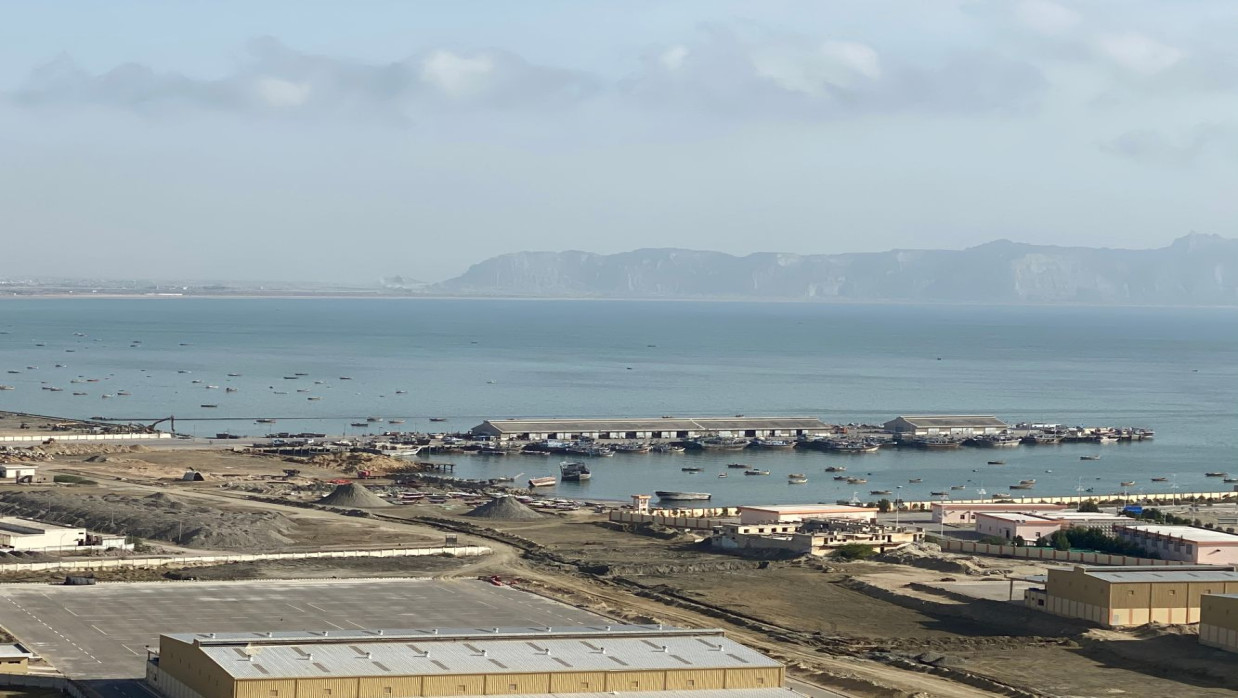
In this broader context, Pakistan’s ports, particularly Gwadar, assume critical importance. Strategically located near the Strait of Hormuz, Gwadar is well positioned to serve as a gateway for energy and trade flows between the Middle East and Asia.
As a state with established security capabilities, Pakistan is relatively well positioned to provide a stable and secure environment for such transit operations compared to many countries in the region. In a post-crisis context, where traditional routes may be perceived as less secure, Pakistan can position its ports as reliable, neutral, and efficient nodes within global supply chains.
However, realizing this potential will require a strategic shift in approach, with ports managed as commercially competitive platforms operating under transparent, efficient, and predictable regulatory frameworks.
At the same time, Pakistan must navigate a complex geopolitical landscape. Its relationships with major powers including China, the United States, and Gulf countries as well as neighboring Iran, require careful balancing.
Rather than viewing these relationships through a zero-sum lens, Pakistan would benefit from adopting a multi-vector strategy that prioritizes economic pragmatism and strategic flexibility. This includes exploring alternative financing mechanisms, leveraging regional organizations such as the Shanghai Cooperation Organization (SCO) and the Economic Cooperation Organization (ECO), and ensuring regulatory consistency to attract investment.
Beyond infrastructure and geopolitics, Pakistan’s long-term success hinges on its human capital. With a large and youthful population, the country holds a strong demographic advantage, already reflected in the growing contributions of its IT sector to innovation and economic growth. However, fully unlocking this potential requires sustained investment in education, skills development, and inclusive policies—particularly in underdeveloped regions such as Balochistan—along with meaningful community engagement in major projects to ensure security, local ownership, and shared prosperity.
Despite emerging opportunities, the path forward remains complex. The evolving and uncertain trajectory of the Middle East conflict continues to disrupt regional energy cooperation, influencing investment flows, supply stability, and geopolitical alignments. Simultaneously, domestic constraints—including infrastructure gaps, security concerns, and institutional inefficiencies—limit Pakistan’s ability to fully capitalize on these shifts. Addressing these challenges demands coordinated governance, sustained political commitment, and consistent, forward-looking policies.
Yet, this convergence of global disruption and regional opportunity presents a rare strategic moment. By aligning CPEC 2.0 with a broader regional energy corridor, Pakistan can reshape its economic trajectory—reducing external energy dependence, enhancing regional connectivity, and integrating into value chains. This pivotal juncture offers a pathway toward a more resilient, self-reliant economic model, provided Pakistan adopts a proactive strategy centered on energy integration, connectivity, and human capital development.

0 Comments
LEAVE A COMMENT
Your email address will not be published