

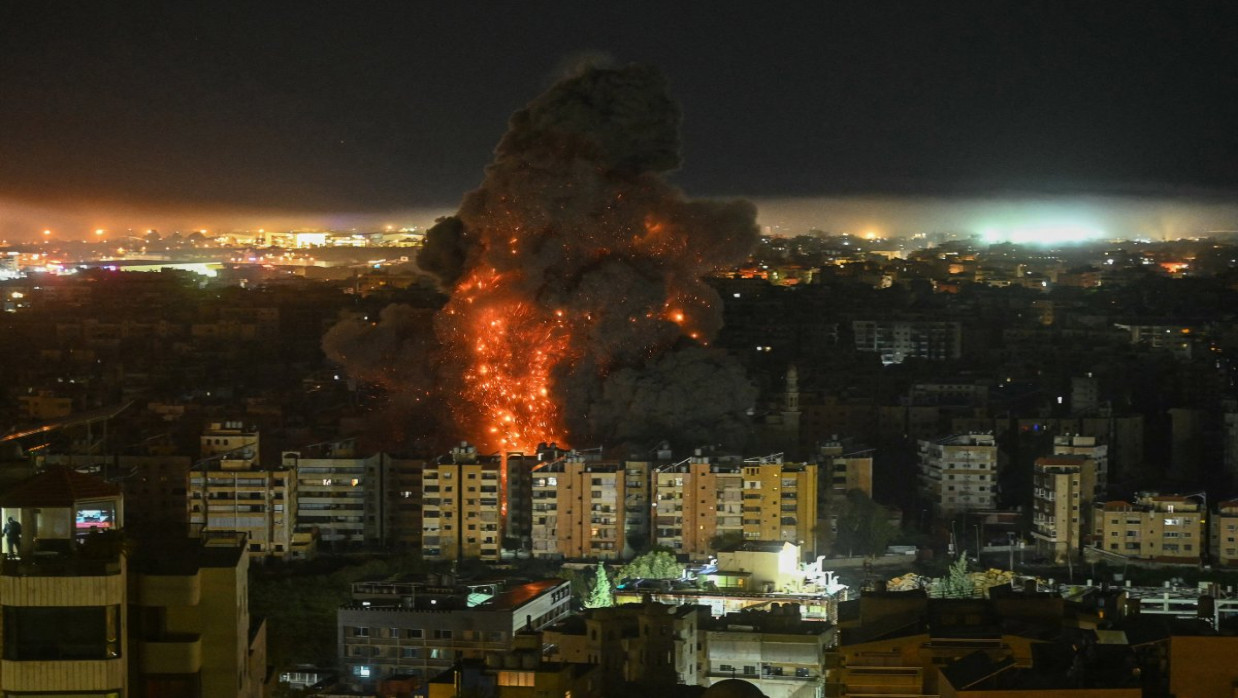
As tensions intensify between United States, Israel, and Iran, a new diplomatic centre is quietly taking shape in Islamabad. Recent reports suggesting that Pakistan may host a high-level summit, potentially involving JD Vance and Mohammad Bagher Ghalibaf, point to a significant shift in regional diplomacy. At the centre of this development is Pakistan, positioning itself not merely as an observer but as a proactive mediator in one of the most volatile geopolitical crises of the decade.
On the face of it, it might seem that the appearance of Pakistan as a mediator in such a high-stakes conflict is out of the blue. In practice, it is the result of a protracted, calculated development of foreign policy; one which fuses strategic necessity with historical precedent.
A Familiar Role in Unfamiliar Times
The present diplomatic stance of Pakistan has its origins in the past. In 1971, Islamabad made the secret visit of Henry Kissinger to Beijing, which preconditioned the US-China rapprochement, which changed the world geopolitics. That episode made Pakistan a state that can carry out sensitive and high-level diplomacy between enemies.
Fifty years later, the situation has changed, but the principle is the same: Pakistan acts best as a partisan actor, not as a bridge. This strategy has been rekindled under the new urgency of Shehbaz Sharif. His recent interactions with Iranian leadership, such as Masoud Pezeshkian, and similar communication lines with Washington, are an indication of an effort to place Pakistan at the centre of de-escalation.
More importantly, it is not a lone ranger diplomacy. The military leadership of Pakistan, especially Asim Munir, has also been involved in the background to get the key counterparts in the world. This civil-military congruence gives credibility and consistency to the outreach of Pakistan, which indicates that its mediation is supported by the full authority of the state.
The Logic Behind Pakistan’s Leverage
The capacity of Pakistan to intervene in this position is not a coincidence but rather a structural one. There are not many countries that have working relations with all the parties of the current crisis. Pakistan does.
It has a long history of relations with the United States that includes security cooperation, counterterrorism relations, and economic aid of more than 30 billion dollars since 2001. Meanwhile, Pakistan has a long border with Iran and has had economic, cultural, and religious ties that date back to the pre-modern geopolitical orientations.
Of equal importance is the relationship that Pakistan has with Gulf states and especially Saudi Arabia with whom it has formalised defence cooperation. The diplomatic advantage of this triangular location between Washington, Tehran, and Riyadh provides Islamabad with a special diplomatic position.
This advantage is supported by geography. Pakistan, being the crossroad of South Asia, Central Asia and the Middle East, is a natural channel of communication. The fact that it has a population of more than 240 million and is one of the largest militaries in the world only increases its strategic weight.
Mediation in Practice: Signals and Silences
But mediation is not just access, but trust. And this is the main difficulty. The reluctance of Iran to do so is a direct result of decades of bad relationship with the United States. The credibility gap has been caused by sanctions, military confrontations, and political mistrust.
This seems to be the reality that Pakistan is embracing. Instead of pressing towards immediate high-visibility deals, it is enabling incremental engagement, silent conversations, passing of messages, and confidence-building actions. It is also reported that other countries like Türkiye and Egypt are also in the game, indicating a more coordinated effort. Nevertheless, the readiness of Islamabad to host negotiations provides it with the central, anchoring position.
This approach is in line with international trends. The United Nations has found that most successful peace processes since 1990 have been based on third-party facilitators, whose work is first informal, and only after that, formal negotiations commence. The current strategy of Pakistan fits perfectly in this framework.
Reframing the Global Narrative
In addition to the current crisis, the diplomatic activism of Pakistan is transforming its image in the world. In the early 21st century, the world discourse about Pakistan was dominated by the issue of security. Today, that image is evolving.
Pakistan is also among the biggest donors of the UN peacekeeping operations with over 200,000 soldiers serving almost 50 years. At the same time, economic projects like the China-Pakistan Economic Corridor, worth more than 60 billion dollars, have made it one of the major hubs of connectivity in the region.
Its involvement in high-level mediation now introduces a different dimension: of a positive diplomatic actor. Pakistan is becoming more and more a pivot state, able to interact with several power centres without being captured by any one of them.
Data supports this perception. According to surveys by the Pew Research Center, there is a slow but steady rise in the international perception of the role that Pakistan plays in the world especially in conflict mediation and stability in the region. Though such changes are gradual, they are still important.
The Stakes and the Test Ahead
The Islamabad summit, should it happen, will be a crucial trial of the diplomatic ambitions of Pakistan. A full-scale agreement is not always the key to success; even starting the face-to-face communication between the opponents would be a significant step toward de-escalation.
Failure, however, would not nullify the efforts of Pakistan but would emphasize the natural complexity of arbitrating between deeply rooted conflicts. The tensions between the United States and Iran are not something that can be solved in one night. Pakistan does not suggest a quick fix, but rather a platform, a space in which dialogue can still take place.
A Calculated Ascent
The crisis itself is not the only thing that makes this moment especially important, but what it tells us about the direction Pakistan is taking. It is a nation that is deliberately leaving the reactive diplomacy behind to proactive involvement. It is using its history, geography and relationships to cut a niche that is both relevant and constructive.
By so doing, Pakistan is not only reacting to events; it is creating them. And in a world that is becoming more and more fragmented and competitive, that skill, to bring together, to broker, to bridge, can turn out to be one of the most useful kinds of power.
It is still unclear whether Islamabad would finally manage to get the enemies to the table. What is evident though is that Pakistan has already changed the diplomatic equation. It is no longer on the periphery of world decision-making. It is, more and more, where such decisions start.

0 Comments
LEAVE A COMMENT
Your email address will not be published