

As the U.S.-led campaign against Iran enters its third week, the fog of war is lifting and with it, the illusion of a swift victory. What was initially perceived as a brief, decisive military operation has become a prolonged confrontation whose effects are rippling across the region.
Despite relentless airstrikes, Iran continues to launch missiles and drones at Israeli cities and U.S. military installations across the Gulf, while maintaining control over the Strait of Hormuz. These attacks reveal that Tehran’s retaliatory capacity remains intact, forcing Washington to confront a sobering question: how does this war end?
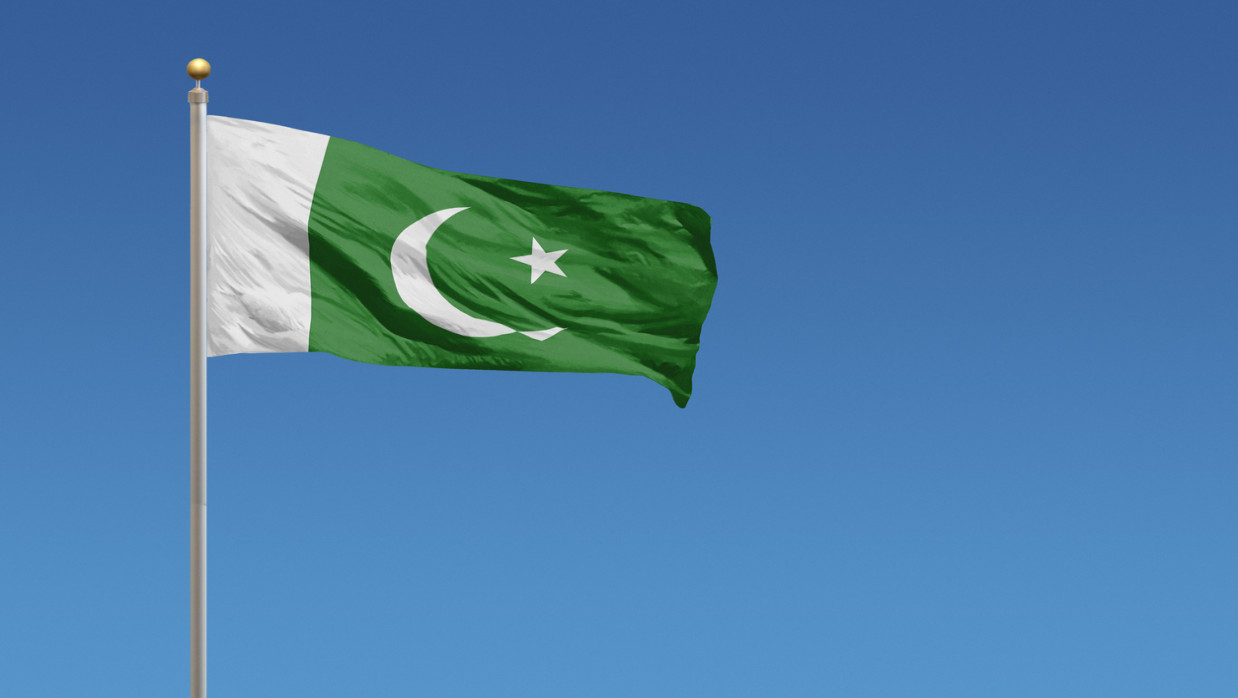
For Pakistan, these developments are not a distant theater. The crisis is unfolding along the energy corridor that fuels our economy. Nearly a fifth of the world’s oil passes through the Strait of Hormuz, and instability there translates directly into higher import costs, inflation, and financial strain for energy‑dependent economies like ours. Fuel prices have surged, schools have been closed, financial markets are under pressure, and ordinary citizens are bearing the burden.
Washington faces four possible paths: declare victory and withdraw, boots on the ground to effect regime change, escalate toward catastrophic confrontation, or return to diplomacy. Each choice carries far‑reaching consequences. Whichever path Washington chooses, one outcome is already clear: America’s influence in the Middle East will wane, creating a vacuum that other powers—particularly China—will seek to fill. Sun Tzu’s maxim rings true: “The greatest victory is that which requires no battle.”
As Washington debates its next move, Islamabad faces immediate challenges and opportunities. Neutrality is no longer a strategy—it is a liability. Nations that try to belong everywhere end up nowhere. Pakistan must choose its path with clarity or risk being left behind in the shifting order of the region. We must begin positioning ourselves as the only stable harbor in a burning neighborhood.
The closure of the Strait of Hormuz has exposed the vulnerability of the Gulf as the region’s sole commercial hub. With shipping insurance costs soaring and energy flows turning volatile, global capital is searching for safer destinations. Pakistan can provide that alternative—if its leadership acts decisively.
By leveraging strategic ties with China and Saudi Arabia, Islamabad can fast‑track China‑Pakistan Economic Corridor (CPEC) projects and transform Gwadar into a vital logistics hub integrating Central Asia, South Asia, and the Middle East.
Yet optimism must be tempered with realism. Ports do not become global trade hubs by geography alone. Dubai’s success rests on decades of institutional growth, financial services, and investor confidence. Without similar reforms, Gwadar’s potential will remain unrealized. It cannot replace Dubai overnight, but it is the only port in the region positioned to serve as a credible “bypass” to the Strait’s volatility.
To seize this moment, Pakistan must inject fresh momentum into CPEC and stop viewing Gwadar as a distant, long‑term project. It must be treated as an urgent national priority. At the same time, accelerating the development of CPEC’s Main Line‑1 (ML‑1) railway is essential. Gwadar cannot thrive in isolation; it must be integrated into a regional supply chain that connects directly to Western China’s industrial hubs.
Physical infrastructure alone is not enough. Institutional capacity must match ambition. Pakistan needs to establish an institutional authority or strengthen an already available one, like the Special Investment Facilitation Council (SIFC). That institution must become an assertive, one-window authority that can deliver immediate, legally assured measures such as tax exemptions, swift visa processing for industrial workers, and provision of foolproof security to the manufacturing and logistics companies relocating from the Gulf.
In addition to focusing on the development of infrastructure, Pakistan must strengthen its energy resilience through diversified imports. Closer ties with Central Asian neighbors, combined with a credible role as mediator in Gulf conflicts, can help Islamabad navigate this turbulent landscape. Stability must become our greatest asset, allowing Pakistan to assert itself as a central player in emerging trade and security networks. In this context, even Pakistan’s engagement with Afghanistan must be framed around projecting stability to the world, rather than being seen as part of endless conflict.
The decisions Washington makes in its war with Iran are beyond our control. But how Pakistan responds to the resulting vacuum is entirely ours to determine. In a region entering a long era of uncertainty, it is preparedness—not merely geography—that will decide which nations emerge stronger. If we hesitate, opportunities will slip away. If we act with clarity and courage, Pakistan can transform crisis into opportunity and anchor itself at the heart of a new regional order.


0 Comments
LEAVE A COMMENT
Your email address will not be published