

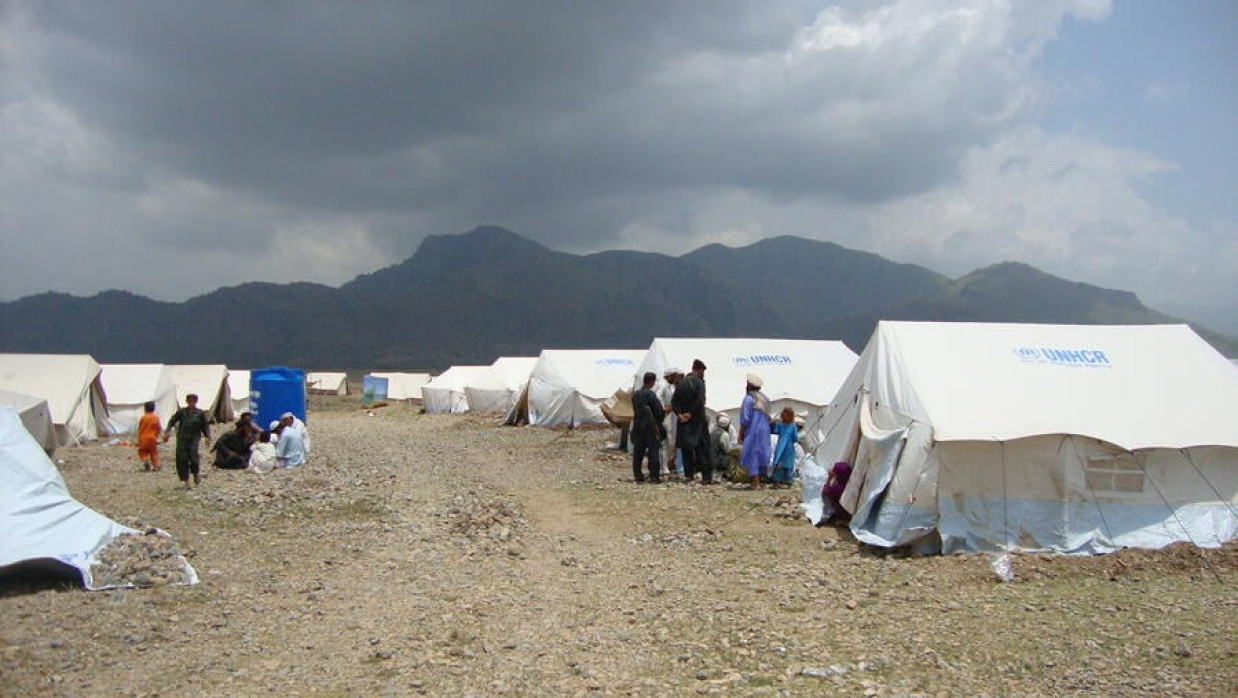
Since 1979, Pakistan has assumed a humanitarian duty of massive scope because it has sheltered millions of Afghan refugees who escaped from war and foreign military occupation and the breakdown of Afghan government control. The burden which Pakistan has endured since 1979 exceeds all but a few countries in modern times because of international relief efforts which did not share the load with Pakistan. Pakistan maintained its border access to refugees between 1979 and the end of its civil wars because it faced both international military invasions and internal insurgency threats, which led to its population growing beyond the number of many countries. Pakistan has become one of the world's biggest refugee host countries according to United Nations High Commissioner for Refugees (UNHCR) data, which shows that the country has been resettling and reintegrating refugees based on emergency response reports.
The hospitality extended to others did not exist without its own background. Pakistan faced multiple challenges when it worked to support Afghan refugees because the country experienced terrorism and internal displacement and economic problems and natural disasters. The community resources which included schools and hospitals and labor markets and housing and public services faced demands which lasted through multiple generations. Pakistan accepted humanitarian needs from refugees who arrived to its territory even though the country had not signed the 1951 Refugee Convention or the 1967 Protocol. The Proof of Registration PoR cards and Afghan Citizen Cards ACC functioned as administrative tools because their creators intended them to be temporary status documents which would remain valid through various extensions granted by authorities through goodwill.
Amnesty International issued an open letter to Prime Minister Shehbaz Sharif which described unlawful detention and harassment and deportation of Afghan refugees in Pakistan while it demanded an end to deportations and protection of people who need protection under international law. Human rights organizations have continuously reported their worries about government-led deportations which occur on a massive scale.
The discussion needs to take place within its complete legal and humanitarian and geopolitical context. Afghan nationals in Pakistan now face a situation where their PoR and ACC documents have expired because Pakistan does not provide them with a permanent legal system which would allow indefinite residency. Pakistan has maintained its current actions because the government needs proper procedures which began from its first extension and continued through all subsequent notification periods until actual implementation of those procedures. The government has provided details about transportation services and food supply and medical treatment facilities which will support returnees before the government-enforced deadlines.
The new conditions create a situation where people can return voluntarily without facing any legal or ethical violations because their return becomes an expected outcome which matches international standards. A nation cannot be expected to accommodate millions of undocumented immigrants forever after the main reason for their immigration has decreased. The term repatriation describes the process of returning to one’s home country while it does not include the act of being forcibly removed from a location that provides permanent protection. Pakistan has established return procedures which need to be completed in three stages while providing people with enough time and resources to make their return journey.
The process needs to correctly determine who holds responsibility for these events. The Afghan Taliban who control Afghanistan as its de facto government must stop asserting their right to rule while they fail to take responsibility for bringing back Afghans who want to return home. All three types of reintegration obstacles which include economic and social as well as institutional challenges must be handled by Afghanistan’s ruling authorities who will receive assistance from the international community. The practice of passing Afghan governmental duties to neighboring nations which have already endured excessive expenses for multiple decades represents an unfair and unsustainable approach.
The work of international humanitarian organizations remains essential yet their responsibilities should move more to Afghanistan instead of continuing to burden host nations. International organizations should prioritize development assistance with their various programs because they enable Afghan communities to sustain themselves better than maintaining extended borderless displacement. UNHCR and International Organization for Migration (IOM) have documented the ongoing return streams and the corresponding protection requirements while they advocate for countries to share their global responsibilities.
Critics argue that deportations and repatriations create dangerous situations for vulnerable populations who include women and children who face unsafe conditions when they return. A coalition of Afghan civil society groups and human rights advocates has urged Pakistan and the international community to halt enforced deportations. Pakistan asserts that all nations possess sovereign authority to restore their immigration controls which they can exercise during periods when immigration laws have lapsed and security issues intersect with immigration regulations.
Pakistan's standing as a nation does not eliminate its ability to practice humanitarian principles because its foundation rests upon those principles. The three elements of dignity which people earn through their actions and regional stability and lawful migration management do not exist as opposite forces. Afghan state duties require permanent protection which must not be replaced through hospitality while people should not treat generosity as perpetual legal duty. Pakistan shows extraordinary compassion which exceeds what most countries can achieve but its humanitarian efforts need to be balanced with national sovereignty and security and sustainable development.
The path forward requires people to return to their home countries while international organizations provide support inside Afghanistan and all nations share their responsibilities based on actual conditions instead of past practices. The world needs to develop sustainable solutions through shared responsibility which includes nations evaluating present circumstances and committing to the complete restoration of Afghanistan.

0 Comments
LEAVE A COMMENT
Your email address will not be published