

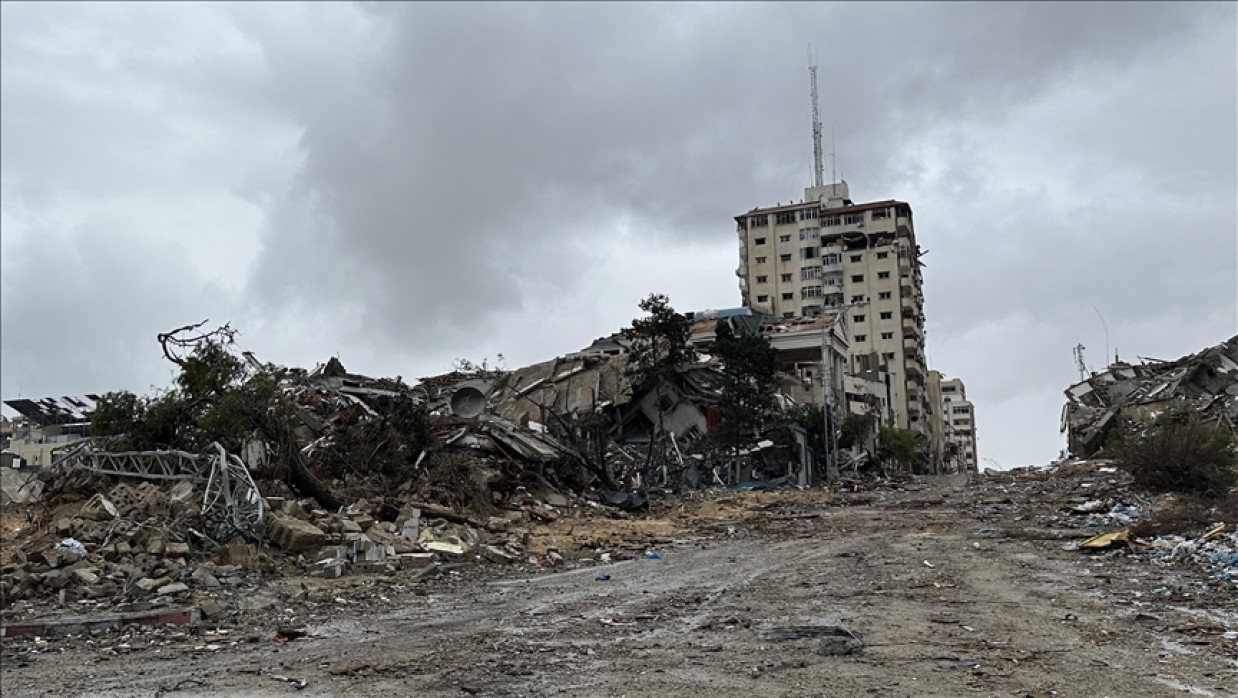
Pakistan made a major diplomatic step early in 2026 when it officially accepted an invitation to become a member of the Board of Peace (BoP), a new international framework as part of the Gaza peace strategy led by the U.S. The decision, announced on 21st January by the Ministry of Foreign Affairs in Islamabad, is an indication that Pakistan will seek to shape the new diplomatic architecture of the Gaza conflict, and the decision restates its long-standing principled support of Palestinian self-determination.
Board of Peace was initially revealed in late 2025 as a component of a wider Comprehensive Plan to End the Gaza Conflict, proposed by U.S. President Donald Trump. Originally envisioned as a narrow tool to unify a weak ceasefire and manage initial humanitarian coordination, the board has become a political discussion venue for long-term peacebuilding.
The involvement of Pakistan is directly linked to the United Nations Security Council Resolution 2803 that supports a ceasefire and multilateral assistance to peace in Gaza. Islamabad has clarified that the board should act within the international legitimacy and UN mandates and that a plausible, time-limited political process that culminates into an independent, sovereign Palestinian state is the only key to long-term peace. The Ministry of Foreign Affairs restated the long-standing policy of Pakistan regarding the Palestinian statehood, demanding a sovereign and contiguous state with Al-Quds Al-Sharif (Jerusalem) as its capital, in line with international law and two-state solutions promoted by the UN.
The foreign policy of Pakistan has never been bloc politics as it has good relations with major world powers such as the U.S, China and Russia. This strategic indifference puts Islamabad in a special position to broker in the conflicts that are usually stifled by deep-rooted animosities. Its participation in the UN peacekeeping missions in past decades has also shown its operational credibility beyond mere rhetoric support, which has also improved its moral authority at the international level. The stand on Palestine and Kashmir based on the resolutions of the UNSC and international law is principled and enhances the image of a consistent and reliable actor of Pakistan.
On a regional level, the involvement of Pakistan gives the Muslim world a greater voice in an international arena that determines the future of Gaza government and stability. By becoming a member of key Arab countries and other Muslim regimes, Islamabad demonstrates that the countries with a long-standing interest in the matter are collectively engaged, and Western-centric diplomacy will not disregard regional opinions. Its ruling is a move around the world to reconcile the differences in an international system that is polarized. The non-alignment and interaction of Pakistan across ideological and geopolitical borders enable it to promote existing international standards and remain credible in the multilateral environment.
Although there have been instances where Pakistan has been criticized over its broader participation in security programs, including the International Security Force (ISF), the officials emphasize that BoP membership is a political and diplomatic initiative, not military intervention. It is still concentrated on conflict resolution, humanitarian assistance and reconstruction, which are in line with the national interests of Pakistan as well as its international obligations.
As geopolitical fault lines in the Middle East continue to stiffen, the involvement of Pakistan sends a distinct message that it is not a spectator in the process of creating peace, it is an active participant. By the BoP, Islamabad is supporting Palestinian rights and is portraying itself as a positive regional player with the ability to facilitate dialogue, reconciliation, and sustainable security.
Being a member of the Board of Peace is not merely a diplomatic act, but a strategic necessity in a world where power balances are constantly shifting. Pakistan now faces the challenge of translating this engagement into tangible outcomes, including saving civilian lives, stabilizing Gaza, and setting a precedent for principled international action in the 21st century. Looking ahead, Islamabad has the opportunity to play a pivotal role in coordinating reconstruction efforts, facilitating multilateral dialogue, and ensuring that humanitarian aid reaches the most vulnerable populations. Its participation could also help institutionalize frameworks for long-term peacebuilding, enabling Gaza to emerge from repeated cycles of conflict with stronger governance, economic resilience, and social cohesion. Beyond immediate stabilization, Pakistan’s engagement positions it as a credible mediator in regional crises, capable of bridging divides between conflicting parties and enhancing the influence of the Muslim world in global diplomacy. If executed effectively, this involvement may not only reinforce Pakistan’s moral and strategic authority but also serve as a blueprint for principled, multilateral conflict resolution in other hotspots, demonstrating that sustained peace is achievable through dialogue, law-based frameworks, and coordinated international cooperation.


0 Comments
LEAVE A COMMENT
Your email address will not be published