

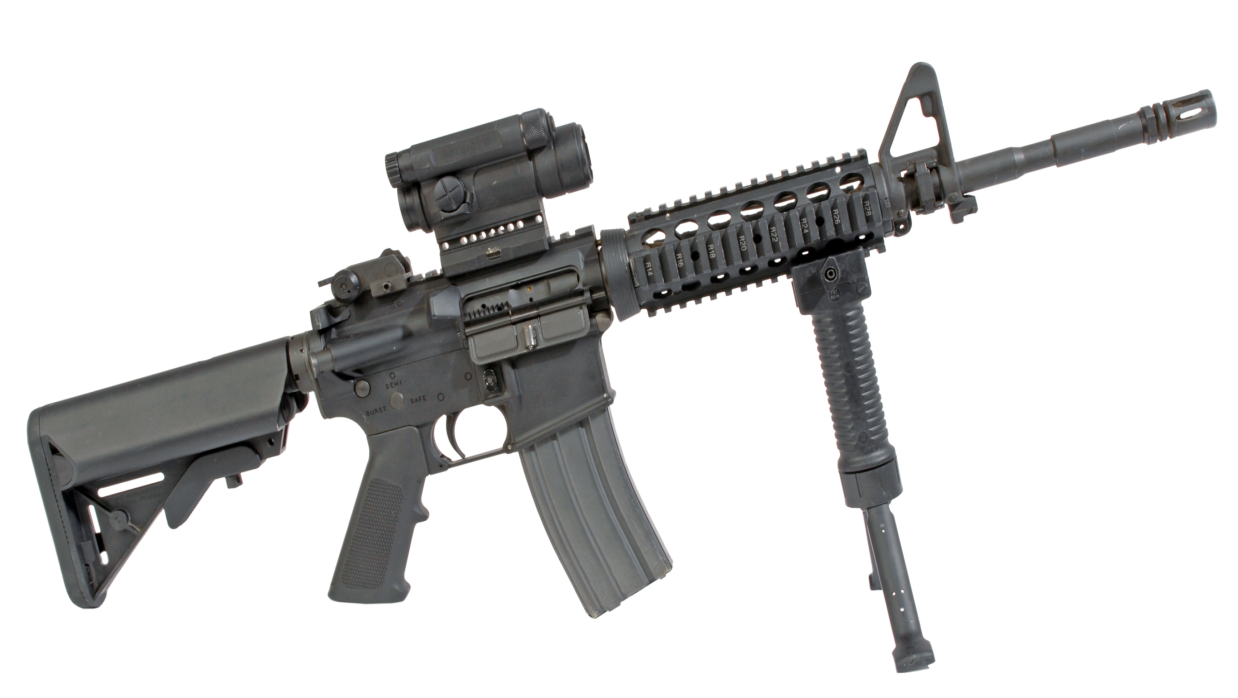
The recent incident involving TTP operative Harar Satoriani, who filmed himself unboxing an American M4 assault rifle allegedly supplied by the Afghan Taliban, underscores a growing and alarming security challenge for Pakistan. The footage was circulated on X (formerly Twitter), reflecting how militants increasingly exploit social media to broadcast their operations and propaganda. These U.S.-origin weapons, left behind after Washington’s withdrawal from Afghanistan in August 2021, are now in the hands of terrorists along Pakistan’s western borders, materially enhancing their operational capabilities against Pakistani security forces and civilians.
Following the U.S. exit, approximately $7 billion worth of military equipment- including M4 and M16 rifles, night-vision devices, and advanced tactical gear- remained in Afghanistan. UN reports and independent analyses confirm that a significant portion of these weapons has been diverted to terrorist networks that target Pakistan. Seizures by Pakistani authorities illustrate the scale of the threat: in May 2025 alone, 63 rifles originally supplied to Afghan forces were recovered from TTP operatives. In March 2025, three U.S.-made rifles used in the Balochistan train attack were traced back to Afghan-origin stockpiles. Night-vision equipment, initially priced at around $2,000 per unit, was reportedly sold on black markets for as little as $300 after the Taliban takeover. This dramatic devaluation highlights the widespread illicit circulation of high-end military gear, which has measurably increased the lethality and precision of attacks in Khyber Pakhtunkhwa (KP) and adjacent districts.
The tactical implications are significant. Terrorists equipped with U.S.-origin assault rifles and night-vision devices can conduct high-precision attacks on Frontier Corps convoys, police patrols, and military posts- targets that were previously difficult to strike with such efficiency. The Harar Satoriani episode, amplified through social media, illustrates not only the operational reach of these groups but also the deliberate facilitation by the Afghan Taliban, signaling a cross-border dimension to the terrorist threat. By supplying advanced weaponry, the Taliban have enabled asymmetric attacks that amplify the human and material costs for Pakistan’s security apparatus.
Analyses of seized weapons and operational patterns suggest that these are not isolated incidents. They reflect systematic diversion of military-grade equipment from Afghan stockpiles to terrorist networks operating in Pakistan. The black-market proliferation of arms, coupled with external facilitation, has materially enhanced terrorist capabilities, enabling coordinated and targeted assaults. This challenges Pakistan’s security forces to continuously adapt tactics and intelligence operations, as adversaries now operate with tools previously exclusive to state militaries.
Strategically, these developments underscore the importance of regional counterterrorism cooperation and rigorous monitoring of cross-border arms flows. The proliferation of foreign-supplied weapons into Pakistan not only strengthens terrorist organizations but also threatens regional stability. Each attack executed with U.S.-origin rifles or advanced tactical gear reinforces the need for Pakistan’s zero-tolerance policy against militancy while exposing the organized external support networks that continue to embolden groups like the TTP.
From a security policy perspective, the current environment demands three concurrent measures. First, enhanced intelligence-sharing and operational coordination with Afghanistan-adjacent partners to trace, intercept, and neutralize the movement of illicit arms. Second, stricter control of black-market channels that facilitate the sale of military-grade equipment. Third, sustained modernization and training for Pakistan’s security forces to counter high-precision threats enabled by foreign-supplied arms. Failure to address these vectors would not only embolden terrorists but could also destabilize Pakistan’s western regions, where local communities remain vulnerable to attacks facilitated by externally sourced weaponry.
The broader lesson is clear: abandoned foreign weaponry can materially empower terrorist organizations, prolong conflict, and undermine national security. For Pakistan, the Harar Satoriani case, now widely circulated on X, is both a warning and a call to action. It demonstrates the evolving nature of the threat along its western border and underscores the critical need for strategic vigilance, operational readiness, and regional collaboration to prevent the transformation of abandoned arms into instruments of asymmetric warfare.

0 Comments
LEAVE A COMMENT
Your email address will not be published