

India’s approval of the 260-megawatt Dulhasti Stage-II hydropower project on the Chenab River marks more than an incremental expansion of infrastructure-it reflects a deeper transformation in South Asia’s water politics. Coming after New Delhi’s April 2025 decision to place the Indus Waters Treaty in abeyance, the move signals a shift away from one of the world’s most durable frameworks for transboundary water cooperation toward a strategy in which upstream control is increasingly treated as a source of geopolitical leverage. For Pakistan, whose agricultural and economic stability depends overwhelmingly on Indus Basin flows, the implications are profound.
The Dulhasti Stage-II project, approved at a cost of Rs. 3,277.45 crore (approximately USD 395 million) and to be developed by the Indian public-sector company NHPC Limited, will utilise existing infrastructure from the 390-megawatt Dulhasti Stage-I plant commissioned in 2007. Indian officials maintain that the project qualifies as a run-of-the-river scheme and is therefore permissible under the Indus Waters Treaty. Yet treaty compliance cannot be evaluated in isolation from cumulative hydrological impact, strategic intent, or the concurrent erosion of dispute-resolution mechanisms that have governed Indus waters for more than six decades.
A Treaty Under Unprecedented Strain
Signed in 1960 under World Bank mediation, the Indus Waters Treaty is widely regarded as one of the world’s most durable transboundary water agreements. It endured wars between India and Pakistan, prolonged diplomatic deadlocks and repeated regional crises. The agreement granted India control over the eastern rivers-Ravi, Beas, and Sutlej- while allocating western rivers-Indus, Jhelum, and Chenab to Pakistan, allowing India only limited non-consumptive use under strict engineering and storage constraints.
Crucially, the treaty contains no provision allowing unilateral suspension or termination. Nevertheless, following the April 2025 Pahalgam incident and subsequent cross-border escalation, India halted hydrological data sharing, questioned the treaty’s dispute-resolution architecture, and accelerated multiple long-contested hydropower projects across the Indus Basin. Dulhasti Stage-II must therefore be understood not as an isolated infrastructure decision but as part of a broader policy trajectory that includes projects such as Ratle, Pakal Dul, Bursar, Sawalkot, Kiru, Kwar, and Kirthai-I and II.
In August, the Permanent Court of Arbitration once again confirmed that India is obligated to "let flow" the waters of western rivers for Pakistan's unrestricted use, meaning that the treaty’s obligations remained legally binding despite political disputes. Meanwhile, Pakistan has continued participating in Neutral Expert proceedings, highlighting an emerging asymmetry in complying with the treaty rather than a mutual non-compliance.
Chenab: From Shared Resource to Strategic Pressure Point
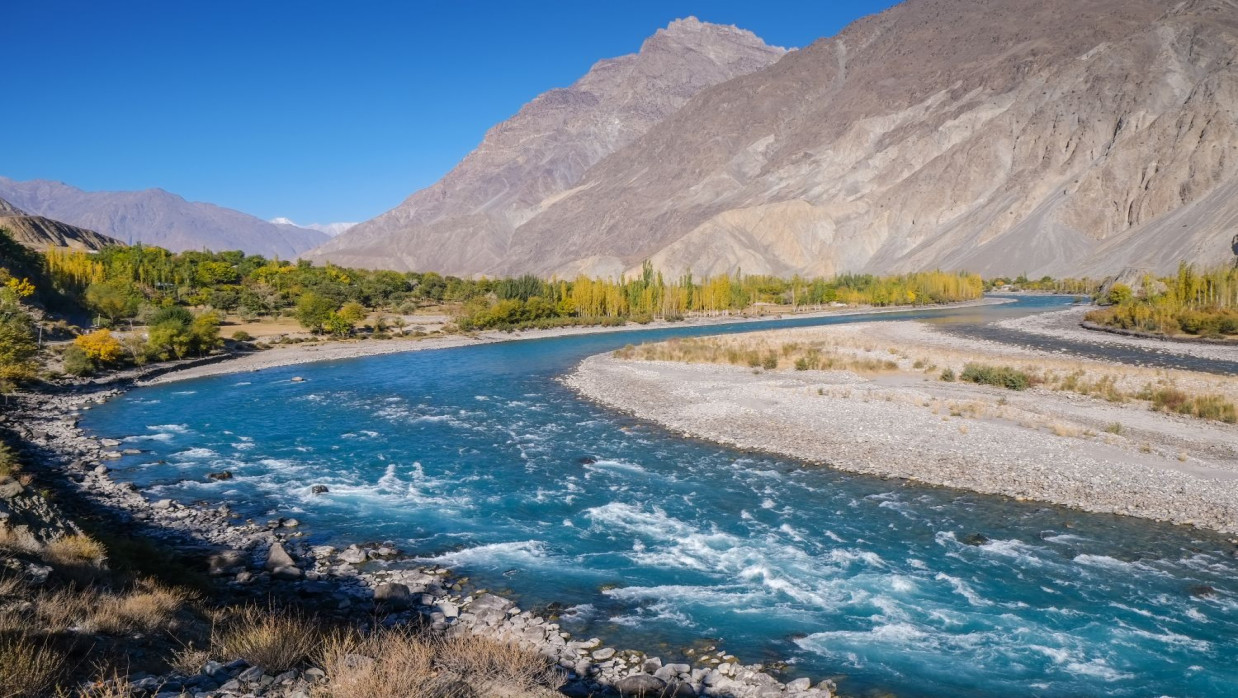
The Chenab River is major contributor to Pakistan’s agricultural and economic stability. As it flows into Punjab, it provides essential support for the irrigation of wheat, rice, and sugarcane which are country’s staple food security crops. Pakistan operates the world’s largest contiguous irrigation system, and over 80 percent of its agriculture depends on the Indus Basin. Even limited disruptions in timing or volume of flows can therefore produce outsized economic and humanitarian consequences.
Dulhasti Stage-II draws additional water from the Marusudar River, channelled through the Pakal Dul project into the Dulhasti reservoir. Indian environmental clearance documents themselves acknowledge that this reconfiguration will alter river morphology and ecology. A 25-kilometer stretch of the Marusudar river downstream will experience significant hydrological change with cumulative effects extending beyond India’s border.
While run-of-the-river projects do not permit large-scale storage, they still allow upstream operators to modulate the timing of flows, particularly during critical sowing and harvesting periods. In water-stressed agrarian systems, timing can matter as much as volume-an issue that lies at the heart of Pakistan’s concerns.
Water as a Non-Traditional Instrument of Power
This dynamic has increasingly been recognised beyond South Asia. According to the report by US-based Eurasia Group, which assesses the top risks of 2026, India has effectively weaponized water by suspending treaty obligations and withholding hydrological data from Pakistan. The report cautions that such actions jeopardize the agricultural sector, the food security, and rural communities in Pakistan, turning water into a new strategic battleground between the two nuclear-armed states.
Unlike conventional military escalation, water coercion operates gradually and often invisibly. Reduced or irregular flows can shrink harvests, destabilise rural incomes, increase food prices, and exacerbate malnutrition-without triggering immediate crisis thresholds. In a nation where agriculture dependent on the Indus River provides direct employment and sustenance for tens of millions, ongoing water uncertainty poses systematic economic and social risks.
Strategic and Regional Implications
India’s approach also carries implications well beyond the bilateral relationship. The Indus Waters Treaty has long been cited as evidence that cooperative water governance is possible even among adversaries. Its erosion risks establishing a precedent in which international water agreements become contingent on political convenience rather than binding legal commitments.
For downstream states globally-particularly in regions already strained by climate change-this precedent is troubling. Glacier melt, irregular monsoons, and increasing demand for fresh water are intensifying competition for water, putting the strength of international treaties to the test. Weakening one of the most successful international water-sharing treaty could escalate the global trend of treating water as a security issue.
From a security perspective, introducing resource coercion into the India-Pakistan equation has further strained the already fragile deterrence relationship. Unlike territorial disputes, water insecurity directly affects civilian survival and economic activity, making it difficult to isolate or contain during crises.
A Test Case for the Future of Indus Governance
Dulhasti Stage-II is therefore more than a hydropower project. It is a test case for whether the Indus Waters Treaty remains a living framework or becomes an eroded relic. Proceeding without meaningful international scrutiny or restored data-sharing mechanisms would embolden further unilateralism, deepen mistrust, and entrench water as a tool of strategic pressure.
Safeguarding the IWT is no longer solely a bilateral concern. It is tied to regional food security, climate resilience, and conflict prevention. The destabilization of this framework risks cascading effects on Pakistan’s agricultural output, rural employment, and long-term economic stability, while exacerbating tensions along one of the world’s most sensitive geopolitical fault lines.
In the short term, leveraging upstream control may offer India political or strategic advantage. In the long run, however, dismantling a treaty that has prevented rivers from becoming instruments of conflict for over sixty years risks transforming water from a shared resource into a permanent source of instability in South Asia.


0 Comments
LEAVE A COMMENT
Your email address will not be published