

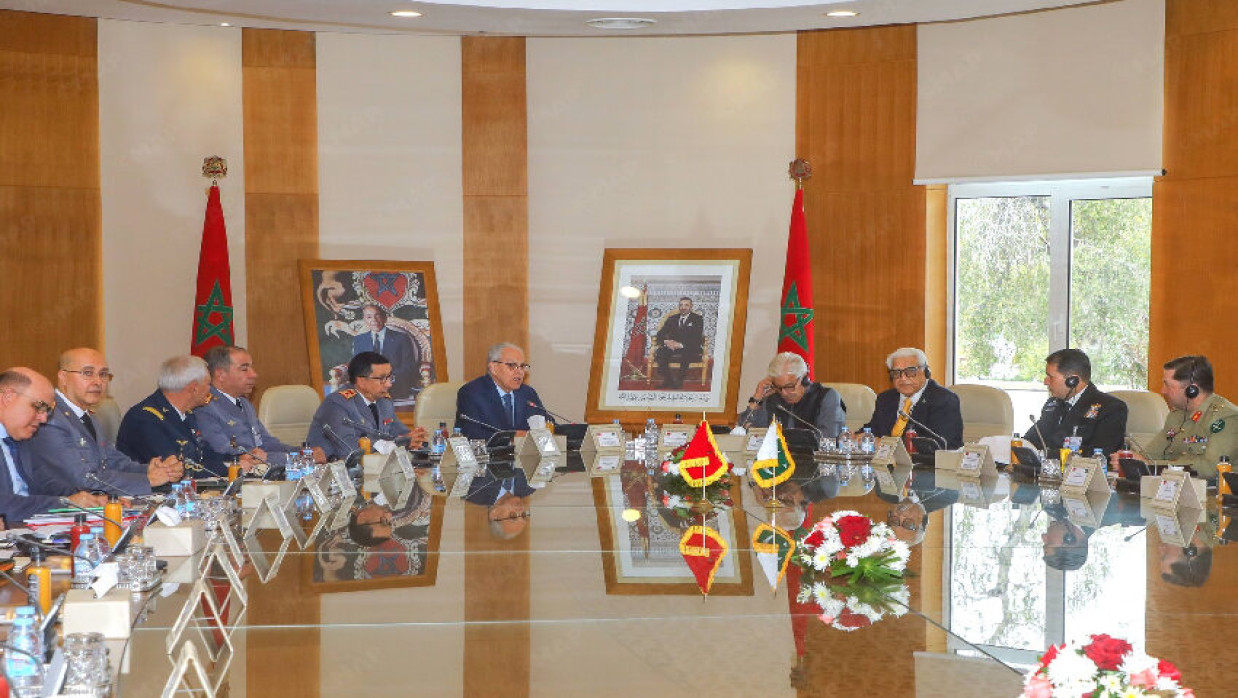
The fact that a new defense cooperation agreement was signed between Morocco and Pakistan, during a high-level visit to Rabat, is not just another milestone in terms of diplomacy. It indicates a rationalized convergence of interests in a period when the environments of regional security are becoming more liquid, technology mediated and interrelated throughout regions which were previously considered to be strategically separate.
On the face of it, the Memorandum of Understanding signed in Rabat is traditional. It includes accustomed fields like training, mutual military exercises, cybersecurity, military industries, military health, as well as the exchange of experience. However, in the broader geopolitical and security environment, the deal represents a silent but significant indication of the way the mid-sized powers are forming their defense alliances without the customary alliance systems.
In the case of Morocco, the deal will be well integrated into its long-term plan of diversification of defense relations as well as the renewal of military capacities. Rabat has progressively been playing the role of a security anchor in North and West Africa by balancing domestic modernization and external collaboration. The involvement with Pakistan provides an Asian component to this strategy providing access to a partner having decades of experience in operations, developing a base of defense production, and developed training facilities. Notably, this alliance does not come with the political strings that are common with defense alliances with bigger powers.
To Pakistan, the deal signifies its growing defense diplomacy outside the region that it inhabits. Cooperation has consistently been a goal of Islamabad in pursuit of building bilateral relations, liberalizing its defense market, and its image as a responsible security partner. Alliance with Morocco would provide Pakistan with an entry point to North Africa, which is becoming more and more strategically relevant because of transnational security threats, sea routes, and changing power dynamics in the Mediterranean and the Atlantic passages.
The focus on cybersecurity and defense industries is one of the most significant issues of the MoU. The history of modern defense cooperation is not associated with the exchange of troops or even the joint drills any more. The digital resilience, and the ability to communicate with safety are now the main priorities of the national security planning. Through institutionalization of cooperation in these spheres, the two nations realize that threats in the future might be hybrid in nature and combine conventional, cyber, and informational aspects.
The military sector is also important. The native defense industry in Pakistan has come of age and has manufactured aircrafts, naval platforms, armored vehicles and various electronic systems. Morocco has, in the meantime, been interested in building local maintenance, repair, and production capability but at the same time is integrated within the world supply networks. Cooperation here can transform the relationship between the two into a material economic and technological result in case joint production, training of engineers or transfer of technologies are realized even in the long run.
The other significant aspect of the agreement is the creation of a common follow-up mechanism. Defense MoUs do not fail due to intent but as a result of poor implementation. A well-organized system of coordination enhances the chances that agreed activities can be converted to long-term engagement as opposed to a one-time interaction. This process also denotes political intentions on both parties to make the partnership long term and not transactional.
The Morocco-Pakistan agreement is another example of an international security trend, which is broader in the regional view. Middle powers are also aiming to develop cross-regional relationships that will help them hedge against uncertainty and limit their reliance on one block. These are more pragmatic, capability-oriented and flexible, and do not have the inflexible nature of formal alliances, but can still provide strategic value.
Importantly, this collaboration does not seem that it is targeting some third party. Rather, it focuses on capacity building, interoperability and knowledge exchange. It will be simpler to make both countries seek the association without causing a breakdown of the existing regional ties. This is a measured and flexible approach that is contrasted with the zero-sum view of defense agreements in an era where such agreements are frequently considered through the prism of zero-sum.
Finally, the Morocco-Pakistan defense cooperation pact is more of a strategic indication than a orchestral switchover. It demonstrates that two states that are geographically apart may reach an agreement on the mutual ground regarding the security issues, professional military evolution, and technological adjustment. When correctly executed, the alliance would be a prototype of a cross-regional defence cooperation that is both balanced, prospective and based on mutual benefit as opposed to power politics.,
The pragmatic alliances of this kind can even be regarded as one of the most durable instruments that states could have in their arsenal in an uncertain global security environment.


0 Comments
LEAVE A COMMENT
Your email address will not be published