

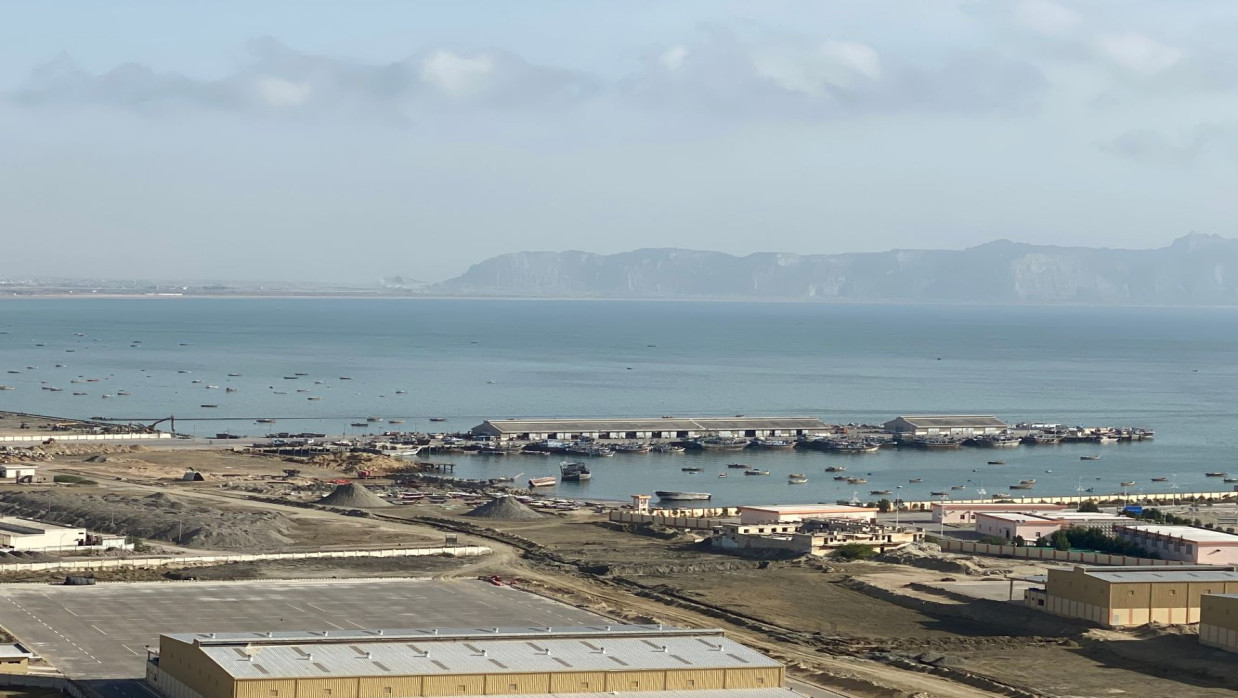
Pakistan once again stands at the threshold of a defining moment in its maritime and economic trajectory, where new initiatives by the government coupled with strategic research open the gate for a leap in the Blue Economy. As experts point out, with renewal of vigor and structural reforms, and with planned robust port infrastructure, reshaping national trade capacities, logistics strengthening, hence developing a regional maritime hub, it would unlock a value between $100 billion and $150 billion.
Ateeq ur Rehman, an independent economic and financial analyst whose research has contributed to catalyzing recent policy direction, said it was capable of generating this monumental revenue if Pakistan modernizes and expands its maritime sector with a long-term vision. "It is quite encouraging that determined and firm endeavors on the development of maritime potentials of Pakistan have already started," he underlined in a recent research proposal. He said that finally the country was moving from discussion to implementation, which was a turning point for the sector that has been largely underutilized.
The federal government fast-tracked the plans to reshape the country's maritime landscape, driven by energetic leadership from Minister for Maritime Affairs Muhammad Junaid Anwar Chaudhry. It announced plans for three new deep-sea ports along the 1,001-kilometer coastline-a strong indication that the government was making an ambitious move to increase capacity and reduce congestion in a bid to further grow maritime trade. A high-level multi-agency committee was formed for the purpose of identifying suitable locations for the ports, marking what experts term the beginning of the century-long maritime expansion program.
It follows the research proposal "Dire Need of Mini Sea Ports" by Ateeq ur Rehman, which underlined the requirement for simultaneous development of mini and deep-sea ports with a view to strengthening the maritime infrastructure of Pakistan. The approval justifies not only the importance of the study but also reflects the growing national consensus that maritime development is vital for economic resilience.
Rehman views the government's response as a big milestone in maritime advocacy, underlining that approval manifests an increasing recognition of blue economy potential. He notices that port development will provide a backbone to the improvement of the country's trade capacity, since at the moment, Pakistan relies on a few major ports, and for this very reason, bottlenecks, delays, and high logistics costs have weakened its competitiveness.
The mini-ports will decentralize the maritime logistics, increase accessibility of the coastline, and develop smaller economies along the coasts. Such infrastructure would provide an avenue for regional industry, fisheries, and coastal communities to be better integrated with national and international supply chains. At the other end, new deep-sea ports will accommodate larger vessels that could take on greater cargo throughput, thereby enhancing the appeal of Pakistan to international shipping lines.
Higher port capacity will, according to experts, directly respond to chronic congestion in the ports that has long impeded efficient trade in Pakistan. It will help exporters and importers with their increased cargo handling and better logistical capability, while it will also increase foreign investor confidence-a necessary ingredient considered essential for sustained economic growth.
Notwithstanding being enriched with tremendous maritime potential, the blue economy of Pakistan only contributes 0.4 to 0.5 percent to the national GDP, which is quite low as compared to international benchmarks. The coastline is heavy with marine biodiversity, mineral deposits, fisheries, and offshore economic potential but largely underutilized. As such, the analysts claim that proper investment in and governance of the sector could make it a strong driver of economic growth.
The Pakistan coastline offers opportunities relating to fisheries and aquaculture, tourism, renewable energy, and seabed mining, given rich marine species, ecosystems, and natural resources. Historical barriers to development have included restricted infrastructure, outdated technologies, and inadequate policy frameworks. These new maritime initiatives aim at overcoming these constraints through modernization and enhancing institutional coordination.
In all, diversified maritime projects include the deep-sea ports that were recently announced and are considered a major stride for trade development, regional connectivity, and the development of the blue economy in Pakistan. Better maritime infrastructure would translate into better supply chain resilience vis-à-vis a rapidly changing global trading environment, with growing competition among regional ports. Other regional countries, such as the United Arab Emirates, Oman, and India, have developed their maritime infrastructures to make them part of their respective economic transformations by attracting global shipping traffic and investment.
According to analysts argue that similarly positioned at a strategic geographical advantage along vital trade routes, Pakistan can achieve this if it can sustain the impetus and ensures effective implementation. The stakes are very high for Pakistan: while the concept of blue economy offers a road to economic diversification, it furthers the cause of national security, jobs, and social and economic empowerment of its coastal areas. Needless to say, with a rise in global trade through the sea route, countries in possession of developed maritime capabilities will emerge as major gainers.
The long-term government maritime expansion plan indicates a larger economic vision in which the ocean emerges as an important strategic resource. Of course, there are many hurdles ahead, such as transparent policy implementation, environmental safeguards, and capacity building, but the course being mapped certainly shows a sea change. Research support, governmental commitment, and increased awareness of the maritime importance might finally bring about the transformation of the blue economy in Pakistan so long waited for. If efforts continue relentlessly with strategic implementation, the country will receive an unparalleled economic dividend, reshape its maritime identity, and create for itself a better standing in regional and global trade networks. For the first time in decades, the maritime sector in Pakistan looks ready to set sail toward a far more prosperous future-one driven by ports, policy, and potential.


0 Comments
LEAVE A COMMENT
Your email address will not be published