

Nepal’s latest communal unrest is a warning that political authority cannot be exercised through silence, improvisation and informal advisers. Social media may spread sectarian rumors faster than ever, but communal violence rarely erupts from online provocation alone. It usually requires accumulated grievances, political manipulation and an administration that has failed to establish public trust.
Violence that started in Sunsari and later spread to Siraha was reported to have killed three people and left at least 25 others injured. Clashes between Hindus and Muslims began after disagreements over religious flags and loud music. Misleading photographs and old videos were circulated on social media to stoke tensions further, diverting attention from the original conflict. Police fired upon crowds, killing two people in Sunsari. A third fatality occurred during protests in Siraha. Curfews were imposed on several towns. (Reuters)
The crackdown evoked memories of Nepal’s 2015 Tarai crisis, in which political disenfranchisement, contested constitutional settlements and a heavy hand led to protracted strife. Nepal should have learned that bullets cannot answer demands for dignity, representation or intercommunal trust. When a government fires first and asks questions later, it risks turning a small-scale riot into a full-blown insurgency.
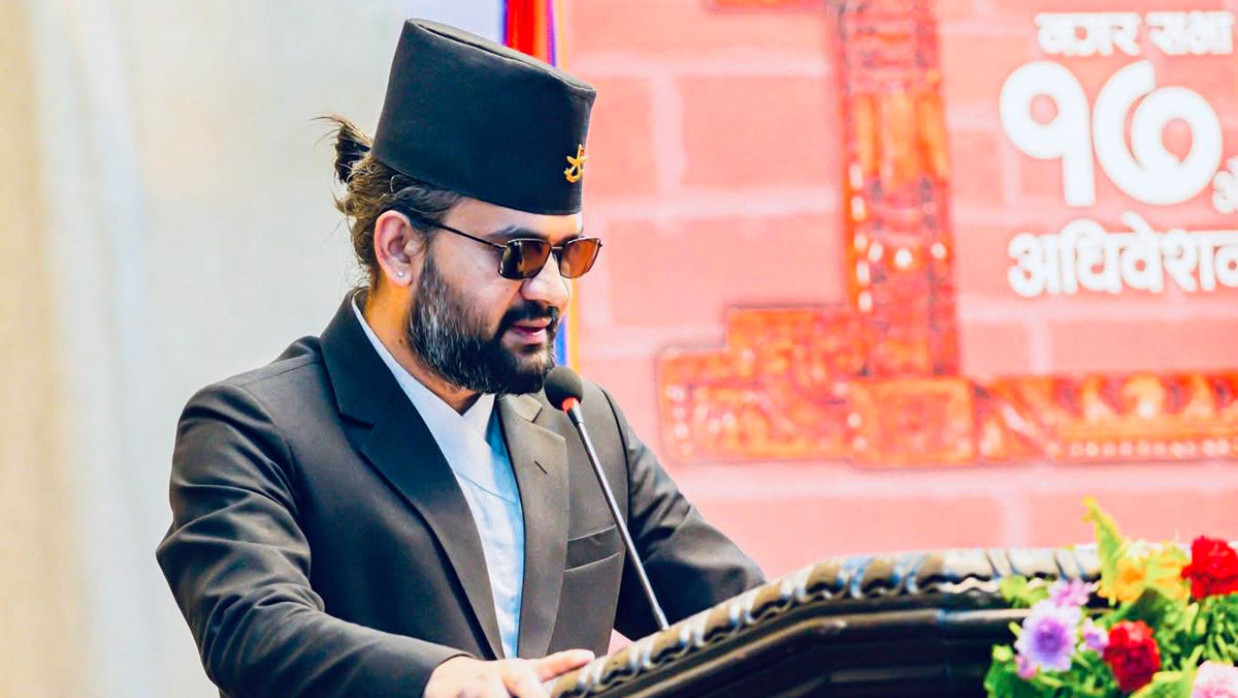
Prime Minister Balendra Shah finally ended his months-long silence with the public. Four months into his tenure, Shah spoke to the nation in Nepali and Maithili, called for peace between communities, and pledged a fair inquiry. His words were careful and, at times, statesmanlike. Still, he posted the speech on his Facebook page rather than delivering it on national television a surprising choice during a national crisis. (Reuters)
Shah also met Nepal’s president, Ram Chandra Paudel, whom Shah had otherwise avoided. Welcome as these steps were, they raised an awkward question: Did Nepal need deaths and the specter of larger-scale turmoil before its prime minister would visibly lead the country? (The Rising Nepal)
Shah is still learning how to govern. He entered office carrying enormous expectations after the Rastriya Swatantra Party’s sweeping electoral victory. His rise symbolized the rejection of Nepal’s entrenched political establishment and its culture of patronage. But campaigning against the old order is easier than constructing a disciplined new one.
Nepal increasingly appears to have two parallel governments. One operates constitutionally through the Council of Ministers, Parliament and the civil service. The other functions through the prime minister’s “kitchen cabinet,” a small circle of friends and advisers whose authority is unclear but whose influence appears substantial. When these two centers do not communicate, ministers become spectators, institutions are bypassed, and accountability disappears.
In contrast to that style, RSP Chairman Rabi Lamichhane demonstrated a different kind of leadership. Lamichhane moved quickly to consult religious leaders and political actors in an attempt to restore trust between communities before the violence escalated further. His intervention also highlighted the government’s early inertia. (The Rising Nepal; joint appeal by religious leaders)
There is another controversy involving reports that Shah’s chief adviser, Kumar Byanjankar, also known as Kumar Ben, secretly visited India without briefing Nepal’s Ministry of Foreign Affairs. Ben has denied visiting India, while other reports claim he reached New Delhi via an indirect route. The truth of these conflicting claims must be established. What remains baseless, however, is speculation linking the alleged visit to the violence in the Tarai without credible supporting evidence. (The Kathmandu Post)
Still, developments across the border offer a lesson about political accountability. Student protests in India compelled Education Minister Dharmendra Pradhan to resign amid public anger over examination leaks, unemployment and the failure to hold officials accountable. (Reuters; Associated Press) Youth demonstrators have brought similar grievances, including anger over nepotism, corruption and the scarcity of opportunities, to the streets of Nepal. (Carnegie Endowment for International Peace)
Communal violence is only one facet of Nepal’s crisis. The deeper issue is the growing disconnect between what voters expect and what their government delivers. Will Prime Minister Shah govern through democratic institutions or through handpicked cronies? Nepal may live with competing centers of power for a time. But it cannot have two governments indefinitely without eventually losing faith in both.


0 Comments
LEAVE A COMMENT
Your email address will not be published