

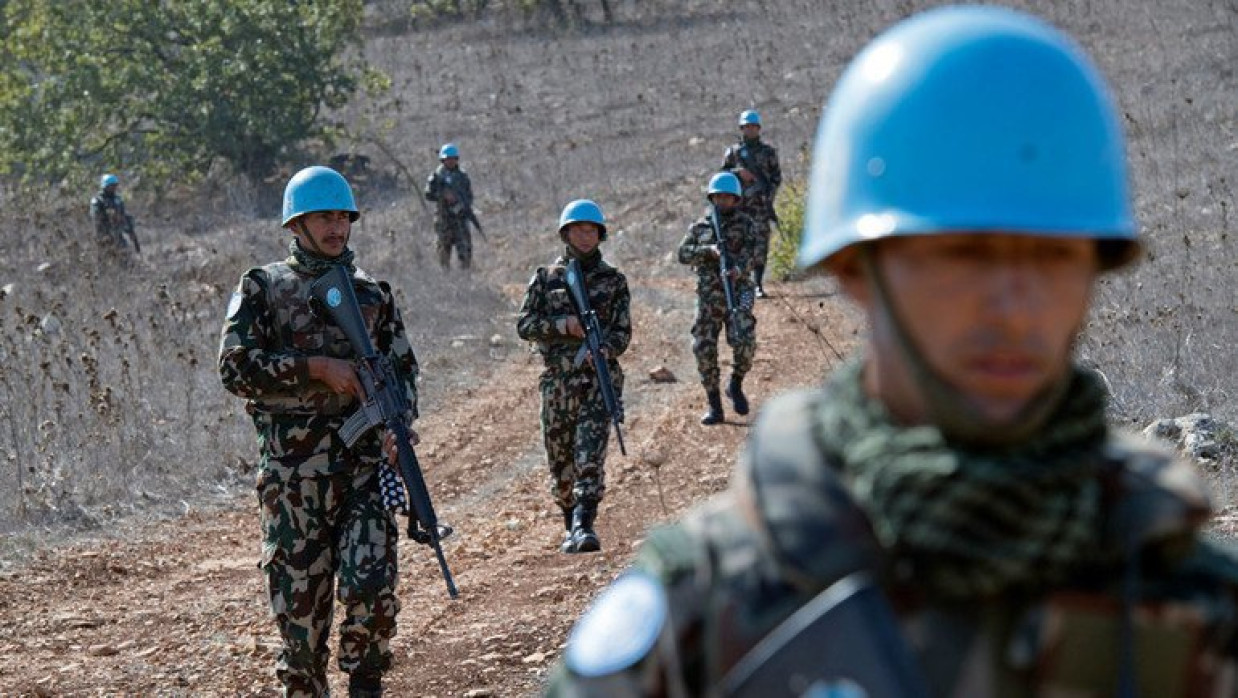
Nepal is a significant contributor to the United Nations ( UN) peacekeeping operations,consistently ranking among the top troop and police-contributing nations. Over 155,000 Nepali personnel have served in 44 UN missions since 1958, with over 6,000 currently deployed across different missions, according to the UN. Nepal's commitment is rooted in its foreign policy, which emphasizes the importance of maintaining international peace and security.
Nepal’s three main security agencies – Nepal Army, Armed Police Force Nepal and Nepal Police contribute to UN peacekeeping. Nepal Army is the one of the largest contributors of troops in the world under UN peacekeeping efforts. Nepal's contributions are known for their high professionalism and discipline. The country has a strong focus on protecting civilians and has endorsed principles like the Kigali Principles on the Protection of Civilians. Nepali peacekeepers receive specific training on civilian protection, and Nepal has a zero-tolerance policy for sexual exploitation and abuse.
Peacekeeping by the United Nations is a role of the United Nations's Department of Peace Operations and an "instrument developed by the organization as a way to help countries torn by conflict to create the conditions for lasting peace". It is distinguished from peacebuilding, peacemaking, and peace enforcement although the UN does acknowledge that all activities are "mutually reinforcing" and that overlap between them is frequent in practice.
Peacekeepers monitor and observe peace processes in post-conflict areas and assist ex-combatants in implementing the peace agreements they may have signed. Such assistance comes in many forms, including separating former combatants, confidence-building measures, power-sharing arrangements, electoral assistance, strengthening the rule of law, and economic and social development. Accordingly, UN peacekeepers (often referred to as Blue Berets or Blue Helmets because of their light blue berets or helmets) can include soldiers, police officers, and civilian personnel.
Peacekeeping operations contribute to progress across several Sustainable Development Goals, particularly those related to peace, justice, and strong institutions. Their efforts also intersect with goals on gender equality, health, and reduced inequalities. By creating safer environments and supporting local institutions, peacekeepers help lay the groundwork for long-term development and stability.
Nepali peacekeepers serve in various capacities, including contingents, military observers, staff officers, and specialized units like engineers and military police. Nepali peacekeepers have served in numerous missions across Africa, the Middle East, Asia, and Europe. Some of the missions where Nepal has participated include those in Congo, South Sudan, Sudan, Western Sahara, Israel, Lebanon, Mali, Syria, Central African Republic, Iraq, and Libya. Nepal has lost 93 peacekeepers who made the ultimate sacrifice while serving under the UN flag. Nepal's Birendra Peace Operations Training Centre plays a crucial role in training personnel for UN peacekeeping missions. Nepal has been recognized for its efforts to increase the participation of women in peacekeeping operations. Nepal is exploring the use of technology and innovative solutions, such as unmanned aerial systems (UAS), to enhance peacekeeping operations.
Birendra Peace Operations Training Centre (BPOTC) is a renowned training institute of Nepal which is dedicated to training peacekeepers for employment in various United Nations Peace Keeping Operations (UNPKO). Today BPOTC trains almost 6000 Peacekeepers annually prior to their deployment in various PKO. Recently, the training center has been verified by Integrated Training Services of UN DPKO and awarded UN training recognition for Pre- Deployment training and United Nations Staff Officers Course conducted at the center. This step has proven itself to be a milestone achievement and has paved the way for this center to establish itself as "Center Of Excellence" and a globally recognized Peace Keeping Training Centre in this region.
The UN and the specialized agencies division under the Ministry of Foreign Affairs is responsible for Nepal’s relations with the United Nations and other international organizations. It works to protect and promote Nepal’s national interest in the United Nations and other multilateral and international organizations and processes by makes substantive preparations, and plans and performs functions related to the participation and representation of Nepal in conferences, sessions and meetings of the UN, its specialized agencies, and other multilateral and international organizations, and entities. This division also functions related to UN peacekeeping missions and other missions
The Ministry of Foreign Affairs, Nepal Army and Nepali missions abroad with UN Peace Keeping missions abroad jointly contribute to soft military diplomacy. Military diplomacy, also known as also defense diplomacy, leverages military capabilities and personnel to achieve foreign policy objectives through non-coercive means, effectively acting as a form of soft power. It involves building relationships, fostering trust, and promoting shared values and interests, rather than relying on direct military force or economic pressure.
Nepal has also evolved its historical military prowess into modern international trust, ranking as a premier, highly-respected contributor to UN peacekeeping missions globally to project "soft power," overcoming its small-state status to build global trust, moral authority, and diplomatic credibility. Situated between India and China, Nepal maintains a politically non-aligned stance, allowing it to host international dialogues without geopolitical bias. Like Switzerland, it relies on historic neutrality and serves as a premier hosting crucial regional summits and international secretariats. Kathmandu and Pokhara serve as emerging destinations for global peace negotiations and regional dialogue.
Nepal’s soft power relies on cultural and geographic persuasion, such as the spiritual legacy of Lord Buddha, the majesty of Mount Everest and the Himalayas, its diverse cultural heritage, and the global reputation of Gurkha soldiers. By deploying troops to numerous missions, Nepal not only supports global peace efforts but also enhances its international standing and influence. This involvement, particularly in conflict zones, allows Nepal to project an image of a responsible and peace-loving nation, contributing to its soft power projection.
Nepal leverages its peacekeeping role as a key component of its soft power diplomacy. Soft power, in this context, refers to the ability to influence others through attraction and persuasion rather than coercion or force. Nepal's participation in peacekeeping operations elevates its global image, portraying it as a responsible and reliable partner in maintaining international peace and security. Contributing to peacekeeping missions allows Nepal to have a voice in international affairs and potentially influence the agenda of the UN and other international bodies. Now Nepal can use its experience in peacebuilding to advocate for peaceful resolutions to conflicts and promote international cooperation.


0 Comments
LEAVE A COMMENT
Your email address will not be published