

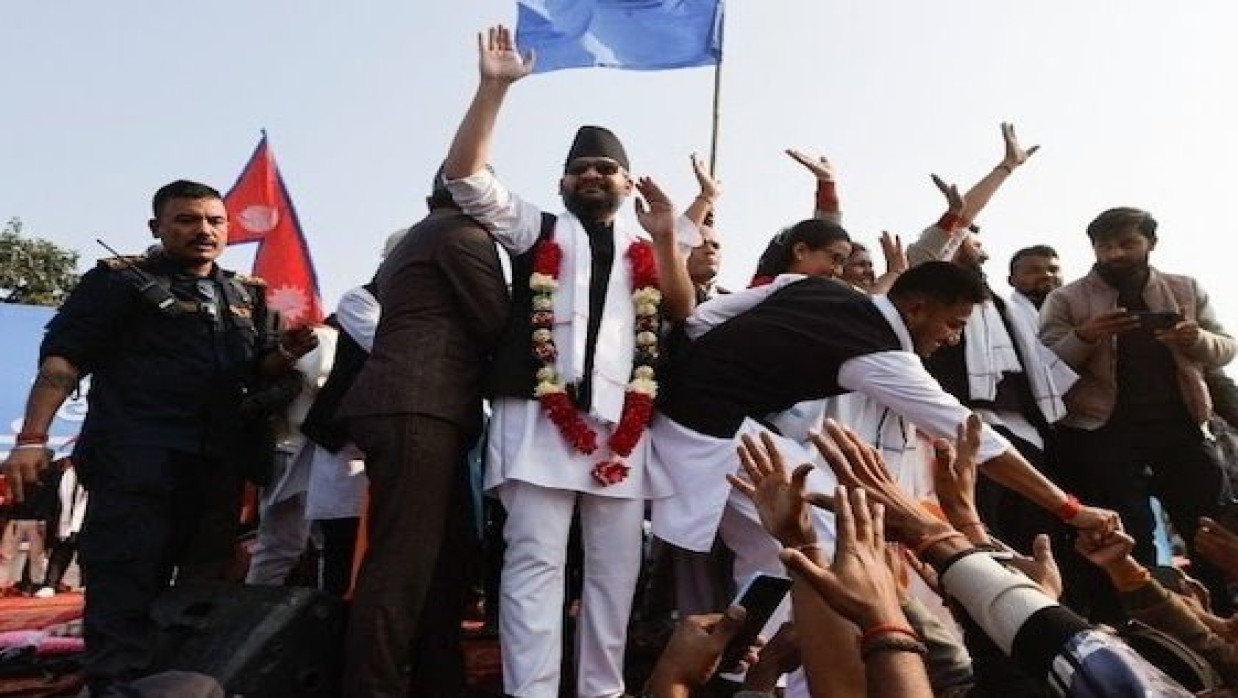
The wave of victory of newcomers with novel streams of thoughts swept away the monopoly of old guards in the election of the House of Representatives (HoR) in Nepal. This political realignment is the change in behavior of voting groups, switching of their preferences from one party to another. The culture of voters that is altered over time as technology advances, needs for change, and values evolve are also factors for political realignment. With this shift, people's views and desires have also changed by resulting in parties realigning relevant to the new political atmosphere.
A political realignment is a composition of fast changes in party-related ideology, issues, leaders, regional bases, demographic bases, and/or the structure of powers. These changes result in a restructuring of political focus and power that lasts for decades, usually replacing an older dominant coalition. Political realignments can be sudden (1–4 years) or can take place more gradually (5–20 years). Political scientists and historians often disagree about which elections are realignment and what defines a realignment, and even whether realignments occur. The terms themselves are somewhat arbitrary, however, and usage among political scientists and historians does vary. In the US, some argued for a 30–38 year "cycle" of realignments and other favored 38-year cycles are considered "realigning" for different reasons. Though they differed on some of the details, earlier realignments scholars generally concluded that systematic patterns are identifiable in American national elections. Such cycles occur on a regular schedule: once every 36-years or so. This period of roughly 30 years fits with the notion that these cycles are closely linked to generational change.
In Nepal, it usually occurs in the duration of 30-35 years as a "cycle" of realignment. After multiparty democracy in 1990, Gen Z protest in 2025 is the latest cycle of political realignment in Nepal. The "Gen Z protest" was a driving force for political realignment in Nepal, which was, largely leaderless, youth-led uprising that erupted in September 2025, driven by frustration over systemic corruption, high unemployment, and a government ban on social media. The protests forced the government of KP Oli to step down, after which President Ram Chandra Paudel appointed Sushila Karki as the interim Prime Minister of Nepal. The goals of the Gen Z movement were to end corruption, reduce unemployment, promote good governance, and ensure economic equality, which were missing parts before the period of Gen Z protests. During these protests, at least 74 people were killed, and multiple government buildings, political parties’ offices as well as the parliament and the president’s residence along with private and commercial properties were set on fire, causing losses in trillions of rupees.
During the last municipal election, the victory of independent Mayors from Kathmandu, Dharan and Dhangadhi are also considered to be a sign of people’s aspirations for political realignment as well as indication for change in the political monopoly of old political parties. Last year, as a product of the Gen Z movement, some political incidents and events gave new momentum to political change. A new alliance formed by Rastriya Swatantra Party(RSP) leader Rabi Lamichhane and former Kathmandu Mayor Balendra Shah, which challenged the traditional, long-established political parties, proved to be a well articulated strategy for better performance in the election. The rising nationwide popularity of Balen Shah made RSP the number one political party in the election of HoR. The victory of Balendra Shah by defeating former Prime Minister KP Sharma Oli in HoR election from Jhapa 5 constituency has been an historical moment in politics of Nepal. This election squeezed major political parties into the lower positions.
Most importantly, the formation of a new government under the Premiership of RSP party leader Balendra Shah by breaking the musical chair rotational monopoly of leaders of old political parties has been a big bout in the process of political realignment in Nepal. Moreover, it has already started to implement the recommendation of a high-level inquiry commission led by former high court judge Gauri Bahadur Karki, formed to investigate the September 2025 Gen-Z protests, which uncovered a centrally coordinated crackdown by top political and security officials. As a first step to implement the findings of the high level committee, the government has arrested former Prime Minister KP Sharma Oli and former Home Minister Ramesh Lekhak for their alleged involvement in the killing in last year's Gen Z protests.
Previously, after the promulgation of constitution of Nepal in 2015, three figures ( Sher Bahadur Deuba from Nepali Congress, KP Sharma Oli from Nepal Communist Party, UML and Pushpa Kamal Dahal from Nepal Communist Party (Maoist) were continuously in position of premiership turn by turn.
After the Gen Z protests, there have also been big changes in the Nepali Congress party. A special convention of the Nepali Congress, by the majority of representatives, convened under the leadership of the Gagan Thapa–Bishwa Prakash Sharma group, which elected Gagan Thapa, it revolted against the party President Sher Bahadur Deuba faction and the special convention elected Thapa as party president unanimously. This convention changed the old guards in the party, however due to strong divisions and declining democratic exercises inside the party, the new establishment of Nepali Congress could not get the confidence and good support from the people in the general election and the party squeezed in the small position of opposition with nominal seats in HoR. And, based on experiences of some countries, the weak opposition in the HoR could be full of risk for democracy, if the high majority government diverted from the main objectives of the state.
The landslide victory of Gen Z supported Rastriya Swatantra Party, in the recent general election has been a center point of new hope for the majority of people in Nepal.This rapid, grassroots-driven rise of a new political party led by a majority of youths would certainly break the cycle of instability that has characterized Nepal's political landscape for decades. And it is expected that the new leadership would extensively implement the transformative changes the population was demanding during the Gen Z protests in Nepal.
After all the ups and down, it is expected that political stability—characterized by low conflict, reliable legal frameworks and rule of law, consistent policies, and, often low level of corruption— would certainly accelerate economic and political transformation in the nation. The first cabinet meeting of the Balen led new government also approved 100 new initiatives aimed at administrative and governance reforms, signaling a focus on efficiency and systemic improvements. Moreover, the newly appointed ministers , in their first day, as an indication of morning shows the day have also made encouraging decisions to drive the nation in the right direction. Above all, the fruit of political realignment would certainly be converted into stability and prosperity because economic crises can trigger political collapse, which the nation cannot bear any more.

0 Comments
LEAVE A COMMENT
Your email address will not be published