

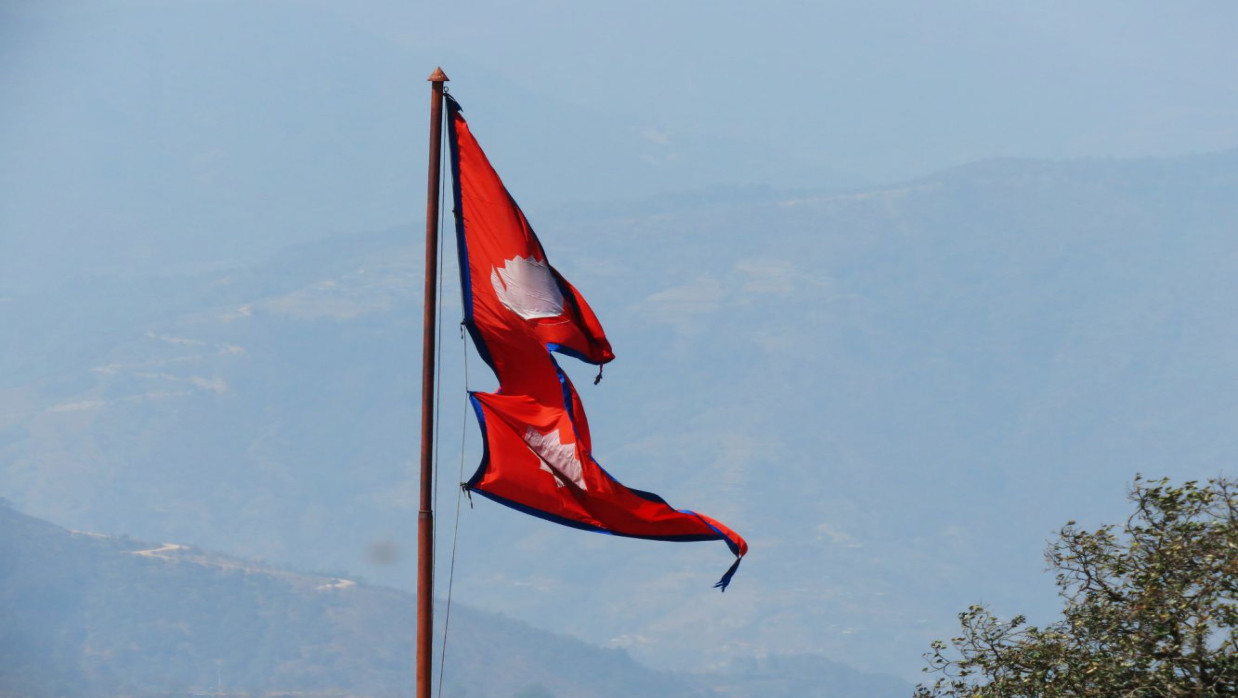
Nepal Between Two Giants
Situated in South Asia, Nepal has one of the most geostrategically sensitive locations in Asia. Bordered by India to the south and China to the north, Nepal often had to accommodate pressure from both neighbors in its foreign policy, economy, and internal politics.
India and China have extremely different governing bodies and ideologies, but both will have substantial impacts on Nepal. India provides Nepal with most of its trade and labor opportunities. Essentially, all imports and exports pass through India, and Nepal relies on it for transit, fuel, and migrant workers. China, however, also plays a strong role in Nepal's economy and politics, providing infrastructure development and trade opportunities.
Nepal's internal politics often reveal whether a party prefers India or China. No party outright states that they choose one country over the other, but their ideologies tend to make that inference easy.
The Pro-India Political Orientation
India is traditionally seen as having the closest ties with the Nepali Congress (NC). NC helped lead Nepal's resistance to the mid-twentieth-century Rana oligarchy, and many NC leaders were acquainted with Indian leaders and institutions. NC politicians have traditionally supported policies friendly to India: free-market economics, democratic governance, and deeper regional economic integration with South Asia. India is by far Nepal's biggest trading partner, and most imports (including fuel and basic goods) flow through Indian ports and overland routes. Kathmandu and New Delhi have seen strong bonds between political leaders due to this structural interdependence, especially between NC leaders. Some political parties aligned with Nepal's Madhesi people in the Terai have also been viewed as pro-India. Madhesis have ethnic, linguistic, cultural, and economic ties to residents living on the open border with India. However, they mainly push for more rights for Madhesis within Nepal rather than acting as proxies for Indian interests.
The Pro-China Political Orientation
On the other side of Nepal's political landscape are its communist parties, traditionally friendlier towards Beijing. They include Nepal's largest communist party, the Communist Party of Nepal (Unified Marxist–Leninist), and the Communist Party of Nepal (Maoist Center).
Ideological and political differences aside, these parties have at times pushed for greater alignment with China. Beijing is seen as a way to balance Nepal's foreign relations and limit Kathmandu's economic dependence on New Delhi.
Over the last 20 years, China's footprint in Nepal has grown considerably. Under projects related to the Belt and Road Initiative, China has funded highways, hydropower plants, and even plans for a rail link across the Himalayas connecting Tibet to Kathmandu.
There are several reasons Nepal matters to China. Firstly, Beijing takes its security interests in Tibet very seriously. Nepal is home to thousands of Tibetan refugees. Over the years, Chinese officials have pressed Nepal to limit the political activities of Tibetans advocating for independence.
Secondly, Nepal is one piece of China's broader ambitions to increase its economic and political clout throughout South Asia. By investing in infrastructure development, providing development aid, and cultivating political ties, Beijing can further entrench itself in a neighborhood that has long been New Delhi's sphere of influence.
Leaders of Nepal's communist parties have been eager to accept Chinese funding to boost the country's infrastructure and reduce Nepal's dependence on India.
The Nationalist and Balancing Camp
A third orientation in Nepalese politics emphasizes strategic neutrality and national sovereignty. Advocates of this approach argue that Nepal should maintain balanced relations with both India and China while avoiding excessive reliance on either power.
This philosophy is deeply rooted in Nepal's diplomatic tradition. Nepalese foreign policy has often been described as pursuing "equidistance" between its two powerful neighbors. The objective is to maximize economic opportunities while preserving political independence.
Supporters of this balancing strategy believe Nepal can benefit from Chinese infrastructure investment while maintaining its vital economic connections with India. However, achieving such an equilibrium has always been challenging.
Nepal's geography naturally ties its economy to India through open borders, trade corridors, and labor migration. At the same time, China's rapid rise as a global economic power offers Nepal new investment and development opportunities. Navigating between these two realities requires diplomatic finesse and political stability.
The Emergence of the Rashtriya Swatantra Party
Nepal's new political player, the Rashtriya Swatantra Party (RSP), has been on the rise. Nepal's old guard of political parties has been largely aligned with the pro-India and pro-China camps for many years.
But RSP hasn't exactly positioned itself towards any of these camps. Rather, it brands itself more as an anti-corruption and better governance political party.
The party's popularity speaks volumes about public sentiment against political elites and disappointment with the persistent political deadlock.
Leaders from RSP, such as Balendra Shah, have tapped into the youth psyche that they are less bothered by political parties drawing lines between pro-China and pro-India. They seem to care more about good governance, jobs, and ending the country's perennial political turmoil than about who praises or condemns Nepal's politics.
RSP has gained popularity across sectors, cutting across generations, geographic regions, and ideologies, because it no longer aligns with politics as it did in the past few decades.
Balendra Shah's Potential Foreign Policy Approach
Balendra Shah has not explicitly laid out a foreign policy vision or doctrine. But several general positions can be gleaned from RSP statements.
Nepal will continue to pursue a balancing act between India and China. Shah will almost certainly not discard Nepal's traditional foreign policy approach of cultivating friendly ties with both neighbors. For geographical reasons, Nepal cannot afford to alienate one at the expense of the other.
Balendra Shah's foreign policy decisions will likely be guided more by economic development concerns than by ideology. Shah's political rhetoric has centered less on geopolitics and focused more on providing Nepalis, especially youth, with better governance, investment, and jobs. Many young Nepalis have become disillusioned by Nepal's lack of opportunities and have begun seeking employment overseas.
Expand relations outside South Asia. The RSP may seek to further engage with countries beyond South Asia, such as the United States, the European Union, Japan, and multilateral development partners such as the World Bank and the Asian Development Bank.
Doing so would allow Nepal to benefit from more markets and reduce dependency on any one country's goodwill.
The Risks of Intensifying Geopolitical Competition
Nepal's political changes coincide with growing geopolitical rivalry across Asia. India and China are jockeying for influence across South Asia with infrastructure loans, trade deals, and diplomatic outreach.
The key test for Nepal will be to leverage these partnerships for development without becoming politically dependent in new ways.
Coalition governments have often been weak and subject to political instability in Nepal. Governments have even changed in office amid struggles to hold them together. A stable government that can get things done will be important to protect Nepal's independence as it seeks to manage great-power rivalry.
A Potential New Direction for Nepal
Does Nepal's election result herald a new dawn?
The RSP's potential to form a stable government signals a new era in Nepal's democratic journey. Winning people's mandate has shown that the people of Nepal want transparency, change, and economic development.
RSP faces challenges of keeping its leaders cohesive and supporters' patience intact while dealing with external stakeholders who have the muscle.
Now it's time for them to show results!
Nepal's democracy has spoken loud and clear. Change has come!
For years, Nepali politics has been marked by short-lived governments and powerful feudal forces. The people have had enough.
Will Balendra Shah and RSP meet the expectations of Nepali people? Will it shape Nepal's future relationship with India and China?


0 Comments
LEAVE A COMMENT
Your email address will not be published