

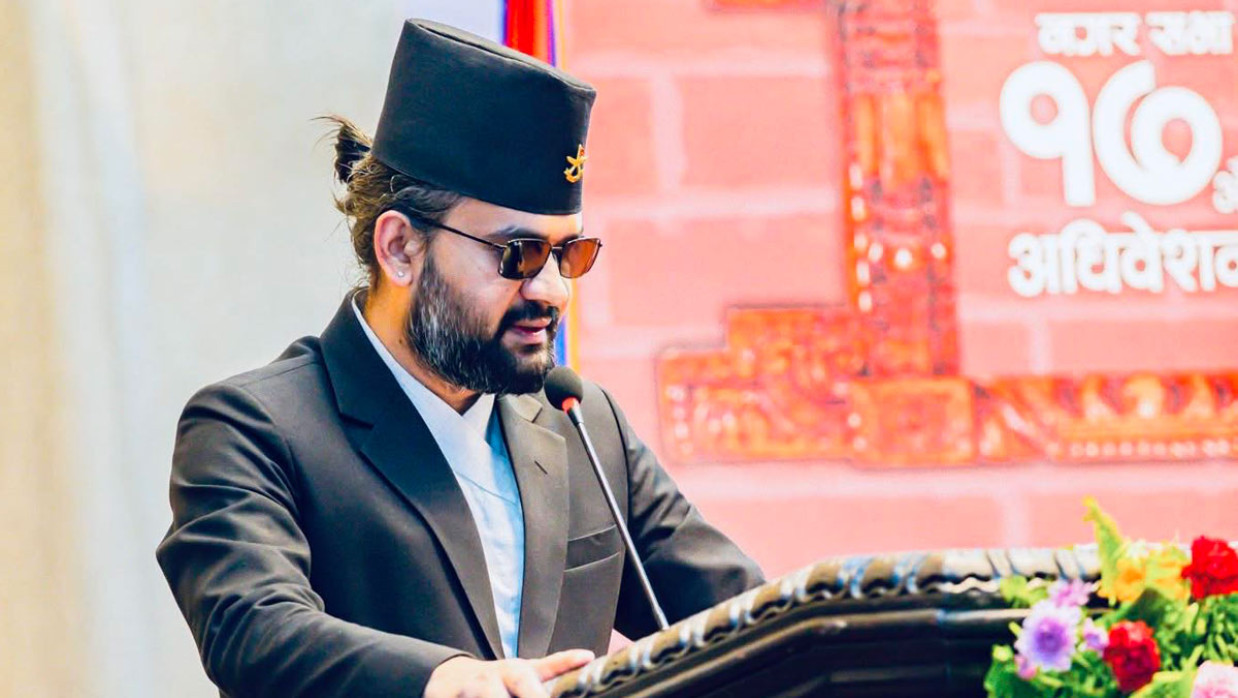
Nepal has experienced many political transitions over the past three decades, from monarchy to republic, from insurgency to democratic experiment. Still, few developments have shaken the country’s political landscape as dramatically as the recent electoral victory of the Rashtriya Swatantra Party (RSP). In an outcome that few analysts predicted, the party led by Balendra Shah secured approximately 182 out of 275 seats in parliament, achieving a rare two-thirds majority.
This unprecedented result represents more than just a political victory. It signals a profound shift in Nepal’s socio-political dynamics, reflecting widespread public frustration with established political elites and the growing power of youth activism and digital mobilization.
A Historic Electoral Upset
For years, Nepal’s political system was defined by fragmented coalition governments. The country’s constitution and electoral dynamics appeared to ensure that no single party could command a parliamentary majority. Coalition bargaining, unstable governments, and frequent political crises became the norm.
The recent election shattered that assumption.
The RSP’s victory, securing roughly two-thirds of the 275 parliamentary seats, marks the first time in modern Nepalese politics that a newly formed political movement has captured such overwhelming authority. What makes the outcome even more remarkable is that the RSP was not one of the traditional political parties that dominated Nepal’s political landscape for decades, such as the Nepali Congress or the various communist factions.
Instead, it emerged as a political insurgency, an outsider movement fueled by public dissatisfaction with corruption, nepotism, and economic stagnation.
The election result, therefore, represents a systemic rejection of Nepal’s entrenched political establishment.
Youth Protests as the Catalyst
The roots of this political earthquake can be traced to September 2025, when a wave of youth-led protests swept across Nepal.
Triggered by allegations of corruption, nepotism, and governance failures, the protests—largely organized by Generation Z activists quickly spread across major cities. Demonstrators demanded accountability from political leaders and called for a new generation of leadership.
These protests soon escalated into broader political unrest. Clashes occurred between protesters and security forces, and the country entered a period of political uncertainty.
Yet what emerged from this turmoil was not chaos but transformation.
The protests created the conditions for a new political force to rise, one that could channel public frustration into a coherent electoral movement. The Rashtriya Swatantra Party became the primary beneficiary of this momentum.
While the youth movement provided the spark, the RSP’s appeal ultimately extended far beyond young voters.
Broad-Based Support Across Nepal
Contrary to initial perceptions, the RSP’s electoral surge was not limited to Gen Z activists. The party managed to build support across multiple generations, ethnic groups, and regions.
Urban voters frustrated by corruption embraced the party’s promise of clean governance. Rural communities, long neglected by traditional parties, saw the RSP as an opportunity for economic revival. Even Nepal’s large overseas workforce, particularly those in the Gulf states and Malaysia, actively supported the movement through financial contributions and online mobilization.
This cross-generational support base allowed the RSP to transform what began as a protest movement into a nationwide political force.
In many ways, the election became a referendum on Nepal’s political status quo.
The Social Media Revolution
A defining feature of the RSP’s campaign was its mastery of digital communication.
Unlike traditional parties that relied on mass rallies and lengthy speeches, the RSP embraced a social media–driven strategy. Platforms such as Facebook, WhatsApp, YouTube, and Instagram became the primary tools for political outreach.
Through carefully curated videos, graphics, and short messages, the party built a powerful narrative around change, transparency, and youthful leadership.
The most striking aspect of this strategy was the deliberate mystique surrounding Balendra Shah. During the entire campaign, Shah spoke publicly for only about 27 minutes across five events.
This unusual approach created an aura of intrigue. Instead of traditional political rhetoric, Shah’s carefully managed image, carefully managed by a professional media team, became the central symbol of the campaign.
The strategy proved extraordinarily effective in the digital age, where concise messaging and visual storytelling often carry more influence than lengthy speeches.
The Rise of Balendra Shah
At the center of this political transformation stands Balendra Shah, a 35-year-old engineer and former mayor of Kathmandu.
Shah first gained national prominence during his tenure as mayor, where his technocratic approach to governance and his outsider status appealed to voters frustrated with traditional politics.
Before entering politics, Shah was also known as a rapper—an unusual background for a national political leader. Yet this unconventional profile contributed to his appeal, particularly among younger voters.
Equally significant is Shah’s identity. Of Madhesi origin but raised in Kathmandu, he represents a more inclusive vision of Nepal—one that transcends traditional ethnic and regional divides.
If he becomes prime minister, Shah would likely be Nepal’s first Madhesi leader to hold that office, a milestone in a country historically shaped by caste and regional tensions.
Ravi Lamichhane and the New Leadership
Another key figure in the RSP leadership is Ravi Lamichhane, the party’s chairman and co-leader.
At 51, Lamichhane brings a different kind of political experience to the movement. Before entering politics, he was a well-known media personality who helped shape the party’s populist messaging and national outreach.
However, Lamichhane currently faces a pending court case that temporarily bars him from attending parliament.
This legal complication introduces uncertainty into the party’s internal leadership dynamics, particularly regarding the balance of power between Lamichhane and Shah.
Maintaining unity between these two figures will be critical for the long-term stability of the new government.
The Immense Challenges Ahead
While the RSP enjoys an overwhelming electoral mandate, governing Nepal will be far more difficult than winning an election.
The party’s manifesto promises ambitious reforms, including creating between 1.2 and 2 million jobs, doubling national income, and implementing universal health insurance.
These promises resonate strongly with voters in a country where unemployment and economic migration remain major challenges. Each year, hundreds of thousands of Nepalese workers leave the country to seek employment abroad.
Reversing this trend will require large-scale economic transformation.
At the same time, the government must address Nepal’s persistent problems of corruption, bureaucratic inefficiency, and social inequality. Managing relations among Nepal’s diverse ethnic communities, many of whom feel historically marginalized, will also remain a delicate task.
Navigating Geopolitical Pressures
Nepal’s foreign policy presents another major challenge.
The country sits between two powerful neighbors, India and China, while maintaining important relationships with Western countries. Historically, Nepal has pursued a policy of strategic neutrality, balancing these competing influences.
For the new RSP government, maintaining this delicate balance will be essential.
India remains Nepal’s largest economic partner and exerts significant political influence. At the same time, China has increased its engagement through infrastructure investments and regional connectivity initiatives.
Any shift in Nepal’s diplomatic posture could have significant economic and political consequences.
The Role of the Interim Government
Amid the excitement surrounding the RSP’s victory, it is also important to recognize the role of the outgoing interim administration.
Led by Sushila Karki, the interim government lasted only six months but successfully oversaw the election process amid considerable political turmoil.
Despite protests and uncertainty, the administration managed to conduct elections on schedule while preserving peace and electoral integrity.
In a region where political transitions often trigger instability, Nepal’s peaceful election represents an important institutional achievement.
A New Chapter for Nepal
The landslide victory of Balendra Shah and the Rashtriya Swatantra Party marks a historic turning point in Nepal’s political history.
Driven by youth activism, social media mobilization, and widespread dissatisfaction with traditional elites, the election reflects a powerful demand for political renewal.
Yet electoral success is only the beginning.
The true test for Nepal’s new leadership will be whether it can translate this overwhelming mandate into effective governance, economic reform, and inclusive national development.
If successful, the rise of the RSP could mark the birth of a “new Nepal.” If not, the political earthquake that reshaped the country’s politics may become another chapter in Nepal’s long struggle to build stable democratic institutions.

0 Comments
LEAVE A COMMENT
Your email address will not be published