

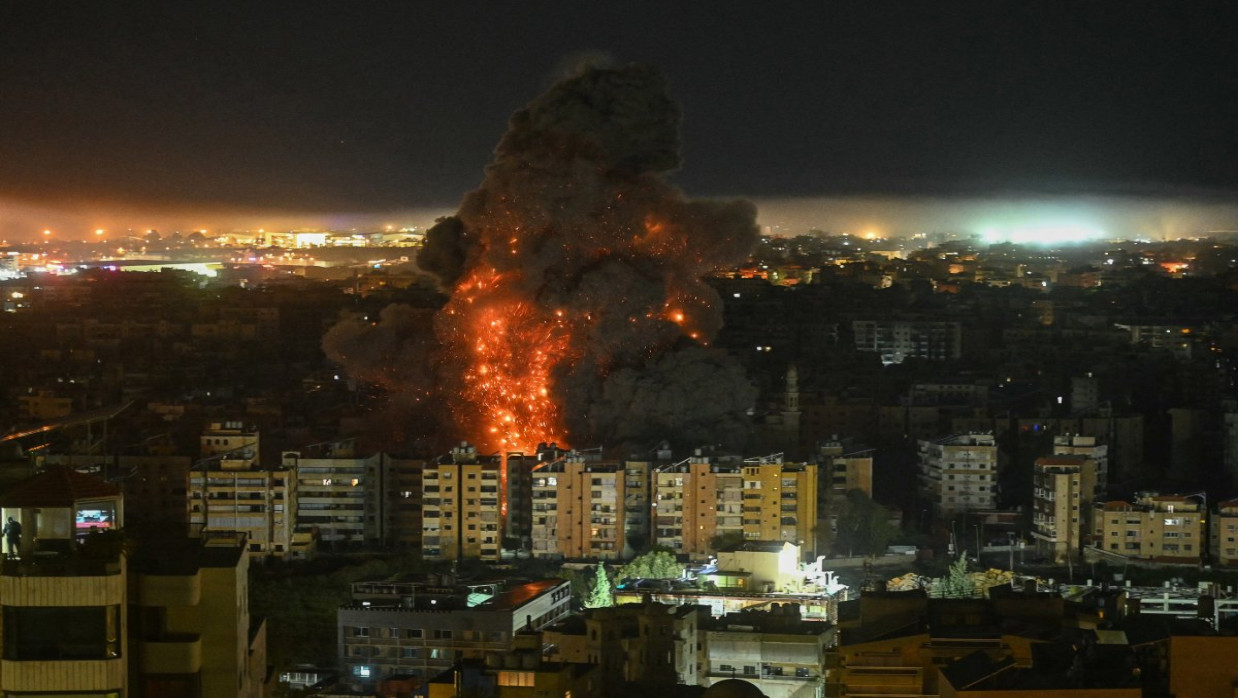
If Iran doesn’t open Strait of Hormuz, President Donald Trump has threatened to strike at the country’s infrastructure (April 5). Earlier, Trump voiced his plans to continue bombing Iran “to bring them to the Stone Ages” (April 1). There is no guarantee that this shall remain his stand till he comes out with other statement(s). And yet, he still doesn’t seem sure whether this is possible. This is suggested by his lack of confidence in for how long will the war last. It may take two, three weeks or even more, he said. Iran has repeatedly laid stress that it can continue fighting for months. Interestingly, Trump doesn’t refrain from talking about ceasefire. But he expects Iran to totally yield to what he desires. And this is least likely. This would only be suggestive of accepting defeat against US and Israel, a stand which Iran is not going to adopt. It is not without reason that Tehran has repeatedly taken a strong stand against Trump’s claims. Iran has demonstrated its potential by its strikes against Israel and US bases in the Gulf. This was probably not expected by Trump and his allies.
Trump has claimed several times about Iran being interested in ceasefire. Paradoxically, while stating this, he has not specified as to when and between whom were “talks” regarding ceasefire held. Iran has repeatedly dismissed Trump’s claims about it being keen for ceasefire. There has been no direct communication between US and Iran on this issue, since this war started. Certainly, Trump’s proposal, based on his 15 points, was given to Iran by Pakistan. It may be noted, this ceasefire-initiative was taken by Trump. Iran rejected his proposal. It is possible, Trump may have given serious thought to ceasefire as he may have been keen for an exit from the war. He probably assumed that Iran was also eager for the same and thus he probably expected it to instantly at least talk of considering his proposals. That hasn’t happened.
Besides, how can it be ignored that this war involves US, Israel and Iran. With Israel being eager for continuation of the war, it seems fairly strange that Iran should be expected to give serious thought to only Trump’s stand. The latter loses its credibility against that being promoted by Prime Minister Benjamin Netanyahu, that is continue the war.
In essence, Trump has not refrained from trying different strategies to find a way out of the war, which paradoxically don’t seem genuine, but appear more like diplomatic rhetoric, at best symbolic moves. Yes, his posts on his platform Truth Social giving importance to end of war cannot be side-lined. Here, attention maybe drawn the to his earlier post (March 23), in which he claimed of having “very good and productive conversations” with Iran for a “total resolution of our hostilities in the Middle East.” Iran dismissed this claim, saying Trump was “negotiating with himself.” Subsequently, Pakistan stepped in, handing his 15-point proposal to Iran, which as mentioned earlier was rejected. Following this, Trump’s post described Iranian negotiators as “very different and strange.” Emphasizing that Iran was eager for a deal privately, but was downplaying this publicly. He wrote, “They are ‘begging’ us to make a deal.. and yet they publicly state that they are ‘only looking at our proposal’. WRONG!”
Meanwhile, White House warned on Wednesday (March 25) that if Iran does not accept defeat, “President Trump will ensure they are hit harder than they have ever been hit before.” “President Trump does not bluff and he is prepared to unleash hell. Iran should not miscalculate again,” said White House press secretary Karoline Leavitt. She emphasized that negotiations between two countries are continuing. Iran has, however, expressed that negotiations are not taking place.
Considering that this war involves three countries, how seriously should Iran view Trump’s posts and his proposal, without the same being backed by Israel? This in itself raises questions about the diplomatic credibility of voices being raised in favor of ceasefire. This view cannot be ignored as in June 2025 and this year, Iran was forced to the stage of war, while it was engaged in negotiations with US.
In addition, some importance would have been given to US being seriously concerned about a pause/ceasefire/de-escalation, if at least unilateral moves (on behalf of US) were suggestive of this. While calling for a halt in conflict, steps being taken to deploy more US marines to the Gulf cannot be ignored. There has been no halt in attacks between the warring sides.
Nevertheless, that Trump has considered diplomatic strategies to involve Iran in “negotiations” cannot be ignored. It is possible, he has acknowledged that he probably erred by yielding to those demanding war with Iran. His decision to begin strikes against Iran on February 28 has begun being exposed as a major blunder for more reasons than one. Trump may not have opted for the US-Israel war against Iran if he and Netanyahu were not over-confident about their “victory” being within easy reach, just a matter of few days. The two master-strategists apparently chose not to take stock of Iran’s potential to retaliate, strike back and continue fighting. Clearly, over-confidence in their having power to easily compel the “weaker” party (Iran) to lose against their strength clouded their wisdom on this front. It is astonishing, they did not even consider the ability of Iran to face their 12-day war last year in June. They probably assumed that the June-war had depleted Iran’s strength considerably and it would be compelled to give in within less than 12 days. That has not happened and is not showing any chances of happening. The war has continued for more than a month and may last for several more.
Iran is the 17th largest country and also has 17th largest population in the world. The only country larger than it in the Gulf is Saudi Arabia. Around 75-80 countries of size of Israel can fit it Iran. Compared to Iran’s population of more than 90 million, that of Israel is around 10 million. Yes, US has bases in the region. But the fact that Iran has been able to hit them and has not spared Israel’s Iron Dome, as per reports, was probably not expected by US, Israel and rest of the world. Iran’s strategic decision to control Strait of Hormuz was also not probably anticipated. As certain critics state, Trump initiated the war, yielding to Israel and its supporters, without doing any homework. Yes, Iran has definitely been forced to the stage of war, but at present, chances of it being bullied to accepting a ceasefire on Trump’s conditions seem extremely limited. How can it be, without US showing any sign of taking steps towards a genuine ceasefire?
It is puzzling that Trump has apparently expected Iran to go by what only he has said regarding ceasefire. How can Iran be expected to trust its enemies, particularly when engaged in war? Thus, Iran has apparently kept a close watch on deployment of US troops in the region, transfer of more weapons and so forth, only suggesting steps being taken for continuity of the war.
Trump certainly erred by apparently choosing to yield to Netanyahu’s desire to begin the war against Iran. It is surprising that superpower has taken this step without taking account of Iran’s potential to hold on and strike back. Trump’s claims about having almost totally destroyed Iran, with total command over its skies and so on lack credibility. Rather, this stands shattered with Iran having recently downed US fighter jets. Iran has celebrated this as a major success. A US A-10 aircraft crashed after being hit by Iran forces. A US F15-E Strike Eagle fighter jet was shot down, with a crew member rescued and another missing (April 3), who was later rescued. US fighter jets have been downed for the first time in 20 years. The last time this happened was in 2003 US invasion of Iraq. This clearly indicates that Iran is not as weak as it was probably assumed to be by US and Israel, or more specifically by Trump and Netanyahu. The war began resting on assumptions about Iran’s weakness/strength. The second month has begun and there are minimal chances of the war coming to an end soon.
In this situation, the role of Pakistan as a mediator is also fairly dim. It has at best been a communicator between two (and not three) parties. Essentially speaking, how can Iran even consider any ceasefire till Israel plays a spoilsport?


0 Comments
LEAVE A COMMENT
Your email address will not be published