

In 2001, when the Taliban destroyed the Buddhas of Bamiyan with tanks and explosives, leaders across the world decried the vandalism against history; UNESCO called an emergency meeting while the UN Security Council released a statement saying that to damage humanity’s heritage was to target civilization itself. Time and again, we have heard international leaders speak on behalf of “civilization” when cultural heritage is attacked. But four hours after bombs hit Iranian cultural heritage sites equivalent in antiquity to the damage to the Buddhas, Lebanon and Palestine now also face UNESCO, which released a tepid press release saying it had “no information” on the attacks while member states stayed silent.
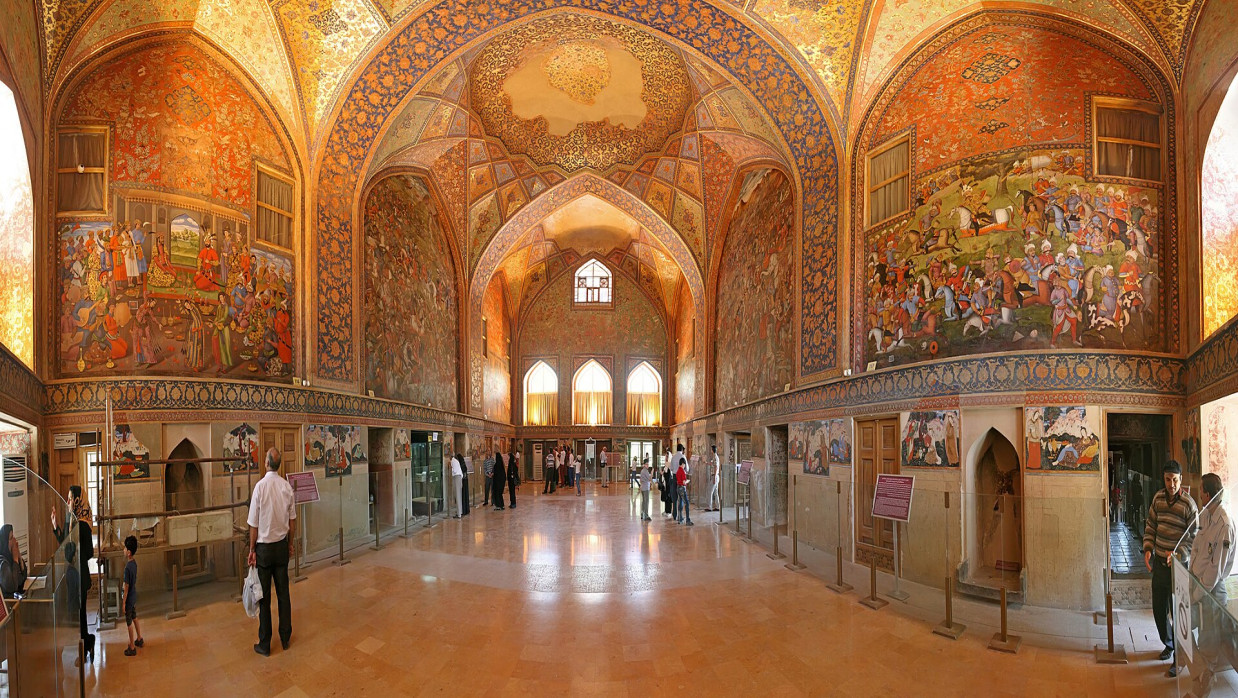
The attacks targeted Iran’s Chehel Sotoun Palace in Isfahan, Golestan Palace in Tehran, the Masjed-e Jame mosque of Isfahan, and centuries-old sites central to Persian culture. Reportedly, UNESCO shared the coordinates of these historical sites with the attackers beforehand, asking them to take precautions to avoid harming them. In an act of cultural vandalism exacerbated by modernity, humanity’s shared historical legacy is being used as a weapon of war.
The Western response to ISIS destroying Palmyra in Syria in 2015 was predictably rapid. Within days, presidents were holding press conferences on the attack. News outlets across the world covered it for weeks. Institutions worldwide called it an attack on civilization. In 2022, when Russia attacked Ukraine’s cultural heritage, it was deemed a violation of international humanitarian law within days. But four sites central to Persian heritage in West Asia have received little Western media coverage, political commentary, or statements on international humanitarian law.

Golestan Palace, Teheran
If heritage sites in war become subject to geopolitical allegiance rather than international consensus, we are asking civilizations aligned against each other to fight to the death for their right to exist. All evidence suggests that is what we are doing.
Humanitarian crises invariably follow the news of cultural devastation. In Lebanon, the scale of displacement has grown dramatically: recent UN assessments indicate that over 815,000 people have been uprooted by renewed Israeli–Hezbollah hostilities since early 2026 alone, while earlier phases of the war displaced more than 1.2 million people nationwide. Civilian infrastructure, including medical services, has been repeatedly affected, and aid workers and healthcare personnel remain among those killed in attacks. This is not a war confined to soldiers. Lebanese authorities have warned that further escalation could displace a substantial share of the country’s population, while hundreds of thousands remain without reliable access to food, shelter, or clean water.
In Gaza, the humanitarian catastrophe has reached even more devastating proportions. As of early 2026, reported deaths associated with the war exceed 73,000 Palestinians, with women and children forming a majority of casualties in many verified datasets. Independent demographic studies suggest that the real number of violent deaths may be well above 100,000 when indirect mortality and undercounting are considered. Meanwhile, displacement has affected the overwhelming majority of Gaza’s population at various stages of the conflict, leaving civilians without sustained access to medical care, sanitation, or adequate nutrition. Even after partial ceasefire periods, humanitarian agencies report continued casualties and widespread deprivation across the territory.
Even if we use UN figures, healthcare facilities, schools, and apartment buildings are being destroyed en masse, leading the World Food Program to warn of famine and pediatric hospitals to say there will soon be more child widows than their beds.
The International Criminal Court (ICC) has issued arrest warrants for individuals who allegedly enacted a policy to deprive Palestinians in Gaza of access to food, water, and other essential supplies, weapons, the ICC found probable cause to believe were used to commit the crime of starvation against the population as part of a war crime. The International Court of Justice (ICJ) found Israel’s occupation policy illegal. Multiple United Nations commissions of inquiry have been assembled to determine if acts committed by Israel constitute genocide. These are the highest findings international institutions can make in the post-WWII international order. Yet silence reigns.
When will world leaders stop hiding behind accusations of “civilization” attacks to viciously attack one another, and stand up for civilization itself? Given how Russia has treated Ukrainian cultural heritage, cries that Ukraine’s heritage is too were undoubtedly coming from Russian embassies around the world had Israel not struck first.
The cultural heritage protection regime emerged from the ashes of World War II, when we realized that targeting history was targeting ourselves. What we are witnessing now is humanitarian pauses and meetings behind closed doors while Lebanon burns, while our collective conscience starves.
We either protect all of humanity’s history or pick and choose which bits of civilization we care about. Because right now, it sure as hell doesn't look like we care about any of it.
If cultural attacks are only criticized when they’re committed by your geopolitical opponents, what’s to stop your allies from also destroying your cultural heritage when the political winds shift? Once international standards of protection are subject to Whac-A-Mole games rather than legal and moral consensus, no country’s cultural heritage is safe.
If we cannot agree that it is an attack on civilization to damage any aspect of our shared history, then we cannot use that language at all. Isfahan’s universally recognized bridges, Baalbek’s Roman ruins, and Gaza’s centuries-old streets were built by history’s anonymous workers. They belong to all of humanity. When we are silent about the destruction of some but not others, we are telling ourselves which parts of history we think are worth saving.


0 Comments
LEAVE A COMMENT
Your email address will not be published