

A War the West Understands Poorly
The latest escalation involving Israel, the United States, and Iran once again underscores a central paradox of contemporary warfare: technological superiority does not automatically yield political success. Scholars of modern conflict, including Andreas Krieg, have long argued that Western militaries continue to approach War through a largely conventional, Clausewitzian framework seeking decisive outcomes, territorial control, and the rapid collapse of the adversary. By contrast, many of their opponents operate within a fundamentally different paradigm, one that resembles Maoist principles of protracted struggle: wars of attrition, decentralization, and endurance. In such conflicts, the objective is not to win quickly, but to outlast a stronger opponent whose political patience is often far more limited.¹
Past conflicts have shown that the United States is exceptionally good at swiftly winning wars, but remarkably poor at imposing enduring outcomes. Washington instead finds itself stuck in political purgatory. Iraq. Afghanistan. You know the story. The key difference between previous iterations of this trend and the current War with Iran is that Iran has learned from the West's mistakes.
The IRGC: A State Within a State
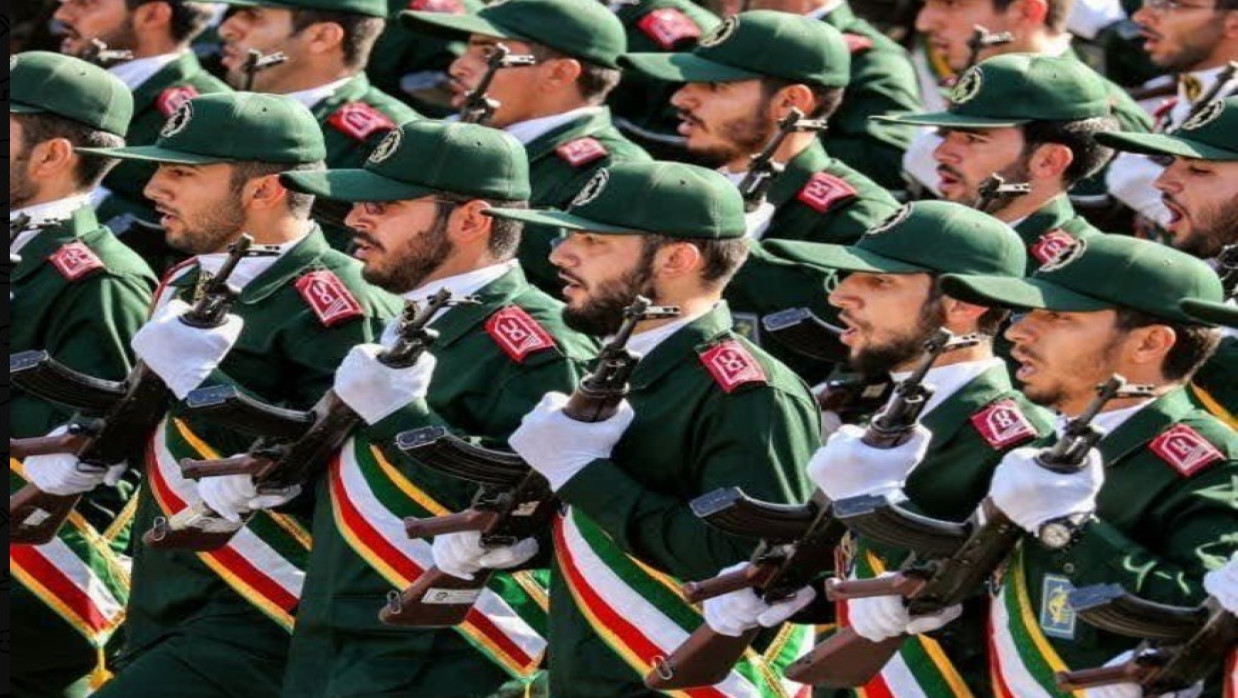
Iran is just one piece of the target. Focus needs to remain on the Islamic Revolutionary Guard Corps, or IRGC. This paramilitary force doesn't act like a traditional military. They act like a state within a state. The IRGC infiltrates every aspect of Iran's government, economy, and society.
The IRGC is designed to be decentralized. Command and control are not done through vertical hierarchy. They have regional commands spread across the country, as well as independent cells that can act on their own initiative, subject to general orders.
Iran also has a militia known as the Basij. You can think of them as the IRGC's "boots on the ground". They have millions of casual members that make up a sprawling paramilitary presence throughout Iran. This means that any attack on Iran would be both military and societal.
Mosaic Defense: Engineering Resilience
The strategic foundation for this system is what foreign analysts have called "Mosaic Defense." Imagine the pendulum of warfare swinging away from centralization and toward diffusion.
Decisions are decentralized among hundreds of semi-independent cells. Like the nodes on a network, they receive guidance from the center but make tactical decisions on the ground. It's redundant by design. Remove one element, and the system keeps going.
By contrast, Western militaries rely on airpower and precision strikes to target leadership nodes, communications arrays, and critical infrastructure. Such attacks would only degrade Iran's ability to project power; they won't collapse it.
This, in a nutshell, is Krieg's thesis. The IRGC has essentially "designed out" the weaknesses that our military loves to target.
The Collapse of Deterrence Logic
The risk calculus changes when you reach this point. Nuclear deterrence theory holds that the threat of escalation deters adversaries. Yet this point, notes Ian Bremmer, may not apply anymore:
Iran is playing 9/11 math. They believe that failing to escalate their attacks against America, despite continued pressure from sanctions and threats of military action, won't increase their chances of survival. On the contrary, escalating attacks, especially asymmetric ones, will.
Why else would Iran threaten attacks against energy facilities should anyone attack its own?
War Without Victory
Krieg notes there's an emerging consensus on what this might mean. Karim Sadjadpour points out that we don't yet know whether the strength of Iran's regime rests on individuals or institutions. If it's the latter, assassination attempts won't accomplish much.
Echoing this, Kanwal Sibal notes that Iran wants to weaken American power in the region, even if it severely harms Iran in the process. As such, Iran's goal may not be to win but to fight a long war of attrition.
In a similarly blunt manner, H. S. Panag suggests that short of Iran bending to our will, any declaration of Victory would be pyrrhic.
He's not wrong. Recall Krieg's point that wars against foes who do not rely on centralized command structures are seldom won outright. They become wars of attrition that sap the greater power's strength.
The Gulf and the Limits of Escalation
Finally, we should remember another wildcard: the Gulf states. States like Saudi Arabia and the UAE have sophisticated militaries, but cannot do enough to shift the strategic equation.
"Saudi and UAE involvement would therefore likely be political score settling rather than militarily decisive," Krieg writes. It could even lead to wider Iranian attacks against them. In other words, Gulf involvement only ramps up the conflict.
That's something Iran surely understands. If Iranian deterrence encourages others to escalate, that's a net positive for Iranian aims. Widening the War puts more pressure on oil markets, triggers international panic, and intensifies pressure on countries that want things to calm down, including those that use Gulf oil.
Energy as the New Battlefield
One important aspect of this War that shouldn't be overlooked is economic warfare. Iranian threats to attack energy facilities throughout the Middle East risk broadening the financial impact of the War internationally.
Tankers passing through the Strait of Hormuz transport much of the world's petroleum needs. Obstructing this supply would hurt economies worldwide by increasing energy costs and disrupting global production.
It sounds like Mosaic Defence logic. If you can't beat your enemies militarily, bleed them economically until the fight is no longer worth it.
The Illusion of Decisive Victory
In Washington, discussions over whether regime change is possible through a "decisive victory" continue. Michael Doran has made the case that taking out Iran's drone and missile forces would alter the equation. Some believe there are seeds of internal collapse waiting to be watered with covert action, like the kinds Israel's Mossad may currently be performing.
But these theories are based on an expectation of fragility. They believe that if you push hard enough, the regime will cave in; everything we have seen points to the contrary conclusion. So far, not only has the Islamic Republic proven resilient in the face of Israeli attacks, but the IRGC has shown itself quite capable of adapting to and operating within an apocalyptic scenario.
Is this a regime flirting with collapse? Or is this a regime designed to withstand such pressure? Israeli journalist Amit Segal posed this question. Which one it is will dictate the future course of the War.
Conclusion: A War of Endurance, Not Victory
The Iran conflict reveals a new paradigm of War. Large-scale conflicts that decided the fate of the twentieth century have become smaller, attritional fights.
IRGC'S Mosaic Defence strategy is a manifestation of this paradigm. It's a strategy meant to diffuse the opponents' technological edge. But it also aims to defy the very ideology of winning.
America and Israel have the power to kill and destroy, but not necessarily win. Iran may not be able to win the fight, but they've been conditioned never to lose.
In such a conflict, the absence of Victory becomes, in itself, a form of defeat.
¹ Andreas Krieg, various writings on hybrid warfare and "liquid warfare," including analyses in War on the Rocks and other policy platforms; see also Mao Zedong's theory of protracted War for conceptual comparison.


0 Comments
LEAVE A COMMENT
Your email address will not be published