

US–Israel Joint Attack on Iran: Regime Pressure or Regional Gamble?
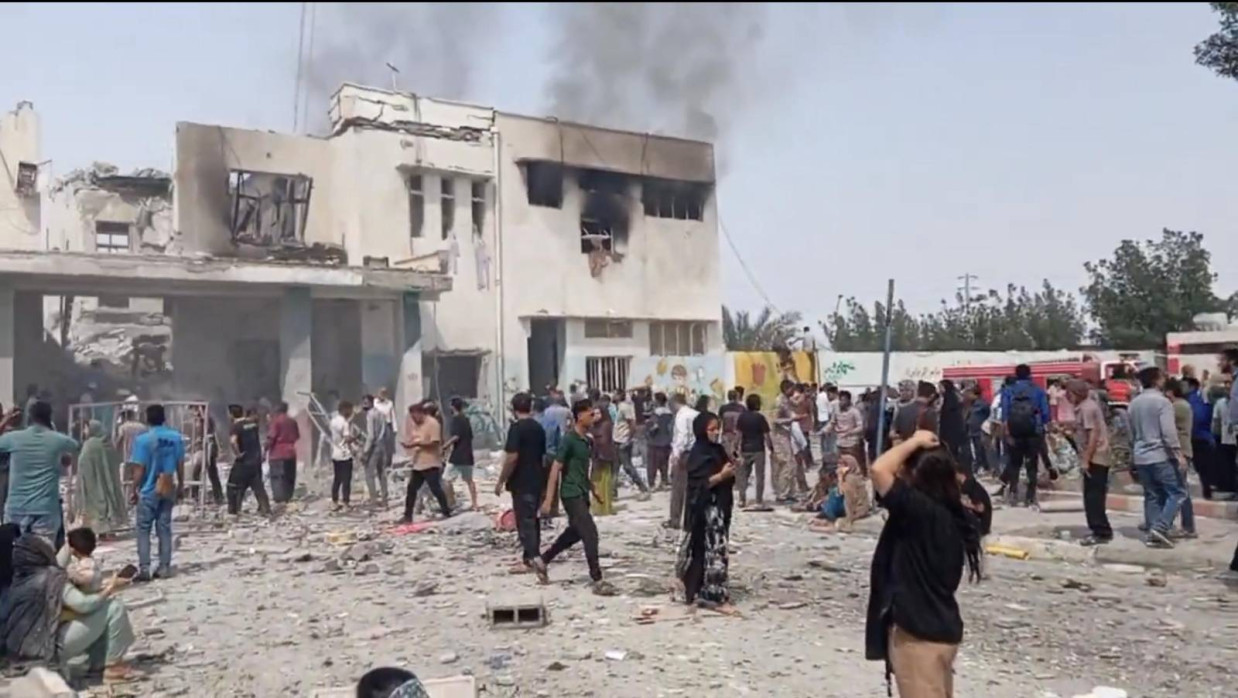
The latest joint military strikes by the United States and Israel on Iran mark the second coordinated attack in eight months, signaling what officials have described as “unfinished business.” The stated objective is to degrade Iran’s nuclear and missile capabilities while applying overwhelming pressure on Tehran’s leadership. Yet beneath the rhetoric lies a far riskier ambition: to provoke regime change.
The strategic calculus is fraught with uncertainty. While Iran’s military infrastructure and regional proxies have been weakened over the past two years, particularly following strikes in June, the resilience of the Islamic Republic remains an open question. Whether Tehran retains the capacity or political will to retaliate decisively across the Middle East is unclear. What is certain is that the consequences of escalation are unpredictable at this early stage.
“Unfinished Business” and Explicit Calls for Regime Change
Trump presented the renewed strikes as a continuation of what previous actions had started: stopping Iran’s nuclear program and sabotaging its missile capability. Trump went further during his eight-minute Truth Social post, openly calling for Iranians to rise up against their government.
“This is a departure from years of strategic ambiguity,” Netanyahu has long called for regime change in Tehran, claiming Iran’s theocratic government breeds regional chaos. Trump seems to be on board with that goal now.
But there’s historical precedent for being skeptical that pressure from outside can induce internal turnover. Foreign enemies demanding regime change can easily trigger a “rally around the flag” response, pushing even unhappy citizens to oppose the regime.
The Complexity and Resilience of the Iranian State
Make no mistake, the regime in Iran is profoundly unpopular. Stagnant economic policies and poor decision-making at home, harsh sanctions abroad, and last year’s murder of protesters have embittered Iranians across all facets of society. Many have called the system brittle and an ideology worn out from years of power.
Brittle does not mean close to falling. The Iranian regime remains resilient and has several advantages. Most importantly, the Islamic Revolutionary Guard Corps, Basij militia forces, and Iran’s sprawling intelligence community all have a vested interest in keeping the state intact. They are not just Iran’s security apparatus; they have their own business interests and political investments in maintaining the status quo.
Estimates vary, but some experts claim that about 30 percent of Iranians work for the regime or its affiliated industries. True, but around 30 percent of Iranians rely on the regime for their livelihood. Plus, there has been no clear consensus on who would replace the regime if it ever fell. Regime change in Iran would almost certainly lead to a chaotic power struggle due to the regime’s many tiers of governance.
Misjudging Patriotism and the Risks of External Intervention
Iranian nationalism is a strong and underrated sentiment. Sure, Iranians hate their regime, but they might not want regime change dictated by America or Israel. Trump's begging Iranians to overthrow their government may easily come off as meddling and thus play into the hardliners' conspiracy theories.
This is why regime change as a strategy will not work. No amount of weapons and rallying Iran around ideology is going to knock over a regime through air strikes alone. Regime changes almost always require some internal mobilization that you can't predict or control.
Targeting Iran’s Missile Arsenal
Beyond responding to regime pressure, military goals include limiting Iran’s missile program. Trump talked of “taking Iran’s missile program to another level, way down,” referring to missiles that can reach Israel and U.S. interests in the Gulf, including long-range and alleged hypersonic missiles.
The landmark nuclear deal Iran signed in 2015, known as the Joint Comprehensive Plan of Action, did not cover Iran’s ballistic missile program or proxy militias. Critics called this a flaw in the agreement. But rolling back years of missile production will not be easy. They’ve spread their infrastructure wide and deep, hiding and hardening sites.
Iran also threatened “crushing” revenge on U.S. installations and allies should they suffer an attack. Iranian retaliation has typically been measured. However, things can quickly escalate once pushed far enough. War may drag on longer than end swiftly.
Strategic Calculations and Domestic Politics
Johns Hopkins University professor Vali Nasr has written that Iran "may welcome a long war of attrition aimed at weakening America’s will." A protracted conflict would challenge America's willingness to absorb casualties and to bear the economic costs.
Trump has indicated he does not rule out casualties among American forces. Additionally, the U.S. will be distracted by the upcoming midterm elections. A quick war of conquest would help Trump's image; a lengthy war would harm it.
Furthermore, President Trump does not want to appear weak by doing something half-hearted, like with Venezuela. Nor does he want to get bogged down in Afghanistan or Libya. When America overthrew Libyan leader Muammar Gaddafi, the country descended into chaos. Libya became a nation split between cities, militia groups, and tribes. Warlords currently battle each other for control of the country. Nobody in Washington wants to see Iran turn into a giant Libya. Iran has a population ten times that of Libya.
Intelligence Assessments and Operational Unknowns
The strikes in June targeted Iran’s nuclear facilities with the intention of destroying them, but ultimately did not follow through. It is unclear if this new strike had similar intentions or if they left anything to chance. Reports of severe damage are still unconfirmed, and Iran has been projecting an image that it can handle whatever comes its way.
Bibi Netanyahu has advocated for more extreme measures, but it’s really up to Washington to make that call. There are fears that they may not fully comprehend how resilient the regime is and how difficult it would be to destroy their military industrial complexes.
Reports of Iran attacking targets in Bahrain and Kuwait just minutes after the first attack began show you how fast things can spiral out of control. If you look at Gulf countries right now, they’re even warning their citizens to take cover.
Conclusion: A Gamble with Global Consequences
The symbolism is important because this is not just a raid. The U.S.–Israeli strikes are a high-risk bet. Weakening Iran’s nuclear and missile program is one thing. Attempting regime change is quite another.
This could go very badly. America and Israel could face years of regional war, energy crises, and a domestic and international political crisis. Even if they consider bombing Iran a success, and the regime survives, we could still see increasing chaos on the scale of what happened in Libya, but bigger.
We just don’t know. Will Iran’s government survive? How far will they escalate, and will other governments fight back? Right now, this could go down as a minor skirmish or the biggest Middle Eastern conflict of the 2020s.

0 Comments
LEAVE A COMMENT
Your email address will not be published